TL;DR
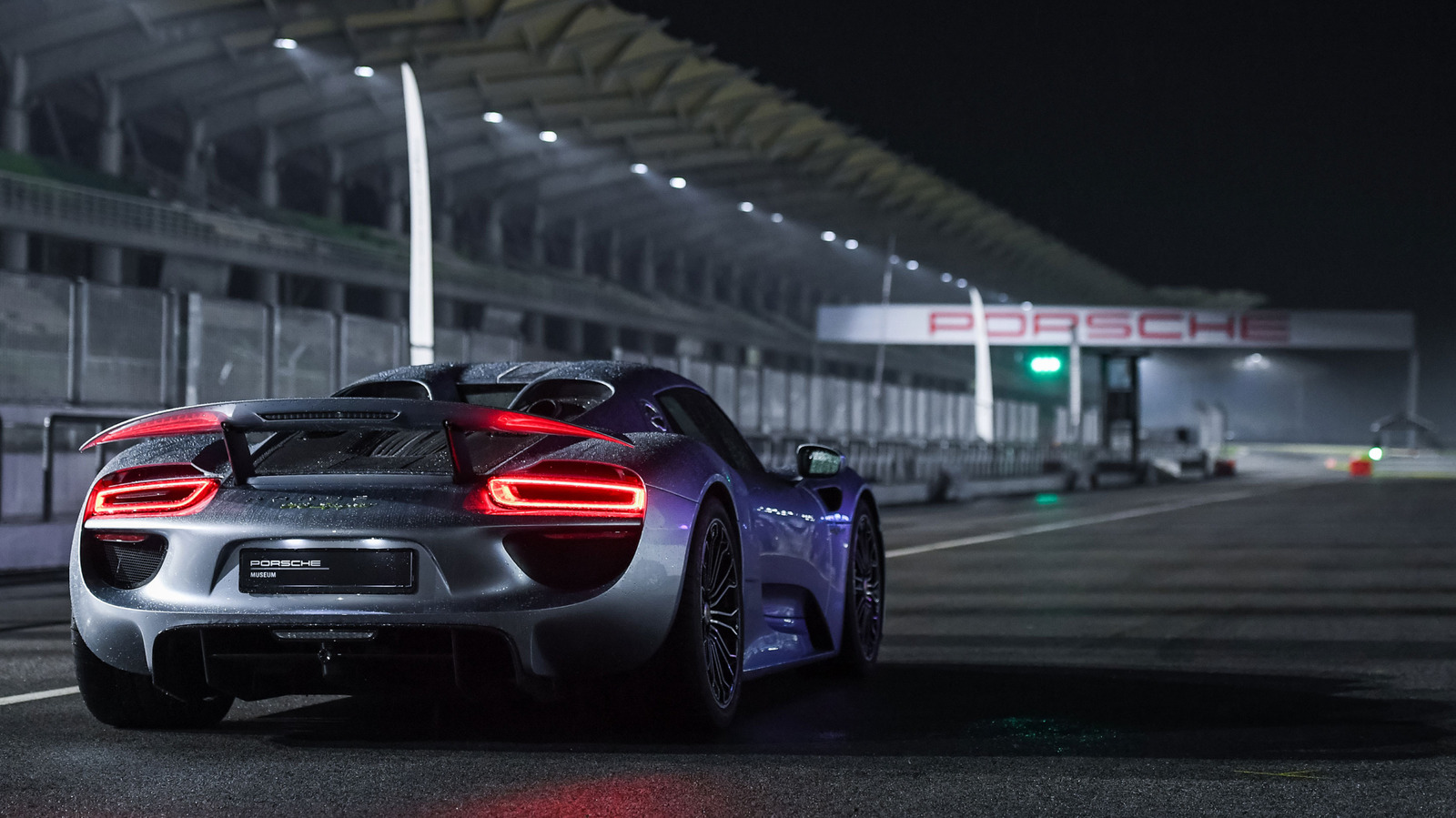
Porsche's 918 Spyder and 991.1 Turbo S are no longer the undisputed kings of the brand's acceleration hierarchy. A new generation of factory-stock Porsches, including the Taycan Turbo GT and the 992-generation Turbo S, have reshuffled the top 10 list, making sub-2.5-second 0-60 mph times the new benchmark for the Stuttgart marque.
What Happened
Jalopnik has published its definitive ranking of the ten fastest factory-stock Porsches ever tested, and the list reveals a dramatic power shift. The 918 Spyder, once the halo car of the brand, has been knocked from the top spot by a combination of all-electric hyper-hatches and updated internal-combustion monsters.
Key Facts
- The Taycan Turbo GT now claims the #1 spot with a tested 0-60 mph time of 2.1 seconds, making it the quickest production Porsche ever.
- The 918 Spyder, Porsche's previous hybrid hypercar flagship, now sits at #3 with a 0-60 mph time of 2.5 seconds.
- The 992-generation 911 Turbo S recorded a 0-60 mph time of 2.3 seconds, placing it at #2 on the list.
- The 991.1 911 Turbo S, once the benchmark for internal-combustion Porsche performance, now ranks #5 with a time of 2.6 seconds.
- The Taycan Turbo (non-GT) achieved a 0-60 mph time of 2.6 seconds, tying with the 991.1 Turbo S at #5.
- The Carrera GT, Porsche's V10 legend from the 2000s, ranks #10 with a 0-60 mph time of 3.5 seconds.
- The list spans three decades of Porsche production, from the 1990s 911 GT2 to the 2025 Taycan Turbo GT.
Breaking It Down
The most startling revelation from this ranking is not just which car won, but by how much. The Taycan Turbo GT's 2.1-second 0-60 mph time is a full 0.4 seconds faster than the 992 Turbo S and 0.4 seconds quicker than the 918 Spyder. In the world of hypercar performance, a four-tenths gap is a chasm. This is the first time an electric Porsche has outright beaten every internal-combustion model on a pure acceleration metric.
The Taycan Turbo GT's 2.1-second 0-60 mph time is faster than the 918 Spyder's by 0.4 seconds — a margin equivalent to the gap between a base 911 Carrera and a 911 GT3 RS.
The internal-combustion hierarchy has also been upended. The 992 Turbo S now sits comfortably above the 918 Spyder, a car that cost over $1 million at auction and featured Formula 1-derived hybrid technology. This demonstrates the relentless pace of engineering improvement: a standard production 911, with no hybrid system and a price tag around $200,000, can out-drag a million-dollar, limited-production hypercar from just a decade ago. The 991.1 Turbo S falling to #5, tied with a standard Taycan Turbo, underscores how electric torque delivery has flattened the traditional performance pyramid.
The presence of the Carrera GT at #10, with a 3.5-second time, serves as a historical anchor. That car was a marvel in 2004, but its manual transmission and naturally aspirated V10 now look almost quaint compared to the dual-clutch, all-wheel-drive, electric-torque-vectoring monsters that surround it on the list. The data shows that Porsche's performance gains are no longer coming from horsepower alone, but from traction management and instant torque delivery—areas where electric powertrains have a fundamental advantage.
What Comes Next
The list is already a snapshot of a moving target. Porsche is not resting on its laurels, and several developments will likely reshape this ranking within 18 months.
- Mission X Production (2027): Porsche's upcoming hypercar, the Mission X, is expected to feature a hybrid powertrain targeting a sub-2.0-second 0-60 mph time. If it delivers, it will reclaim the top spot from the Taycan Turbo GT and set a new benchmark for the entire industry.
- 992.2 Turbo S (Late 2026): The mid-cycle refresh of the 992-generation 911 is expected to bring a mild-hybrid system to the Turbo S. Even a modest 50-horsepower increase and improved launch control could push the 0-60 mph time below 2.2 seconds, challenging the Taycan Turbo GT.
- Taycan Turbo GT "Weissach" Package Updates: Porsche has already demonstrated a willingness to push the Taycan platform further. A potential "Turbo GT RS" or "Turbo GT+ " variant with upgraded battery cells and lighter materials could shave another tenth of a second.
- Third-Generation Taycan (2029): The next-generation Taycan platform will likely feature 800-volt+ architecture, solid-state battery cells, and significantly lighter weight. This could push 0-60 mph times toward the 1.8-second range.
The Bigger Picture
This ranking is a microcosm of two broader technological trends reshaping the automotive industry. The first is Electric Powertrain Dominance. The Taycan Turbo GT's victory is not an outlier; it is a pattern. Across the industry, electric sedans and SUVs are now matching or exceeding the acceleration of internal-combustion supercars from just five years ago. The physics of electric motors—peak torque from zero RPM, no gear shifting, and precise torque vectoring—create a fundamental acceleration advantage that internal combustion cannot easily overcome.
The second trend is Performance Democratization. The 992 Turbo S, a car that costs roughly $200,000, now outperforms the $1 million+ 918 Spyder. This compression of the performance hierarchy means that a wealthy enthusiast no longer needs to buy a hypercar to get hypercar acceleration. Furthermore, the Taycan Turbo GT, while expensive at $230,000, is a four-door hatchback with a usable rear seat. The fastest Porsche ever made is also one of the most practical. This trend toward combining extreme performance with daily usability is a direct result of electric powertrains eliminating the packaging constraints of large engines and transmissions.
Key Takeaways
- [Taycan Turbo GT is the new king]: At 2.1 seconds 0-60 mph, the all-electric Taycan Turbo GT is the quickest factory-stock Porsche ever tested, dethroning both the 918 Spyder and the 992 Turbo S.
- [Internal combustion still dominates the list]: Despite the Taycan's win, 8 of the top 10 positions are held by gasoline-powered 911s, showing that Porsche's internal-combustion engineering remains world-class.
- [Performance gap is shrinking fast]: The 992 Turbo S ($200k) now outperforms the 918 Spyder ($1M+), demonstrating that hypercar performance is increasingly available at a lower price point.
- [Electric torque is the differentiator]: The Taycan Turbo GT's advantage comes not from raw horsepower, but from instant electric torque and advanced traction control, a physics advantage that internal combustion cannot replicate.


