TL;DR
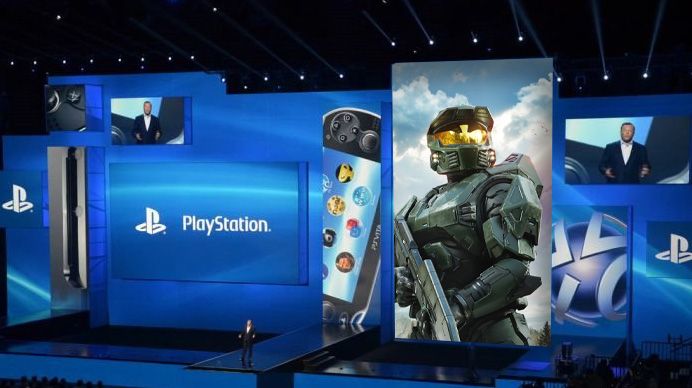
Microsoft is actively debating whether to end Xbox hardware exclusivity, potentially bringing flagship franchises like Halo, Gears of War, and Forza to PlayStation and Nintendo platforms. This decision, if confirmed, would fundamentally reshape the console gaming landscape and mark the most significant strategic pivot in Xbox's 25-year history — with implications for the entire $200 billion gaming industry.
What Happened
Windows Central reported on April 26, 2026, that Microsoft's leadership is engaged in a high-stakes internal debate over whether to abandon the traditional console exclusivity model entirely. The report reveals that the conversation has escalated to the highest levels of the company, with Xbox chief Phil Spencer and Microsoft Gaming CEO Satya Nadella weighing the strategic calculus of bringing Xbox's most iconic intellectual property — including Halo, Gears of War, and Forza Motorsport — to rival platforms from Sony and Nintendo.
Key Facts
- Windows Central's report, published on April 26, 2026, cites multiple sources familiar with internal Microsoft discussions about ending first-party exclusivity.
- Microsoft has already tested this strategy by bringing four previously exclusive titles — Hi-Fi Rush, Pentiment, Sea of Thieves, and Grounded — to PlayStation 5 and Nintendo Switch in 2024.
- Xbox Series X|S hardware sales have trailed PlayStation 5 by approximately 2:1 globally, with Sony shipping 59 million PS5 units versus Microsoft's estimated 28 million Xbox Series consoles through Q1 2026.
- Microsoft acquired Activision Blizzard for $68.7 billion in October 2023, making it the largest gaming acquisition in history and giving Xbox control of franchises including Call of Duty, Candy Crush, and World of Warcraft.
- Game Pass subscriptions have reportedly plateaued at roughly 34 million subscribers as of early 2026, well below Microsoft's internal target of 50 million by 2025.
- The Xbox ecosystem generated approximately $18 billion in revenue in 2025, but hardware margins remain thin compared to software and services revenue.
- Sony generated $29 billion in gaming revenue in 2025, with PlayStation hardware and software exclusivity remaining a core pillar of its strategy.
Breaking It Down
The core tension driving this debate is straightforward but brutal: Xbox hardware has not been a profitable growth business for years. Despite launching the Xbox Series X|S in November 2020 with strong technical specifications — including 12 teraflops of GPU performance versus the PS5's 10.3 teraflops — Microsoft has consistently lost the console sales war to Sony in every generation except the Xbox 360 era. The Xbox One generation was a disaster, selling roughly 58 million units versus the PS4's 117 million. The current generation has not reversed that trajectory.
The gap is stark: Sony has sold more than twice as many PlayStation 5 consoles as Microsoft has sold Xbox Series X|S units through early 2026, a margin that has not narrowed despite Microsoft's aggressive pricing and Game Pass promotions.
The fundamental question Microsoft faces is whether continuing to subsidize a low-volume hardware business — where every console sold at a loss requires years of software royalties to recoup — makes sense when the company could simply become the world's largest third-party publisher. With Activision Blizzard King under its umbrella, Microsoft now controls some of the most valuable intellectual property in gaming: Call of Duty alone generates over $3 billion annually across all platforms. The logic of walling off that revenue to prop up a distant third-place console becomes harder to defend with each passing quarter.
Yet the decision is far from simple. Xbox's Game Pass subscription service — which now includes Activision Blizzard titles — is explicitly tied to the Xbox ecosystem. If Halo launches on PlayStation 5 day-and-date with Xbox, why would a PlayStation owner pay for Game Pass? Microsoft's entire subscription thesis depends on Xbox being the primary destination for its first-party content. Pulling that thread risks unraveling the entire Game Pass business model, which analysts estimate accounts for roughly 40% of Xbox's total revenue.
What Comes Next
The timeline for a final decision remains unclear, but several concrete developments will shape Microsoft's path:
-
June 2026 Xbox Showcase: Microsoft is expected to reveal its holiday lineup and potentially address the exclusivity question directly. Industry insiders expect at least one major franchise announcement — likely Gears of War or Forza — to be confirmed for multi-platform release during this event.
-
Call of Duty's contractual obligations: Microsoft's 10-year agreement with Sony to keep Call of Duty on PlayStation, signed during the Activision Blizzard acquisition regulatory review, expires in 2033. However, Microsoft has already signaled it will honor that deal regardless of any broader strategy shift.
-
Nintendo Switch 2 launch window: The successor to the Nintendo Switch, expected in 2027, could be a key test case. Microsoft has already brought Minecraft and Sea of Thieves to Nintendo platforms, but a Halo or Forza launch on Nintendo hardware would definitively signal the end of exclusivity.
-
Q3 2026 earnings call: Microsoft's fiscal Q3 2026 earnings, expected in October 2026, will provide the first hard data on whether the multi-platform experiment has grown software revenue enough to justify the hardware decline.
The Bigger Picture
This story sits at the intersection of three major trends reshaping the technology and gaming industries. The first is the Platform Agnostic Strategy — the idea that consumers no longer care about which box sits under their TV, only about access to the games they want. Netflix, Spotify, and Apple have all demonstrated that content availability matters more than hardware exclusivity in mature markets. Microsoft's potential pivot would be the most dramatic validation of this thesis in gaming.
The second trend is Subscription Saturation. Game Pass, like Netflix before it, is discovering that subscriber growth has natural limits. With 34 million subscribers and slowing growth, Microsoft faces the same dilemma as every subscription business: how to grow when the addressable market is finite. Pulling exclusives from the subscription model to sell them individually on rival platforms may actually be a more profitable strategy than trying to force everyone into a single subscription.
The third and arguably most consequential trend is Consolidation Economics. The $68.7 billion Activision Blizzard acquisition was predicated on Microsoft achieving scale across all platforms, not just Xbox. When you own Call of Duty, Candy Crush, World of Warcraft, and Diablo, the argument for limiting those games to a console with 28 million users — versus the combined 200 million PlayStation, Nintendo, and PC players — becomes increasingly difficult to defend in boardroom discussions.
Key Takeaways
- [Exclusivity Death Spiral]: Xbox hardware has consistently sold at roughly half the rate of PlayStation for two generations, making the cost of maintaining platform exclusivity increasingly difficult to justify against the revenue potential of multi-platform release.
- [Game Pass Paradox]: The subscription service is both Xbox's greatest strategic asset and its biggest obstacle to going multi-platform, as day-and-date releases on rival platforms would undermine the core value proposition of Game Pass.
- [Activision Blizzard Calculus]: The $68.7 billion acquisition fundamentally changed Microsoft's incentives — owning the world's largest third-party publisher makes Microsoft's first-party exclusivity strategy economically irrational.
- [Decision Timeline]: Expect a definitive answer by the June 2026 Xbox Showcase, with at least one major franchise confirmed for multi-platform release, setting the stage for a complete strategic pivot by 2027.