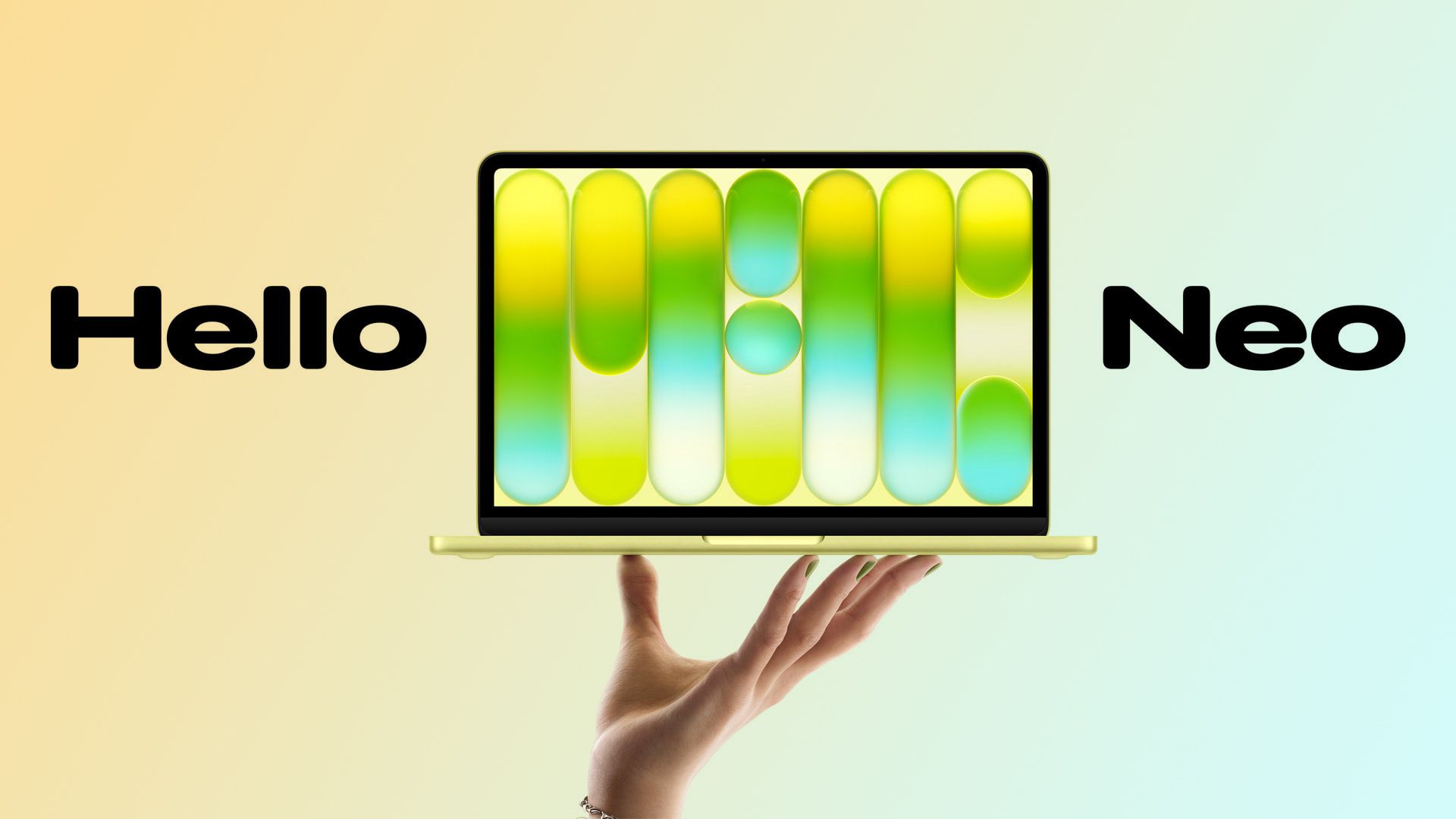
TL;DR
Apple's new MacBook Neo has reportedly sold over 2 million units in its first month, creating a "massive dilemma" for the company. The device's runaway success is cannibalizing sales of the flagship MacBook Pro at an unprecedented rate, forcing Apple into a critical strategic decision about its high-end laptop lineup.
What Happened
Apple’s latest innovation, the MacBook Neo, has become a commercial phenomenon so quickly that it is now disrupting the company’s own product hierarchy. According to a report from Taiwan-based tech columnist and former supply chain analyst Ming-Chi Kuo, Apple is facing a "massive dilemma" as the Neo’s explosive demand threatens to undermine its established and highly profitable MacBook Pro business.
Key Facts
- The MacBook Neo, launched in March 2026, is Apple’s first laptop to feature a neural processing unit (NPU)-centric architecture, designed for next-generation AI applications.
- Analyst Ming-Chi Kuo reported that Apple has sold an estimated 2.1 million units of the MacBook Neo in its first month of availability, far exceeding internal projections.
- The primary issue is cannibalization: Kuo’s supply chain sources indicate that over 60% of MacBook Neo buyers are existing MacBook Pro users choosing to upgrade to the new AI-focused platform.
- The Neo’s starting price of $2,499 sits dangerously close to the $2,399 starting price of the 14-inch MacBook Pro with M4 Pro chip, creating direct competition within Apple’s own portfolio.
- Apple’s dilemma is compounded by the supply chain: key components for the Neo’s advanced NPU, sourced from TSMC, are facing yield challenges, limiting Apple’s ability to ramp up production quickly to meet demand.
- The report, published on Tuesday, April 7, 2026, suggests Apple’s executive team, including CEO Tim Cook and hardware chief John Ternus, are in urgent strategy sessions.
- This internal competition comes at a critical time, as Apple prepares for its Worldwide Developers Conference (WWDC) in June, where software integration for the Neo’s hardware will be a major focus.
Breaking It Down
The MacBook Neo’s success is not merely a product win; it is a strategic earthquake within Apple’s carefully segmented laptop market. For years, the MacBook Pro has been the uncontested pinnacle of Apple’s portable computing, commanding premium prices and driving significant margins. The Neo, with its specialized AI hardware, was likely conceived as a forward-looking, niche product for developers and early adopters. Its positioning as a "prosumer" device, however, has been overwhelmed by mainstream "pro" demand, revealing a massive and perhaps underestimated appetite for dedicated AI computing power among creative professionals and power users.
Over 60% of MacBook Neo buyers are switching from a MacBook Pro. This single statistic is the core of Apple’s dilemma. It demonstrates that the Neo is not expanding the market but actively rearranging it from within. The MacBook Pro’s value proposition—sheer CPU/GPU performance—is being challenged by the Neo’s promise of revolutionary AI-assisted workflows. Users are voting with their wallets for a future where neural processing is as critical as traditional compute, and they are willing to abandon the traditional flagship to get it.
This creates an acute financial and branding problem for Apple. The MacBook Pro lineup, particularly the higher-end configurations with M4 Max and Ultra chips, represents some of the most profitable hardware Apple sells. A rapid shift in sales to the Neo could depress revenue and margins if the Neo’s bill of materials, especially its cutting-edge NPU, is more expensive to produce. Furthermore, it forces a premature reevaluation of the MacBook Pro’s roadmap. Does Apple accelerate the integration of equally powerful NPUs into the next Pro models, effectively merging the lineups, or does it deliberately limit the Neo’s capabilities to maintain differentiation?
The supply constraints reported by Ming-Chi Kuo add a layer of operational crisis. Apple cannot simply flood the market with Neos to satisfy demand, giving it little room to maneuver. This shortage may inadvertently slow the cannibalization, but it also risks frustrating customers and ceding momentum to competitors like Microsoft and its Copilot+ PC partners, who are aggressively marketing their own NPU-powered laptops. Apple’s control over both its hardware and software, through macOS, is a key advantage, but only if it can get the hardware into users' hands.
What Comes Next
Apple’s response to this self-inflicted disruption will define its laptop strategy for the rest of the decade. The company’s immediate and medium-term moves will be closely watched by the industry.
-
WWDC 2026 Software Clarification (June 8-12, 2026): The most immediate signal will come at Apple’s Worldwide Developers Conference. How macOS 15 is presented will be critical. Will Apple unveil "Neo-exclusive" AI features that are permanently gated to the new hardware, solidifying its separate product category? Or will it demonstrate features that scale across the M4 series, suggesting a more unified future? The developer tools and APIs showcased will indicate whether Apple is betting on a bifurcated or convergent Pro lineup.
-
Supply Chain Resolution (Q3 2026): Apple’s ability to resolve the TSMC NPU yield issues and scale Neo production will dictate its strategic options. If it can significantly boost output by late summer, it may choose to fully embrace the Neo as the new de facto high-end laptop, potentially announcing a phase-out of certain MacBook Pro configurations. Continued constraints would force Apple to maintain a dual-track approach for longer.
-
Fall 2026 Product Announcements: The traditional fall event will be the decisive moment. Analysts will scrutinize any refresh to the MacBook Pro. A mere spec bump (M5 Pro/Max) would suggest Apple is trying to reinvigorate the traditional Pro line. A more radical redesign that incorporates Neo-level NPU technology across the board would signal an absorption of the Neo’s innovation into the mainline Pro brand, possibly retiring the "Neo" name after just one generation.
-
Pricing Strategy Adjustments: Before the next launch, Apple may make subtle but telling adjustments. We could see promotional trade-in bonuses for MacBook Pro models to clear inventory, or a repositioning of the Neo’s starting price if a new configuration is introduced. Any change to the $2,499 entry point will be a direct reflection of how Apple wants the market to perceive the device relative to the Pro.
The Bigger Picture
The MacBook Neo dilemma is a microcosm of the AI-Hardware Integration wave sweeping the entire PC industry. Apple is not alone in betting that dedicated neural processors will become the third pillar of computing, alongside the CPU and GPU. However, its vertical integration means its successes and failures are more concentrated and visible. The Neo’s demand proves there is a ready market for this integration, but it also shows that introducing a new paradigm can destabilize even a market leader’s own established categories.
Furthermore, this situation highlights the Cannibalization Conundrum that innovative companies perpetually face. Apple has historically been willing to cannibalize its products—the iPhone effectively ate the iPod—but usually in a sequential, replacement manner. The Neo scenario is unusual because it represents simultaneous, overlapping cannibalization within the same product category. It tests the principle of "eating your own lunch before someone else does" in real-time, under the glare of quarterly earnings reports and with a supply chain that cannot instantly adapt.
Key Takeaways
- Unanticipated Demand: The MacBook Neo’s 2.1 million unit first-month sales have shattered expectations, proving intense market desire for specialized AI hardware.
- Internal Competition Crisis: The device’s success is primarily coming at the expense of the MacBook Pro, with over 60% of sales cannibalizing Apple’s own flagship laptop line.
- Strategic Inflection Point: Apple must now decide whether to merge its Pro and Neo lines or entrench the Neo as a separate, permanent category, a decision that will reshape its high-end laptop roadmap.
- Supply-Limited Dilemma: TSMC production challenges prevent Apple from simply manufacturing its way out of the problem, forcing a strategic rather than a logistical solution.