Introduction
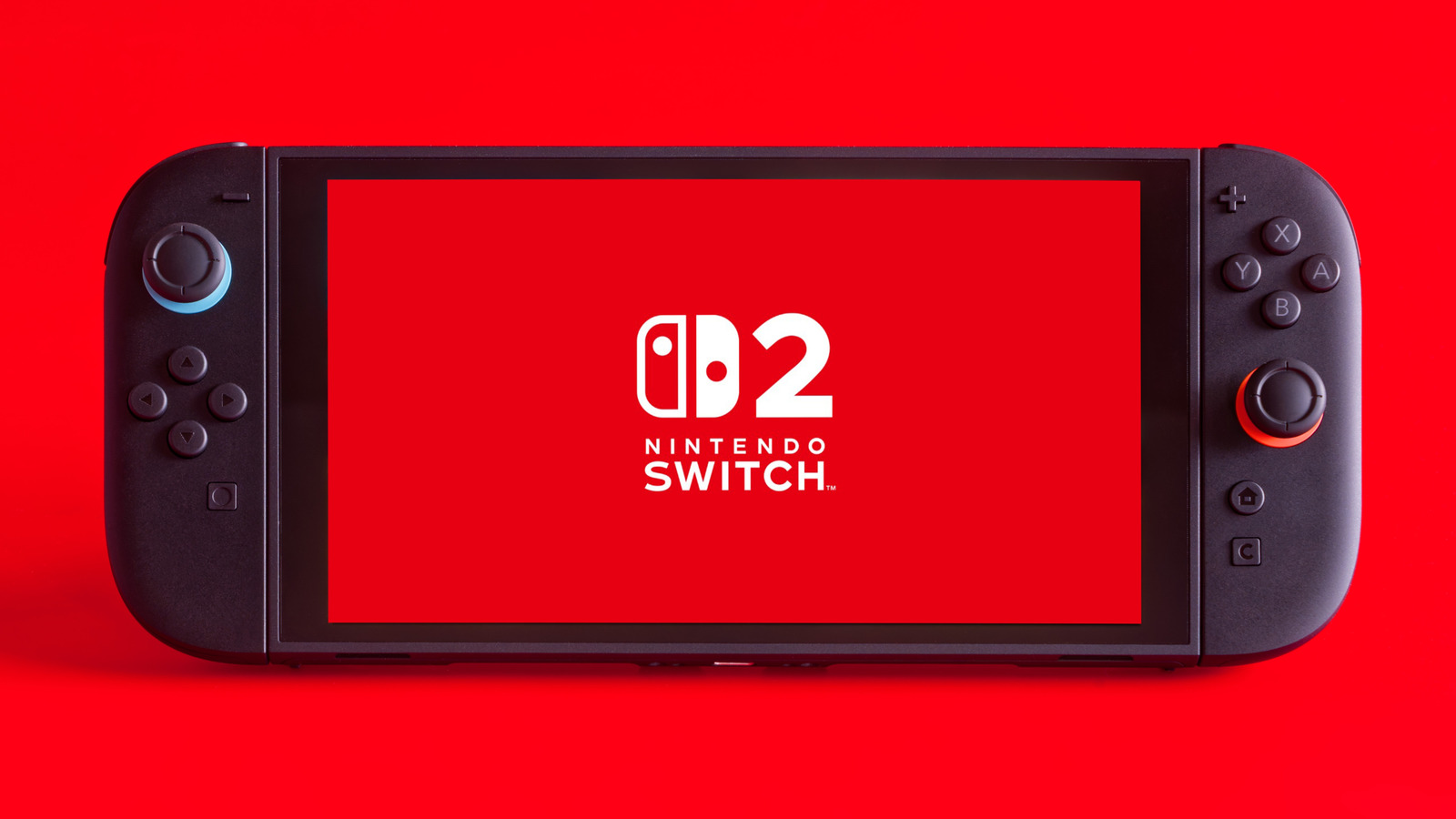
A newly popular $20 portable power bank from Amazon is emerging as a critical accessory for owners of the Nintendo Switch 2, effectively doubling the hybrid console's battery life for on-the-go gaming. This development highlights a persistent gap in mobile gaming hardware endurance and underscores a vibrant third-party accessory ecosystem ready to fill it. For consumers and the industry, it raises immediate questions about value, convenience, and the evolving expectations for portable device performance.
Key Facts
- The core product is a $20 portable power bank sold on Amazon, specifically designed or validated for use with the Nintendo Switch 2.
- The device doubles the battery life of the Nintendo Switch 2, a significant extension given the console's estimated 4-6 hour baseline for intensive gaming.
- The story originates from a report by BGR (Boy Genius Report) on Friday, April 3, 2026.
- The accessory addresses a perceived consumer shortcoming: the Nintendo Switch 2's battery life "not being what you'd prefer when gaming on the go."
- The product's popularity is driven by its low cost ($20) compared to the price of the console itself, which analysts project to retail between $399 and $449.
- This is a third-party accessory, not an official Nintendo-licensed product, operating within the competitive Amazon marketplace.
Analysis
The viral success of this $20 power bank is a direct commentary on the engineering trade-offs Nintendo made with the Switch 2. Launched in late 2024, the Switch 2 featured a more powerful custom NVIDIA Tegra processor and a higher-fidelity 8-inch LCD screen, improvements that inevitably placed greater demands on its battery. Nintendo likely prioritized a slim form factor, heat management, and a consumer-friendly price point over integrating a larger, heavier, and more expensive battery. This created a market opening that companies like Anker, INIU, and Baseus—all major players in the portable power sector—are exploiting. The accessory's success demonstrates that for a significant segment of users, "all-day" portable gaming, a benchmark set by devices like the Steam Deck OLED (which can achieve 6-12 hours), is a non-negotiable feature.
This trend has broader implications for the hardware business model. Console manufacturers like Nintendo, Sony, and Microsoft have historically relied on first-party accessory sales for high-margin revenue streams. A $20 generic power bank siphoning potential sales from a hypothetical $60-80 official Nintendo-branded battery pack represents a tangible loss. It reflects a shift in consumer behavior where platform loyalty is secondary to practical, cost-effective solutions. The phenomenon is analogous to the smartphone case and charger market, where brands like Apple have struggled to maintain dominance against a flood of cheaper, effective third-party alternatives. For Nintendo, whose financials for FY2025 showed over $1.2 billion in revenue from mobile and accessory sales, the erosion of this segment by unbranded competitors is a quiet but persistent threat.
Furthermore, the accessory's popularity underscores a societal expectation shift towards modularity and user-driven device augmentation. Consumers are increasingly comfortable with the idea that a core device may not be perfect out of the box and that its functionality can—and should—be extended through affordable add-ons. This mindset benefits the Amazon marketplace ecosystem immensely, where rapid iteration based on customer reviews allows a product like this power bank to gain traction quickly. It also places pressure on primary device manufacturers to either design more comprehensively or to formally collaborate with accessory makers earlier in the development cycle, as seen with Samsung's partnerships with case manufacturers for its Galaxy Z Fold series.
What's Next
The immediate next step is to monitor Nintendo's official response. The company has a history of being protective of its hardware ecosystem. With the launch of the "Switch 2 Pro" or a mid-cycle refresh rumored for late 2026 or early 2027, Nintendo’s engineers will be closely watched to see if they address battery life directly through a larger cell or more efficient architecture. A significant improvement in the base model's endurance would instantly deflate the value proposition of these third-party power banks. Conversely, if the refresh focuses on other features like an OLED screen, it will signal Nintendo's acceptance of this accessory-driven solution model.
Key dates to watch include Amazon's Prime Day event in July 2026 and the 2026 holiday shopping season. These periods will serve as a major stress test and visibility platform for this product category. If sales surge, it will attract more competitors, potentially driving prices even lower and increasing feature sets, such as integrating faster USB-C Power Delivery standards or built-in cables. It will also be crucial to see if major peripheral brands like PowerA or HORI, which hold official Nintendo licenses, enter the fray with their own competing battery solutions, creating a tiered market of licensed premium versus generic budget options.
Related Trends
This story is intrinsically linked to the rapid evolution and consumer adoption of gallium nitride (GaN) charger technology. GaN allows for smaller, more efficient, and cooler-running power adapters and banks. The $20 Amazon power bank likely utilizes this technology to offer a compact form factor with high output, making it a practical carry-along item. This tech trend, championed by companies like Anker and Navitas Semiconductor, has democratized high-wattage portable power, enabling solutions that would have been bulkier and more expensive just five years ago.
Secondly, it connects to the broader "play anywhere" ambition of the gaming industry. Microsoft’s Xbox Cloud Gaming, Sony’s Remote Play, and NVIDIA GeForce NOW all push gaming beyond dedicated hardware, but they are reliant on strong internet connections. For offline, local play, hardware endurance remains king. The demand for extended battery life for the Switch 2 runs parallel to the development of more power-efficient mobile processors from AMD (in handheld PCs) and Apple (in its M-series chips for iPads). The market is clearly signaling that performance cannot come at the extreme expense of mobility, a lesson the entire portable computing sector is learning.
Conclusion
The success of a $20 Amazon power bank for the Nintendo Switch 2 is more than a simple product recommendation; it is a market correction. It reveals a calculated gap in a flagship product's design that consumers are willing to fill on their own terms, emphasizing cost-effectiveness and practicality over brand allegiance. This dynamic will continue to shape how companies design hardware and how third-party ecosystems compete to complete the user experience.