Introduction
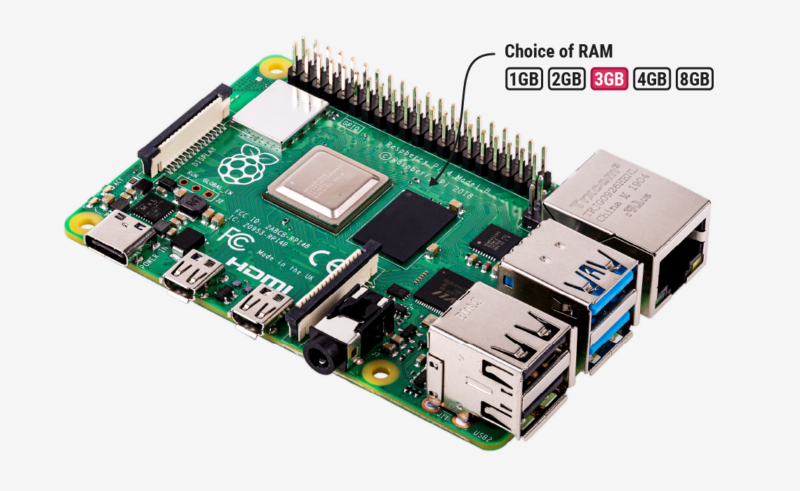
Raspberry Pi Trading has announced a new 3 GB RAM variant of its flagship Raspberry Pi 4 single-board computer, a move initially met with skepticism due to its April 1st timing. The launch coincides with another round of price increases across the existing product stack, signaling a continued strategic shift for the foundational computing platform amid persistent supply chain and economic pressures.
Key Facts
- Raspberry Pi Trading announced a new Raspberry Pi 4 model with 3 GB of LPDDR4 RAM on Tuesday, April 1, 2026.
- The company simultaneously instituted price increases for its other Raspberry Pi 4 models, including the 1 GB, 2 GB, 4 GB, and 8 GB variants.
- The announcement was made directly by Raspberry Pi Trading, the commercial arm of the Raspberry Pi Foundation.
- The new 3 GB model is positioned as a permanent addition to the product lineup, not a limited-run variant.
- This marks at least the third wave of price adjustments for the Raspberry Pi 4 platform since its launch in June 2019, with the last significant increase occurring in 2023.
- The Raspberry Pi 4 platform, despite its age, remains the highest-volume product in the company's portfolio, underpinning its commercial ecosystem.
Analysis
The introduction of a 3 GB Raspberry Pi 4, seven years after the platform's debut, is a calculated maneuver that serves multiple strategic purposes for Raspberry Pi Trading. Primarily, it acts as a pressure valve for the company's complex pricing and supply matrix. By inserting a new SKU between the 2 GB and 4 GB models, Raspberry Pi can more finely segment the market and steer cost-sensitive buyers—particularly in education and industrial prototyping—toward a specific tier. This allows the company to continue raising prices on the higher-margin 4 GB and 8 GB models, which are critical for more demanding applications in edge computing and digital signage, without completely alienating its entry-level user base. The move is reminiscent of chipmakers like Intel and AMD creating nuanced product stacks to cover every possible price point and maximize wafer revenue.
This announcement cannot be divorced from the broader economic context that has defined the single-board computer (SBC) market since the global chip shortage of 2020-2022. While competitors like Pine64 (with its Rockchip-based Quartz64 and RK3588 models) and Radxa have worked to fill supply gaps, Raspberry Pi has maintained an explicit policy of prioritizing its industrial and commercial customers over hobbyist retail availability. The repeated price increases formalize a new economic reality: the era of the sub-$35 Raspberry Pi is effectively over. CEO Eben Upton has consistently framed these adjustments as necessary for the company's long-term sustainability and its ability to invest in next-generation silicon, such as the in-house-developed RP1 southbridge and the anticipated RP2. This pivot positions Raspberry Pi less as a disruptive charity project and more as a stable, reliable embedded hardware supplier competing directly with the likes of NXP and Texas Instruments in the industrial module space.
The implications for the maker and educational communities are profound. Each price increase erodes the platform's foundational promise of ultra-accessible computing. Organizations like the Code Club network and school districts with bulk procurement plans now face significantly higher capital costs for their STEM programs. This creates an opening for alternative platforms. Arduino is advancing its more powerful Portenta line, while BeagleBoard's BeagleV-Ahead continues to push open-source RISC-V architecture. However, none yet match Raspberry Pi's singular combination of software support, community size, and brand recognition. The risk for Raspberry Pi is the gradual fragmentation of its once-unified community, with purists sticking with older, cheaper models and professionals migrating to the newer, costlier offerings, leaving the educational core in a budgetary lurch.
What's Next
The immediate focus will be on the pricing and availability details of the new 3 GB model, which are expected within the coming weeks. Industry analysts will be scrutinizing its price point relative to the adjusted 2 GB and 4 GB models; a strategic placement could make it the new default recommendation for a vast swath of projects. More importantly, the market will watch Raspberry Pi's official retail partners, such as Adafruit, Pimoroni, and Digi-Key, to see how quickly this new SKU enters the supply chain and whether it is subject to the same allocation queues that have plagued other models.
The longer-term horizon is dominated by the anticipated launch of the Raspberry Pi 5. CEO Eben Upton has hinted at a potential release before the end of 2026. This latest pricing action on the Pi 4 lineup is likely a final repositioning to establish clear tiers before the next-generation platform arrives. Key decisions to watch include the Pi 5's starting price, its baseline RAM configuration, and whether it will use a custom Raspberry Pi-designed application processor or a licensed core from Broadcom or another partner. The company's ability to avoid the severe supply constraints of the Pi 4 launch will be the ultimate test of its revised business and manufacturing strategy.
Related Trends
This development is a direct reflection of the "de-commoditization" of hobbyist electronics. The post-pandemic era has seen the end of universal, rock-bottom pricing for generic components. Microcontrollers, sensors, and now full SBCs are subject to the same supply chain, inflationary, and geopolitical forces as automotive or consumer electronics. Companies are no longer competing solely on specs-per-dollar but on reliability of supply, long-term software maintenance, and professional toolchains. Raspberry Pi's price increases are an admission that its product carries a premium value beyond its BOM cost, rooted in its stable Linux distribution and guaranteed multi-year support lifecycle.
Furthermore, the specific choice of a 3 GB RAM configuration taps into the trend of optimized edge AI and machine learning inference. While the 8 GB Pi 4 is often used for heavier workloads, frameworks like TensorFlow Lite and OpenCV are increasingly efficient. For many lightweight vision-based tasks—object detection, sensor fusion, basic analytics—4 GB of RAM can be overkill, while 2 GB is restrictive. The 3 GB model presents a "Goldilocks" configuration for deploying compact, containerized ML models at the edge, a growing niche where Raspberry Pi competes with dedicated hardware from NVIDIA (Jetson Nano) and Google (Coral Dev Board). This SKU refinement shows Raspberry Pi strategically carving out segments within the booming edge computing market.
Conclusion
The Raspberry Pi 4 3 GB model is far from a joke; it is a stark economic indicator and a strategic chess move. It underscores Raspberry Pi Trading's evolution from a charitable educational project into a hardened commercial entity navigating a complex global market, while simultaneously attempting to hold onto the community that built its empire.