Introduction
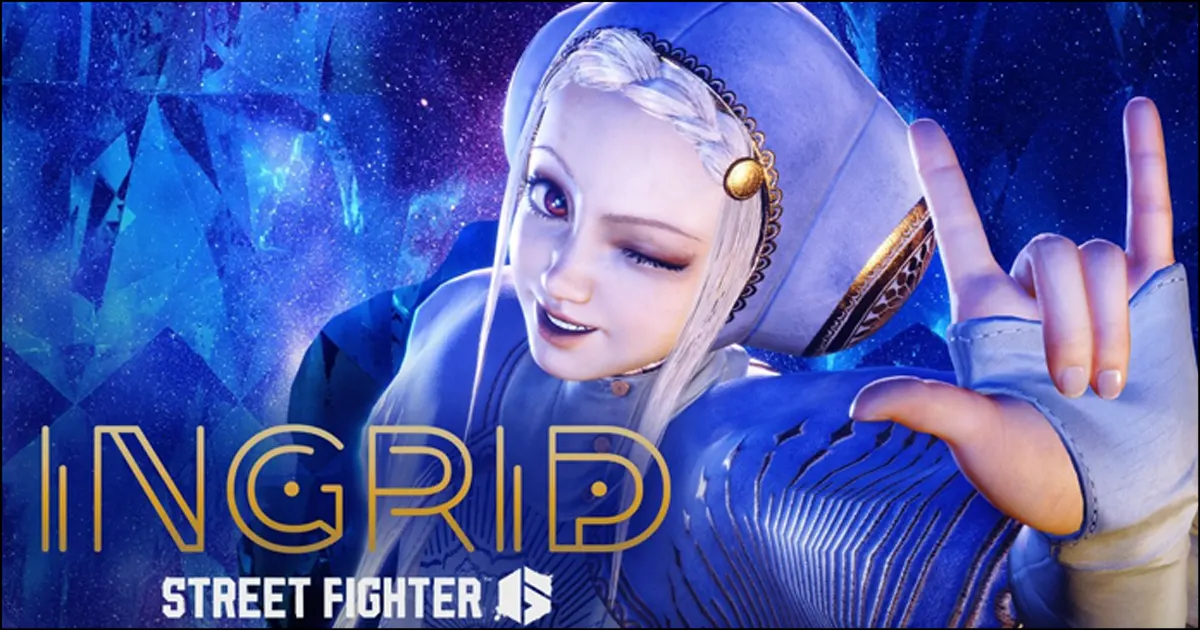
Capcom has released the official teaser trailer for Ingrid, the next DLC character arriving in Street Fighter 6, signaling an aggressive post-launch content strategy. This rapid-fire reveal, coming just weeks after the addition of Alex, underscores Capcom's commitment to maintaining the game's dominant position in the competitive fighting game landscape and capitalizing on its record-breaking commercial success.
Key Facts
- The official teaser trailer for Ingrid was released on Thursday, April 2, 2026.
- The character is the next DLC fighter for Street Fighter 6, following the recent release of Alex.
- Alex was released alongside a major balance update for the game just a few weeks prior to this new reveal.
- The development and publishing entity is Capcom.
- The source of the report is the gaming news outlet EventHubs.
Analysis
The swift unveiling of Ingrid is a calculated move by Capcom to sustain unprecedented momentum. Street Fighter 6 launched in June 2023 to critical and commercial acclaim, selling over 3 million units in its first week and surpassing 10 million units by April 2025. This pace has made it the fastest-selling title in the franchise's 37-year history. The game’s successful live-service model, built around its Fighting Pass, cosmetic shop, and annual character passes, has generated significant recurring revenue. By shortening the window between DLC character announcements and releases, Capcom is directly countering the content cadence of rivals like Bandai Namco's Tekken 8 and Warner Bros.' MultiVersus, ensuring Street Fighter 6 remains the central topic of conversation in the fighting game community (FGC) year-round.
This strategy also reflects a deeper evolution in how fighting games are maintained as platforms. The era of waiting years for a "Super" or "Ultra" edition is over. Capcom, alongside competitors like Arc System Works with Guilty Gear Strive, has fully embraced a games-as-a-service (GaaS) framework where continuous balance updates, new characters, and seasonal events are essential. The "big balance update" that accompanied Alex is as crucial as the character itself, demonstrating Capcom's active stewardship of the competitive meta. This constant evolution keeps the professional scene, from Capcom Cup to EVO, fresh and viewable, which in turn drives engagement from the broader player base.
Financially, the character pass model is a proven winner for Capcom. The Year 1 Character Pass, featuring Rashid, A.K.I., Ed, and Akuma, was a major driver of post-launch income. Leaks and data mines, such as those from reputable sources like Street Fighter insider "Dusk Golem," had long suggested Ingrid was in development, indicating Capcom plans its DLC roadmap years in advance. Introducing a deep-cut character like Ingrid—who originated in the Capcom Fighting All-Stars project and later appeared in Street Fighter Alpha 3 MAX—is a deliberate tactic to appeal to long-time fans while redesigning her with Street Fighter 6’s modern mechanics. This approach expands the game's appeal and monetizes player nostalgia, a strategy similarly employed by NetherRealm Studios with its "guest characters" in Mortal Kombat.
Furthermore, Ingrid’s arrival continues Capcom’s careful curation of its legacy within a modern context. By pulling a character from its obscure past, Capcom is not just adding a fighter; it is reinforcing the Street Fighter universe as a vast, interconnected lore, increasing the value of its intellectual property. Every DLC character release is accompanied by new story elements in World Tour mode, new cosmetics, and new music, enriching the ecosystem. This transforms Street Fighter 6 from a mere game into a persistent, evolving hub for the FGC, a strategy that supports its premium price point and microtransactions in a market increasingly crowded with free-to-play alternatives.
What's Next
The immediate next step is the full gameplay reveal trailer for Ingrid, which will detail her moveset, her modernized design within the RE Engine, and her place in Street Fighter 6’s World Tour and Battle Hub modes. Capcom typically follows a teaser with a full showcase within a few weeks. Players and analysts will dissect her gameplay to see how her unique "celestial" powers, which historically involved projectiles and mobility, are adapted into the Drive System. Key questions include whether she will utilize a new Drive mechanic or variant, and how she will match up against the current top-tier characters established by the recent balance patch.
Following the reveal, the community should expect an official release date. Based on Capcom's previous DLC schedule for Year 1 and the early Year 2 release of Alex, the gap between full reveal and launch is often 4-6 weeks. A release in late May or early June 2026 is a strong possibility. This release will almost certainly be accompanied by another, smaller balance patch to fine-tune interactions introduced by the new character. Furthermore, Ingrid’s release will activate the next phase of the Year 2 Character Pass, confirming the remaining fighters in the pass. Data mines have suggested other candidates, and Capcom will need to maintain this reveal rhythm to keep pass sales strong.
The long-term horizon involves the 2026 competitive circuit. Ingrid’s impact on the meta will be scrutinized in premier tournaments like the ongoing Capcom Pro Tour. Her viability at the highest level of play will influence competitor character choices and viewership interest. Additionally, Capcom will be gauging player reception to Ingrid to inform future character choices, potentially for a Year 3 pass. The company’s financial reports, such as the next quarterly earnings release, will also provide concrete data on how this sustained DLC strategy is contributing to Capcom’s bottom line in its flagship fighting game division.
Related Trends
This rapid content pipeline is a hallmark of the live-service game model, which has become the dominant paradigm for competitive multiplayer titles. Across the industry, from Epic’s Fortnite to Riot’s Valorant, a constant stream of new content is non-negotiable for player retention. Capcom’s approach with Street Fighter 6 is a genre-specific execution of this trend, where "content" is defined not by new maps or weapons, but by finely tuned characters and balance states. This model demands significant ongoing investment in development teams but creates a more stable, long-term revenue stream than relying solely on sequel releases.
Secondly, the revival of Ingrid connects to the broader trend of legacy content and IP mining in media. Facing high costs for new IP development, companies are increasingly looking to their back catalogs for valuable, pre-established assets. Disney’s focus on its classic animated libraries for streaming and remakes is a parallel in film. In gaming, Nintendo’s continual re-releases and Square Enix’s Final Fantasy VII remake project are prime examples. Capcom is expertly mining its own fighting game history, revitalizing obscure characters to generate hype at a lower marketing cost than creating an entirely new fighter from scratch, while satisfying a dedicated fanbase hungry for deep-cut references.
Conclusion
The Ingrid teaser is far more than a simple character announcement; it is a signal of Capcom's confident, long-term operational strategy for Street Fighter 6. By accelerating its content cadence and leveraging deep-cut legacy characters, Capcom is ensuring the game remains the vibrant, financially successful centerpiece of the fighting game genre for years to come.