TL;DR
A single line of erroneous code in Valve's Team Fortress 2 has prevented players from using the game's built-in voice chat for eight years. This story matters because it demonstrates how a tiny, persistent bug in a massively popular software ecosystem can be diagnosed and fixed by the user community, challenging the traditional developer-support dynamic.
What Happened
For nearly a decade, millions of players in Valve's enduring multiplayer shooter Team Fortress 2 have been plagued by a seemingly random and infuriating bug: their in-game voice chat would inexplicably stop working, forcing them to restart the entire game. The community had long accepted this as an unfixable quirk of the aging title, but a user known as [Joey Cheerio] has now traced the entire problem to a single, incorrect line of code added in a 2018 update. This discovery, detailed in a technical deep-dive, reveals a stunningly simple root cause for a problem that has persisted across thousands of game updates and affected countless player interactions.
Key Facts
- The Bug's Origin: The fault was introduced in the July 12, 2018 Jungle Inferno update for Team Fortress 2 (patch version
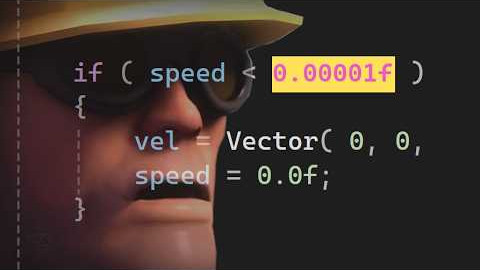
~335). A single line intended to mute voice chat in specific conditions contained a logic error. - The Core Error: The buggy code line was
if ( m_bPlayerMuted && m_bPlayerMuted ). This redundant check, which should have compared two different variables, meant the mute state could become permanently stuck if triggered once. - The Impact: Once triggered, the bug completely disabled a player's voice chat until the game client was fully restarted, disrupting team coordination in a game heavily reliant on communication.
- The Discoverer: The bug was diagnosed and a fix proposed by a community member and programmer operating under the alias [Joey Cheerio], who published a comprehensive technical analysis.
- The Scale: Team Fortress 2 remains one of the most-played games on Steam, regularly seeing over 80,000 concurrent players years after its 2007 release, meaning the bug has impacted a vast user base.
- The Duration: The voice chat malfunction persisted for over 2,800 days (approximately 7 years and 9 months) from its introduction until its public diagnosis in April 2026.
- Community Fix: While Valve has not yet issued an official patch, the community can implement the fix via custom client modifications, though this is not a solution for the general player population.
Breaking It Down
The technical breakdown by [Joey Cheerio] is a masterclass in software archaeology. By examining the game's leaked source code from 2023 and comparing it with the live game's behavior, they isolated the exact function responsible for managing voice chat mute states. The error wasn't one of complex system interaction or hardware incompatibility; it was a fundamental logic flaw in a conditional statement—a typographical error of programming.
The bug resided in a function that was called not just when a player manually muted someone, but potentially during map changes or other routine game state transitions, making its activation feel random and untraceable to the average user.
This is the critical insight. The bug's trigger wasn't rare; it was woven into normal gameplay loops. Every time a player joined a new server or a map changed, there was a chance this faulty line of code would execute, flipping a virtual switch that could never be flipped back. The permanence of the mute state—requiring a full game restart—compounded the frustration. It turned a minor utility function into a major point of failure, all because of a single erroneous boolean check.
The longevity of this bug speaks volumes about the software maintenance lifecycle of "live service" games. Team Fortress 2 is a titan of gaming, but its development resources at Valve are famously minimal, often described as being in "maintenance mode." Critical bugs from major updates get attention, but a sporadic, non-crash bug affecting a subset of users at any given time can easily slip through the cracks for years. The game's own complexity acts as a shield for the bug; with millions of lines of legacy code, pinpointing a single faulty one without a clear reproduction path is a monumental task.
Furthermore, this incident highlights the evolving role of the gaming community as a diagnostic engine. Valve's relationship with its community is unique, often leveraging player-made content and mods. In this case, the community has moved beyond creating content to performing core quality assurance. [Joey Cheerio]'s work is not a mod but a fundamental correction to the game's source logic. This represents a shift from users reporting symptoms to users providing the precise diagnosis and cure, a capability amplified by the 2023 source code leak which gave skilled community members the necessary map to navigate the game's internals.
What Comes Next
The revelation of the bug's simple cause creates immediate pressure and clear next steps. The path forward hinges on both official and community action.
- Valve's Official Response: All eyes are on Valve Corporation to see if and when they will integrate the fix into an official game patch. The company has a mixed record on addressing long-standing TF2 community bugs, but the clarity and simplicity of this fix make ignoring it difficult. An update could be rolled out in a routine maintenance patch, potentially within the next few weeks.
- Community Patch Deployment: In the absence of an official fix, the community will likely disseminate the correction through popular client-side modification frameworks like Mastercomfig or Comanglia's Config. These will allow knowledgeable players to apply the fix themselves, but it will not reach the broader, non-technical player base and may create compatibility concerns.
- Increased Scrutiny on Legacy Code: This discovery will likely galvanize other community coders to re-examine other perennial TF2 bugs. The "voice chat bug" was a known, major nuisance; its resolution provides a template for investigating other issues, potentially leading to a wave of community-sourced fixes for other longstanding problems.
- Broader Industry Attention: The story serves as a case study for other developers maintaining long-lived live-service games. It underscores how a single-character error can have outsized, long-term consequences for user experience, reinforcing the need for robust code review and regression testing processes, even for older titles.
The Bigger Picture
This story is a microcosm of two powerful, intersecting trends in modern technology. First, it exemplifies the legacy code crisis in perpetually updated software. As platforms like games, operating systems, and web services age, they accumulate vast technical debt. Developer teams rotate, original context is lost, and the risk of introducing subtle, long-lasting bugs increases. Team Fortress 2 is a 19-year-old codebase still receiving updates; this bug is a direct result of that complex, layered history. It’s a problem facing everything from enterprise banking software to foundational web infrastructure.
Second, it underscores the rise of the expert user collective as a maintenance force. When official support channels are slow or unresponsive, highly skilled user communities often step in. We see this in the modding scenes for games like Skyrim, in jailbreaking communities for mobile devices, and in open-source software support forums. [Joey Cheerio]'s work pushes this concept further, moving from creating ancillary content to performing core bug fixes. This blurs the line between consumer and contributor and challenges traditional software support models, suggesting a future where developer communities can act as distributed, unpaid engineering teams for the products they love.
Key Takeaways
- The Butterfly Effect in Code: A single erroneous line in a 2018 update crippled a basic communication feature in a major video game for eight years, demonstrating how minuscule errors can have massive, enduring impacts in complex software systems.
- Community-Powered Debugging: The fix was not delivered by the developer but by a skilled user, highlighting how passionate communities are becoming essential diagnostic and repair resources for aging, complex software platforms.
- The Cost of "Maintenance Mode": The bug's longevity is a direct consequence of the limited development resources allocated to Team Fortress 2, a common fate for live-service games past their commercial peak, where non-critical bugs can languish indefinitely.
- A Template for Future Fixes: This successful diagnosis, enabled by a source code leak and community expertise, provides a blueprint for investigating other longstanding bugs in TF2 and similar titles, potentially leading to a new wave of user-driven quality-of-life improvements.