TL;DR
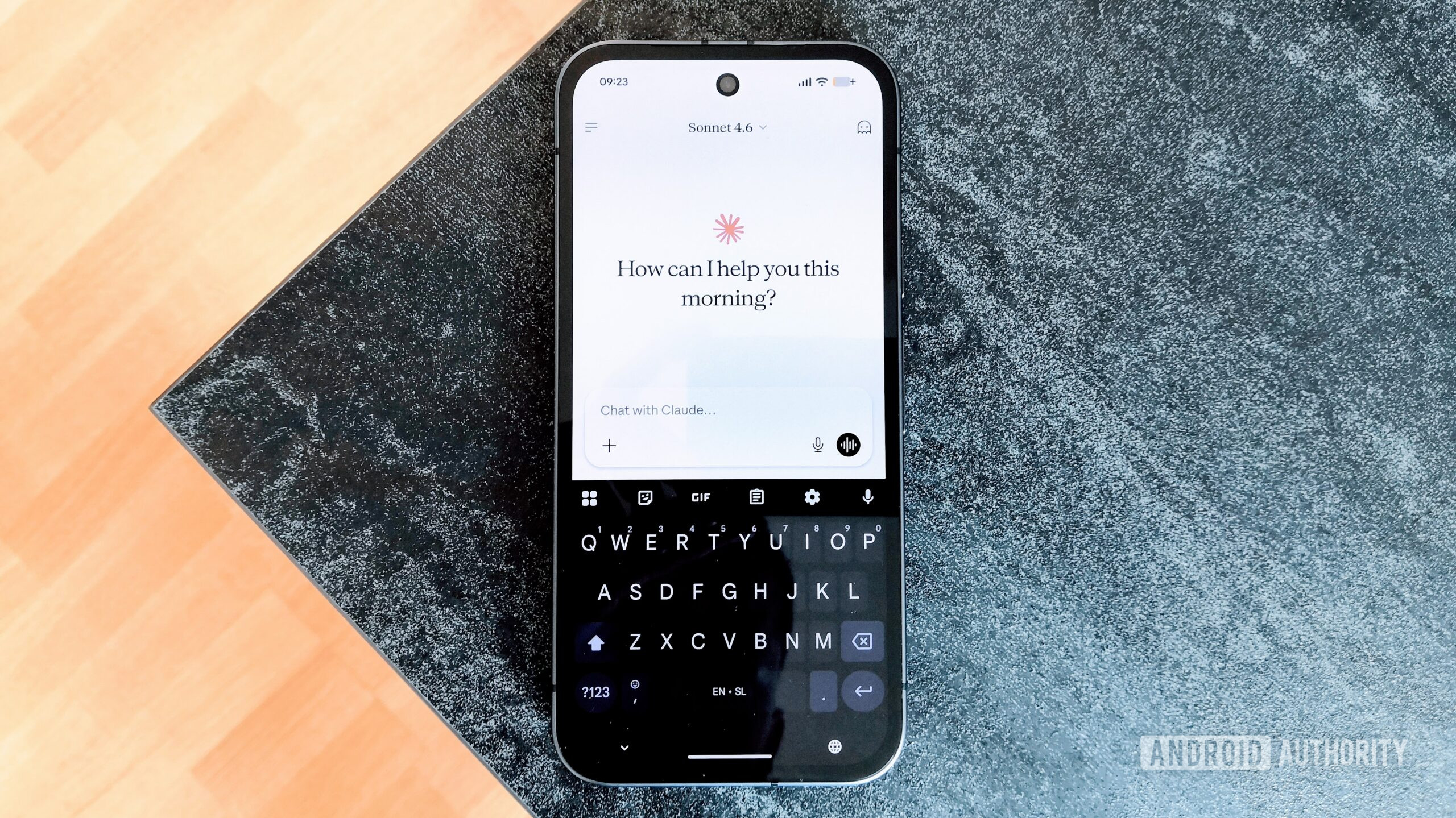
After months of concurrent subscriptions to ChatGPT, Gemini, and Claude, Android Authority's reviewer concludes that Claude is the clear winner for daily productivity and reasoning tasks. This matters because the AI assistant market is fragmenting into specialized tiers, and users paying for multiple services may be wasting money on inferior tools.
What Happened
Android Authority published a head-to-head comparison on May 18, 2026, revealing that after paying for all three major AI subscriptions — ChatGPT Plus, Gemini Advanced, and Claude Pro — the reviewer consistently defaulted to only one service for their core workflow.
Key Facts
- The reviewer maintained concurrent paid subscriptions to ChatGPT Plus, Gemini Advanced, and Claude Pro for an unspecified period before concluding their preference.
- Claude was identified as the "clear winner" for tasks requiring complex reasoning, nuanced writing, and sustained analytical depth.
- ChatGPT was noted for its broad feature set including multimodal capabilities, DALL-E image generation, and plugins, but fell short on response coherence in longer conversations.
- Gemini Advanced (formerly Google Bard) struggled with consistency and sometimes produced hallucinations that undermined trust in its outputs.
- The comparison was conducted in May 2026, a period when all three services had matured significantly from their 2023–2024 launch versions.
- The article did not disclose specific pricing tiers or usage metrics, but implied all three services cost roughly the same monthly fee (approximately $20/month each).
- Android Authority is a major technology publication with over 10 million monthly readers, giving the review significant industry influence.
Breaking It Down
The core finding — that one assistant consistently outperforms the other two in real-world use — challenges the prevailing industry narrative that AI assistants are commoditized tools where any premium subscription will suffice. Android Authority's reviewer did not simply rank features or benchmark scores; they evaluated which service they chose to use when no external constraint forced a decision. That behavioral signal is far more telling than any synthetic test.
"After spending time with all three, I keep coming back to only one of them."
This admission reveals a critical gap between marketing and actual utility. OpenAI has invested heavily in making ChatGPT a one-stop platform with plugins, image generation, and voice mode. Google has positioned Gemini as the deeply integrated ecosystem player, leveraging Gmail, Docs, and Search. Anthropic's Claude, by contrast, offers fewer bells and whistles — no image generation, no web browsing in the same way, and a more restrained interface. Yet the reviewer found that Claude's superior reasoning coherence and hallucination resistance outweighed those feature deficits.
The pattern suggests a segmentation in the AI assistant market that many users overlook. ChatGPT excels at breadth and creative tasks — brainstorming, image generation, quick answers. Gemini wins on integration with Google Workspace and real-time data. Claude dominates on depth — long-form analysis, complex document understanding, and tasks requiring sustained logical consistency. The reviewer's preference for Claude indicates that for knowledge workers and analysts, accuracy and depth trump feature count and ecosystem lock-in.
This finding also raises questions about the $60/month total subscription cost for all three services. If one assistant handles 80% of daily needs, the other two become expensive insurance policies rather than essential tools. The reviewer's implicit recommendation: audit your actual usage patterns before committing to multiple subscriptions.
What Comes Next
- Anthropic's enterprise push: Expect Claude to announce Claude Enterprise with enhanced data controls and API rate limits within Q3 2026, capitalizing on this "accuracy-first" reputation.
- OpenAI's response: OpenAI will likely accelerate GPT-5 development or release a reasoning-focused tier of ChatGPT to close the coherence gap with Claude, potentially by late 2026.
- Google's Gemini overhaul: Google is expected to release a Gemini 3.0 update in Q4 2026 that specifically addresses hallucination rates and long-context performance, based on internal leaks.
- Subscription consolidation: By early 2027, expect at least one major AI provider to offer unified subscription bundles (e.g., ChatGPT + DALL-E + voice at a discount) to prevent users from dropping services.
The Bigger Picture
This story fits into two broader trends reshaping the AI industry. The first is specialization over generalization — as models mature, each provider is finding a distinct niche rather than trying to be everything to everyone. OpenAI owns the creative and multimodal space; Google owns the search-integrated assistant; Anthropic owns the reasoning-and-safety segment. Users who need all three capabilities will pay for multiple subscriptions, but most will gravitate toward one primary tool.
The second trend is the rising cost of AI subscriptions. With ChatGPT Plus at $20/month, Gemini Advanced at $20/month, and Claude Pro at $20/month, a power user faces $720/year for full coverage. That figure is approaching the cost of premium productivity suites like Microsoft 365 ($100/year) or Adobe Creative Cloud ($600/year). As AI assistants become essential workflow tools, the question of value per dollar will drive subscription churn — and the losers will be services that cannot prove they are indispensable.
Key Takeaways
- [Claude's Core Advantage]: Claude wins on reasoning coherence and hallucination resistance, making it the best choice for complex analytical tasks despite fewer features.
- [ChatGPT's Vulnerability]: ChatGPT's broad feature set cannot compensate for inconsistent output quality in long-form, nuanced work — the exact use case where paid subscribers need reliability.
- [Gemini's Trust Problem]: Gemini Advanced's hallucination issues undermine its value even with deep Google ecosystem integration; trust is harder to earn than features are to add.
- [Subscription Strategy]: Paying for all three services is likely wasteful for most users; audit your actual daily tasks and pick the one that handles your primary use case best.