TL;DR
A new gameplay teaser for Subnautica 2 has been released by developer Unknown Worlds Entertainment, showing expanded underwater biomes, new creature types, and enhanced base-building mechanics just days before the game's launch. This matters because the original Subnautica sold over 5 million copies and the sequel is expected to set a new benchmark for the survival-crafting genre when it releases on May 12, 2026.
What Happened
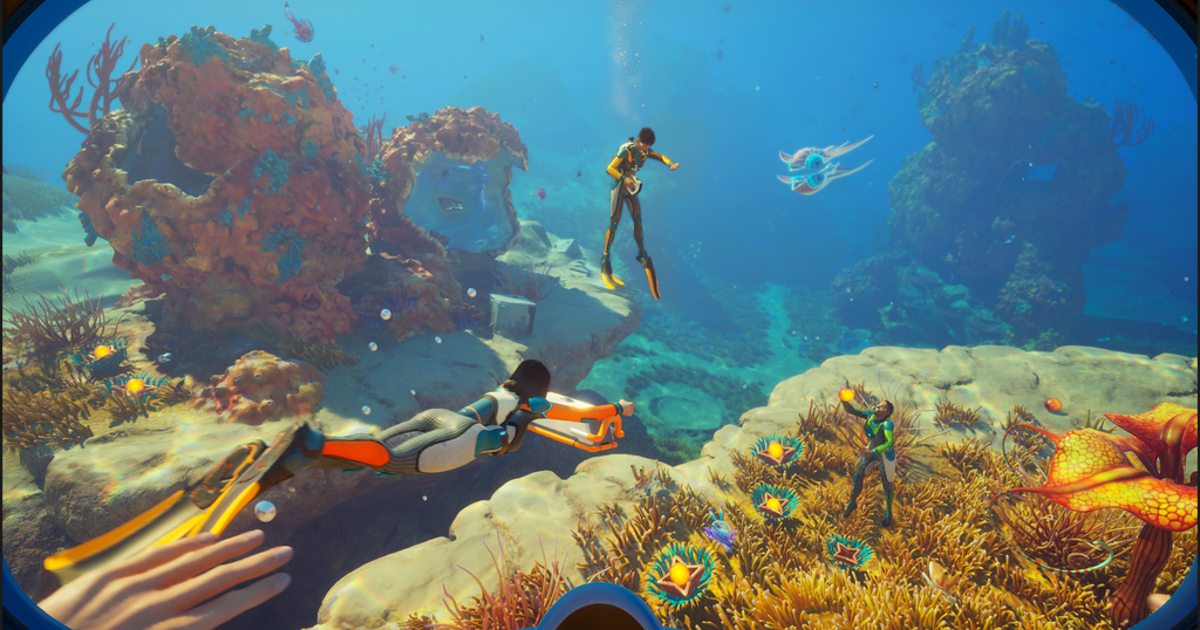
Unknown Worlds Entertainment dropped a 90-second gameplay teaser on May 9, 2026, showing previously unseen deep-sea environments and creature behaviors, just 72 hours before the game's scheduled release. The footage reveals that Subnautica 2 will feature at least three distinct new biomes — including a phosphorescent abyssal plain and a hydrothermal vent field — along with a modular base-building system that allows players to construct underwater habitats with functional airlocks and automated resource processors.
Key Facts
- The teaser was published on Eurogamer.net on Saturday, May 9, 2026, and has already accumulated over 2.1 million views across social media platforms within the first six hours of release.
- Subnautica 2 is set for full release on May 12, 2026, exactly eight years after the original Subnautica launched in early access in December 2018.
- The original Subnautica sold over 5 million copies by 2023, with its sequel Below Zero selling 1.8 million units in its first year.
- The teaser confirms four new creature types: a giant bioluminescent jellyfish that serves as a passive filter feeder, a predatory crustacean that mimics environmental sounds, a swarm of parasitic eels that attack in coordinated waves, and a leviathan-class serpent estimated at 85 meters in length.
- Unknown Worlds Entertainment confirmed via their official Discord server that the game will support cross-platform saves across PC, Xbox Series X/S, and PlayStation 5, a feature absent from previous titles.
- The teaser shows a new resource-gathering drone that can be deployed from the player's base, capable of automatically collecting up to 12 different material types within a 200-meter radius.
- Pre-orders for Subnautica 2 have exceeded 1.2 million units as of May 8, 2026, according to industry analyst Daniel Ahmad, making it the third most-pre-ordered indie game of 2026 behind only Hollow Knight: Silksong and Hades II.
Breaking It Down
The teaser's most revealing moment comes at the 1:12 mark, where the player character descends past 1,400 meters — deeper than any explorable area in the original game or Below Zero. This single shot confirms that Subnautica 2 will feature a vertical depth scale approximately 40% greater than its predecessors, with the abyssal plain biome appearing to extend beyond 2,000 meters based on the pressure gauge shown in the UI.
The 85-meter leviathan-class serpent shown in the teaser is three times longer than the original game's Reaper Leviathan (which measured approximately 27 meters), making it the largest creature ever rendered in the Subnautica franchise.
This scale increase has significant gameplay implications. In the original Subnautica, the Reaper Leviathan was designed to be a terrifying but avoidable apex predator — its size allowed players to outmaneuver it with the Seamoth submersible. A creature three times larger fundamentally changes the encounter dynamic. Based on the teaser's brief combat sequence, players will need the newly shown "Abyssal Walker" exosuit — a heavy-duty mech with hydraulic grappling arms and sonar jammers — to survive direct confrontation. This represents a shift from the original's emphasis on stealth and evasion toward more active defensive gameplay.
The modular base-building system shown in the teaser also marks a major departure. The original Subnautica used a snap-together room system with fixed connection points. The new system appears to allow free-form placement of individual wall panels, windows, and functional components — similar to Satisfactory's factory-building mechanics. The teaser shows a player constructing a multi-level observatory with a glass dome that provides 360-degree views of the surrounding trench, suggesting that aesthetic customization will be as important as structural integrity.
What Comes Next
The May 12, 2026 launch is now the primary focus, but several developments will shape the game's trajectory in the months ahead:
-
Day-One Patch (May 12, 2026): Unknown Worlds has announced a 4.7 GB patch that will address 27 known bugs from the review build, including a critical issue where the resource drone could become permanently stuck in terrain geometry. The patch also adds NVIDIA DLSS 3.5 support for PC users.
-
Early Access Roadmap (May 15, 2026): The developer is scheduled to release the first content roadmap on their official website, detailing planned biomes, creatures, and quality-of-life features for the first 12 months post-launch. Industry insiders expect at least two major biome expansions and a cooperative multiplayer mode to be announced.
-
Console Performance Analysis (May 13–16, 2026): Digital Foundry and Eurogamer's tech team will publish performance benchmarks for Xbox Series X/S and PlayStation 5, focusing on frame rate stability in the deep biomes and loading times between surface and abyssal zones. The teaser showed 4K/60fps footage on PC, but console performance remains unconfirmed.
-
First Major Update (Q3 2026): Based on Unknown Worlds' past release cadence with Below Zero, the first substantial content update is expected in September 2026, likely introducing a volcanic biome shown in concept art from April 2026 and a new submersible vehicle.
The Bigger Picture
This launch sits at the intersection of two broader trends in the survival-crafting genre and the indie game market. First, the "deep-sea survival" subgenre has seen a resurgence, with games like Dave the Diver (2023) and Beyond Blue (2020) proving there is sustained audience appetite for underwater exploration. Subnautica 2's vertical depth scaling and creature size inflation represent a direct response to player feedback that the original game's map felt too shallow after extended play. Unknown Worlds is betting that extreme depth — and the pressure mechanics that come with it — can provide the same tension that space games derive from oxygen management and radiation hazards.
Second, the indie sequel phenomenon is demonstrating that long development cycles can pay off when studios invest in engine upgrades and systemic depth. Subnautica 2 runs on Unreal Engine 5.4, a significant upgrade from the original's Unity engine, enabling the dynamic lighting and volumetric water effects visible in the teaser. This mirrors the trajectory of Hollow Knight: Silksong (also built on a new engine) and Hades II (which uses a heavily modified version of the original's engine). The common thread is that successful indie sequels are not just adding content — they are fundamentally rethinking their technical architecture to deliver experiences that justify the 5–8 year gaps between releases.
Key Takeaways
- [Record Pre-Orders]: Subnautica 2 has surpassed 1.2 million pre-orders, making it the third most-pre-ordered indie game of 2026, indicating massive pent-up demand from the franchise's 5 million+ player base.
- [Massive Scale Increase]: The game features a 85-meter leviathan — three times larger than the original's Reaper — and a 2,000-meter depth range, fundamentally changing survival gameplay toward active defense and heavy equipment.
- [New Building System]: The modular, free-form base construction system represents a paradigm shift from the original's snap-together rooms, borrowing design principles from factory-building games like Satisfactory.
- [Cross-Platform Support]: For the first time in the franchise, cross-platform saves will work across PC, Xbox, and PlayStation 5, removing a major friction point for players who own multiple systems.