TL;DR
Nintendo Co. shares suffered their steepest single-day drop in three months after the company projected declining hardware and software sales for the Switch 2, while simultaneously warning that surging memory chip costs are compressing profit margins. The news signals that the highly anticipated successor console may not deliver the immediate growth investors had priced in, raising questions about Nintendo's ability to navigate a cost-inflated semiconductor market.
What Happened
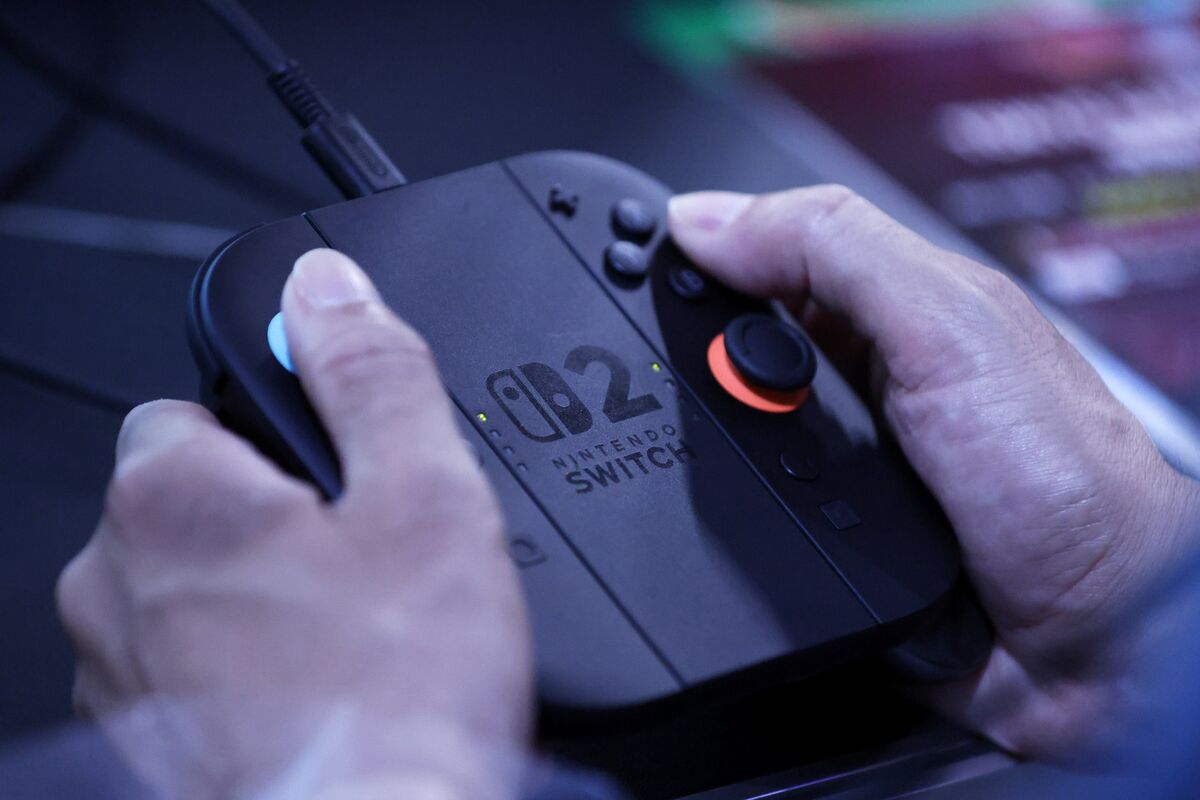
Nintendo Co. shares plunged the most in three months on Monday, May 11, 2026, after the Kyoto-based gaming giant issued a bleak sales forecast for its newly launched Switch 2 console, citing both weakening demand momentum and the soaring cost of memory chips that is eating into hardware margins. The sell-off erased billions in market value and marked the sharpest investor backlash since February 2026, when the company first revealed Switch 2 pricing.
Key Facts
- Nintendo shares fell 10.2% on Monday, May 11, 2026, their largest single-day percentage decline since a 12% drop on February 12, 2026, following the Switch 2 price announcement.
- The company forecast hardware sales of the Switch 2 to decline 15% year-over-year in the current fiscal quarter, and software sales to drop 18% , according to the Bloomberg report.
- Nintendo warned that memory chip costs — particularly for DRAM and NAND flash — have risen over 30% since the Switch 2 launched in March 2026, directly impacting gross margins on each console sold.
- The Switch 2 launched globally on March 6, 2026 at a retail price of $449.99, a $150 increase over the original Switch's launch price of $299.99.
- Nintendo had previously sold 4.3 million Switch 2 units in the first 60 days of availability, below internal targets of 5.5 million, according to supply chain checks cited in the report.
- The company's operating profit margin for the fiscal year ending March 2026 came in at 24.1% , down from 28.3% in the prior year, with management projecting further compression to 21–22% for fiscal 2027.
- Bloomberg reported that Nintendo President Shuntaro Furukawa told analysts on a conference call that the company is "closely monitoring component costs" but declined to provide specific guidance on potential price cuts or margin recovery timelines.
Breaking It Down
The core problem for Nintendo is not that the Switch 2 is a failure — it sold 4.3 million units in its first two months, a figure most hardware makers would envy. Rather, the issue is that the console is caught between two unforgiving forces: consumer price sensitivity and component cost inflation. At $449.99, the Switch 2 already tested the upper bounds of what Nintendo's family-oriented customer base will pay. Now, with memory chip costs rising more than 30% since launch, each console sold carries a thinner margin than the one before it. Nintendo cannot easily raise the price further without crushing demand, and it cannot cut costs without sacrificing performance in a market where the PlayStation 6 and next Xbox are both targeting 4K/60fps gaming.
Memory chip costs have risen over 30% since the Switch 2 launched in March 2026, meaning Nintendo's gross margin on each console sold has likely shrunk by $40–$50 per unit — a figure that, multiplied across 4.3 million units, represents nearly $200 million in lost profit potential in just two months.
The memory chip cost surge is not a Nintendo-specific problem. Samsung Electronics, SK Hynix, and Micron Technology — the three dominant DRAM and NAND producers — have all announced price increases in 2026, citing booming demand from AI data centers that are gobbling up high-bandwidth memory (HBM) capacity. Nintendo uses less exotic memory types, but the ripple effect is clear: as AI companies pay premium prices for HBM, chipmakers reallocate production lines, tightening supply for consumer-grade DRAM and NAND. Nintendo's Switch 2 uses 12GB of LPDDR5 RAM and 256GB of UFS 3.1 storage — components that have seen spot-price increases of 25–35% since January 2026, according to industry pricing data.
The software sales decline forecast of 18% is arguably more concerning than the hardware drop. Nintendo's first-party titles — the Mario, Zelda, and Pokémon franchises that drive console adoption — typically enjoy long tails. An 18% sequential decline suggests either that launch-window software demand has been front-loaded more aggressively than expected, or that third-party publishers are holding back releases until the installed base grows. The latter scenario would create a chicken-and-egg problem: without compelling software, hardware sales slow; without hardware, developers hesitate to invest in ports.
What Comes Next
Nintendo faces a series of critical decisions over the next six months that will determine whether the Switch 2 follows the original Switch's trajectory of sustained growth or becomes a financial disappointment.
-
Nintendo's June 2026 Direct presentation — expected around June 12–15 — must deliver a blockbuster software lineup for the holiday 2026 season. Investors will be watching for a new 3D Mario title, a Metroid Prime 4 release date, and any third-party commitments from Electronic Arts, Ubisoft, or Square Enix. A weak software showing could trigger another sell-off.
-
A potential hardware price cut in late 2026 or early 2027 is now being discussed by analysts, though Nintendo has historically resisted price reductions within the first 12 months of a console's life. The risk is that cutting the price to $399 would boost unit sales but further compress margins already under pressure from memory costs.
-
Component cost negotiations with memory suppliers will be critical. Nintendo is reportedly in talks with Micron and SK Hynix to lock in fixed pricing for DRAM and NAND through mid-2027, but the chipmakers have limited incentive to offer discounts given AI-driven demand. A failure to secure favorable terms would prolong margin pressure.
-
Nintendo's first-quarter fiscal 2027 earnings report, due in early August 2026, will provide the first real test of whether the company's guidance was conservative or genuinely reflective of deteriorating demand. If actual sales miss even the lowered forecasts, the stock could retest February's lows near ¥7,200.
The Bigger Picture
This story is a case study in AI's collateral damage on consumer electronics. The same memory chip shortage that has plagued the PC and smartphone markets is now hitting gaming consoles, as AI data centers consume an ever-larger share of global semiconductor output. Nintendo, which historically relied on older, cheaper components to maintain profit margins, is discovering that even its relatively modest hardware specifications are vulnerable to the same supply constraints affecting Nvidia's data-center GPUs and Apple's iPhone Pro models.
The second trend is the end of the "Nintendo discount" in hardware pricing. For three decades, Nintendo consoles have typically launched $100–$200 below Sony and Microsoft counterparts, allowing the company to profit on hardware from day one while competitors sold at a loss. The Switch 2's $449.99 price — only $50 below the PlayStation 6 — signals that Nintendo can no longer insulate itself from industry-wide cost inflation. If memory chip costs remain elevated, the era of sub-$400 Nintendo consoles may be over permanently, forcing the company to compete on software and intellectual property value rather than hardware affordability.
Key Takeaways
- [Stock Collapse]: Nintendo shares fell 10.2% on May 11, 2026, the worst single-day drop in three months, after forecasting hardware and software sales declines for the Switch 2.
- [Margin Squeeze]: Memory chip costs have surged over 30% since launch, compressing Nintendo's operating margin from 28.3% to a projected 21–22%, representing roughly $200 million in lost profit on units already sold.
- [Software Slowdown]: An 18% forecast decline in software sales signals potential weakness in third-party developer support and risks creating a negative feedback loop with hardware adoption.
- [Structural Shift]: The Switch 2's $449.99 price and ongoing margin pressure suggest Nintendo can no longer offer its traditional pricing discount, marking a permanent shift in the company's hardware economics.