TL;DR
Chase Elliott executed a controlled, full 360-degree spin from 17th place in Turn 2 at Bristol Motor Speedway, triggering a critical late-race caution with under 25 laps remaining on April 12, 2026. This strategic incident, occurring during a green-flag pit cycle, dramatically reset the field and handed a tactical advantage to teams that had not yet pitted, directly altering the race's outcome. The precision of the spin raises immediate questions about the role of advanced vehicle dynamics systems in modern NASCAR strategy.
What Happened
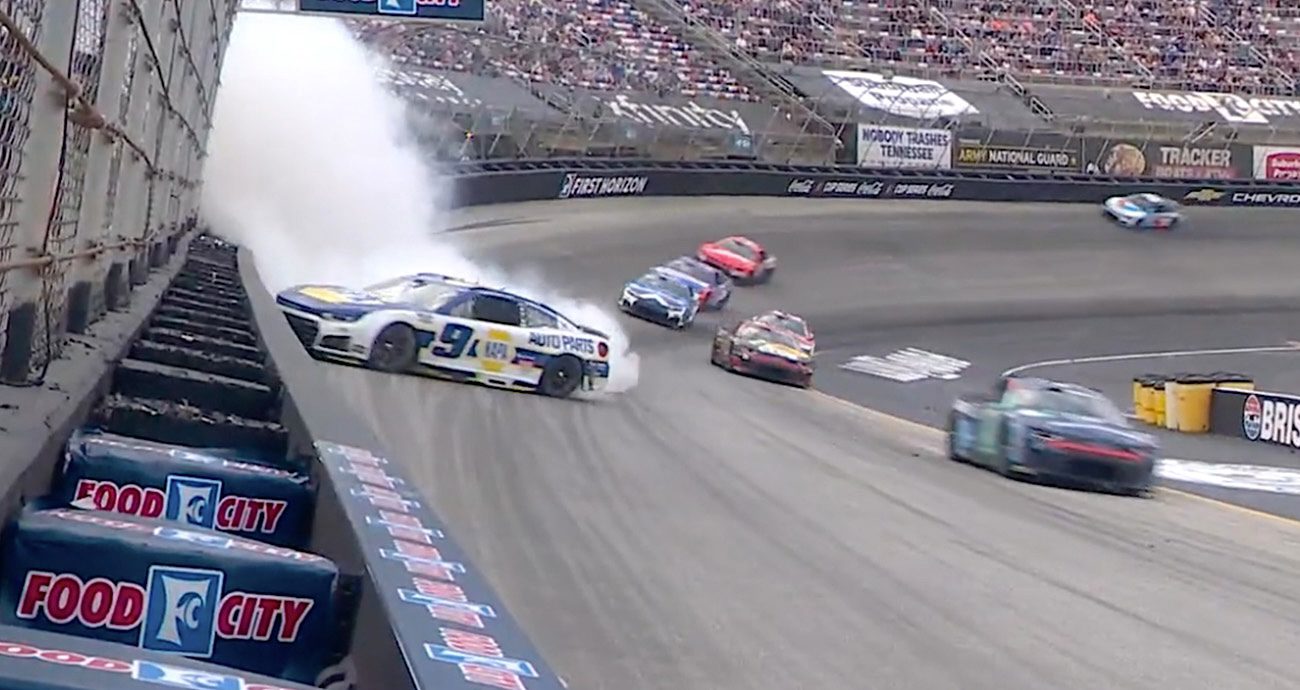
With the laps winding down at the concrete bullring of Bristol Motor Speedway, Chase Elliott’s #9 Hendrick Motorsports Chevrolet snapped around in a perfect, dusty pirouette. The spin from 17th position was not a chaotic crash but a controlled, complete 360-degree rotation that left the car pointed forward and largely undamaged, bringing out the race-altering caution flag just as the field was in the midst of its final green-flag pit stops.
Key Facts
- Driver & Team: The incident involved Chase Elliott, driver of the #9 Chevrolet Camaro for Hendrick Motorsports.
- Race & Track: It occurred during the NASCAR Cup Series race at Bristol Motor Speedway on Sunday, April 12, 2026.
- Race Position: Elliott spun while running in 17th place.
- Location & Nature: The spin happened in Turn 2 and was described as a complete 360-degree rotation.
- Timing: The caution flag flew with under 25 laps remaining in the scheduled race distance.
- Strategic Context: The caution was deployed during a green-flag pit cycle, catching a portion of the field a lap down.
- Outcome: Elliott continued without major damage, but the caution fundamentally reset the race strategy for the entire field.
Breaking It Down
The Bristol incident is a textbook case of a "convenient caution," but its execution elevates it from racing folklore to a subject of technical scrutiny. Elliott’s ability to complete a full spin on Bristol’s high-banked, 26-30 degree corners without sustaining race-ending damage or collecting other cars is extraordinarily difficult. This points directly to the sophisticated vehicle dynamics controls embedded in the Next Gen car, specifically its independent rear suspension and advanced electronic stability management protocols. These systems, while not "traction control" in a traditional sense, manage torque and brake application at individual wheels to help drivers catch slides that would have been unrecoverable in previous generations of stock cars.
A 360-degree spin at Bristol, from entry to exit of Turn 2, typically results in significant rear or side impact with the outside wall, yet Elliott’s #9 car resumed competition with only cosmetic damage.
This is the most analytically significant data point. Historically, a spin at that point on Bristol’s treacherous concrete almost guarantees heavy contact. The fact Elliott avoided it suggests an unprecedented level of car control, aided by technology that allows for micro-corrections beyond human reflex. This blurs the line between driver skill and system intervention, creating a new category of on-track "strategy" where the risk/reward calculation for a self-induced caution has shifted. Teams now have data proving that, under certain conditions, a driver can intentionally unsettle the car to trigger a yellow with a high probability of continuing.
For Hendrick Motorsports and crew chief Alan Gustafson, the spin provided a massive strategic windfall if any of their other three cars had not yet pitted. By resetting the field, it would have allowed them to take the wave-around or pit under yellow, erasing a significant time deficit. This turns a mid-pack car into a strategic pawn, a concept long debated but rarely executed with such surgical precision. The move forces NASCAR officials into a difficult position: adjudicating intent is nearly impossible, but the outcome clearly manipulated the competitive landscape.
What Comes Next
NASCAR’s competition department, led by Senior Vice President of Competition Elton Sawyer, will undoubtedly review the telemetry and in-car data from Elliott’s #9 car. The focus will be on throttle, brake, and steering inputs in the seconds before the spin to determine if the loss of control was a genuine mistake or a deliberate act. While proving intent is notoriously difficult, the consistency of the spin’s execution may prompt a discussion about the rules governing car control and "actions detrimental to stock car racing."
The broader implications will unfold in the coming weeks:
- Technical Inspection Review: Expect NASCAR to scrutinize the vehicle dynamics software logs from the #9 car more intensely in post-race inspection, looking for any anomalous data sequences that could indicate a pre-meditated maneuver.
- Competition Bulletin: By the next race event, NASCAR is likely to issue a competition bulletin or clarify existing rules regarding driver-induced cautions, potentially warning of penalties for "creating an avoidable event" regardless of proven intent.
- Team Strategy Evolution: Every crew chief in the garage will now factor this incident into late-race calculus. The "Elliott Spin" becomes a new reference point for how far a team might go to manipulate race flow, especially during green-flag pit cycles at short tracks.
- Fan and Media Scrutiny: The story will dominate coverage leading into the next short-track event. Any late-race spin by a driver from a multi-car team will immediately be viewed through the lens of gamesmanship, increasing pressure on NASCAR to police the gray area.
The Bigger Picture
Elliott’s spin connects directly to two converging technological trends in motorsport. The first is the integration of drive-by-wire and stability systems. Modern race cars, including the NASCAR Next Gen platform, are increasingly reliant on electronic systems that manage fundamental vehicle functions. While governed by strict regulations, these systems create a buffer between driver input and car reaction, enabling recoveries that were once physically impossible. This incident demonstrates how those safety and performance tools can be leveraged for strategic purposes.
The second trend is data-driven strategy and real-time analytics. Teams operate with live telemetry and complex race simulations. A team’s strategy desk can calculate in seconds the net gain of a caution for its leading car versus the risk to its trailing car. This turns a spontaneous accident into a potential strategic variable that can be modeled. The Bristol event suggests teams may be pushing this analytical approach into the physical execution phase, using the car’s inherent technological capabilities to enact a high-reward, calculated risk.
Key Takeaways
- Strategic Gray Zone: Chase Elliott’s perfect 360 has opened a new strategic gray zone in NASCAR, where the line between accidental spin and tactical caution is blurred by advanced vehicle control systems.
- Technology’s Double-Edged Sword: The independent rear suspension and electronic stability management of the Next Gen car, designed for safety and competition, inadvertently enabled a near-flawless race-altering spin that would have been a crash in prior car generations.
- Regulatory Challenge: The incident presents NASCAR with a significant regulatory challenge: how to police driver intent and maintain sporting integrity when technology allows for "controlled" accidents that benefit a team’s overall strategy.
- New Precedent Set: Regardless of official sanction, the April 12, 2026 Bristol spin sets a new precedent in the garage. It demonstrated a viable, low-risk method to manipulate late-race cautions, guaranteeing it will be in every crew chief’s playbook for future short-track events.