TL;DR
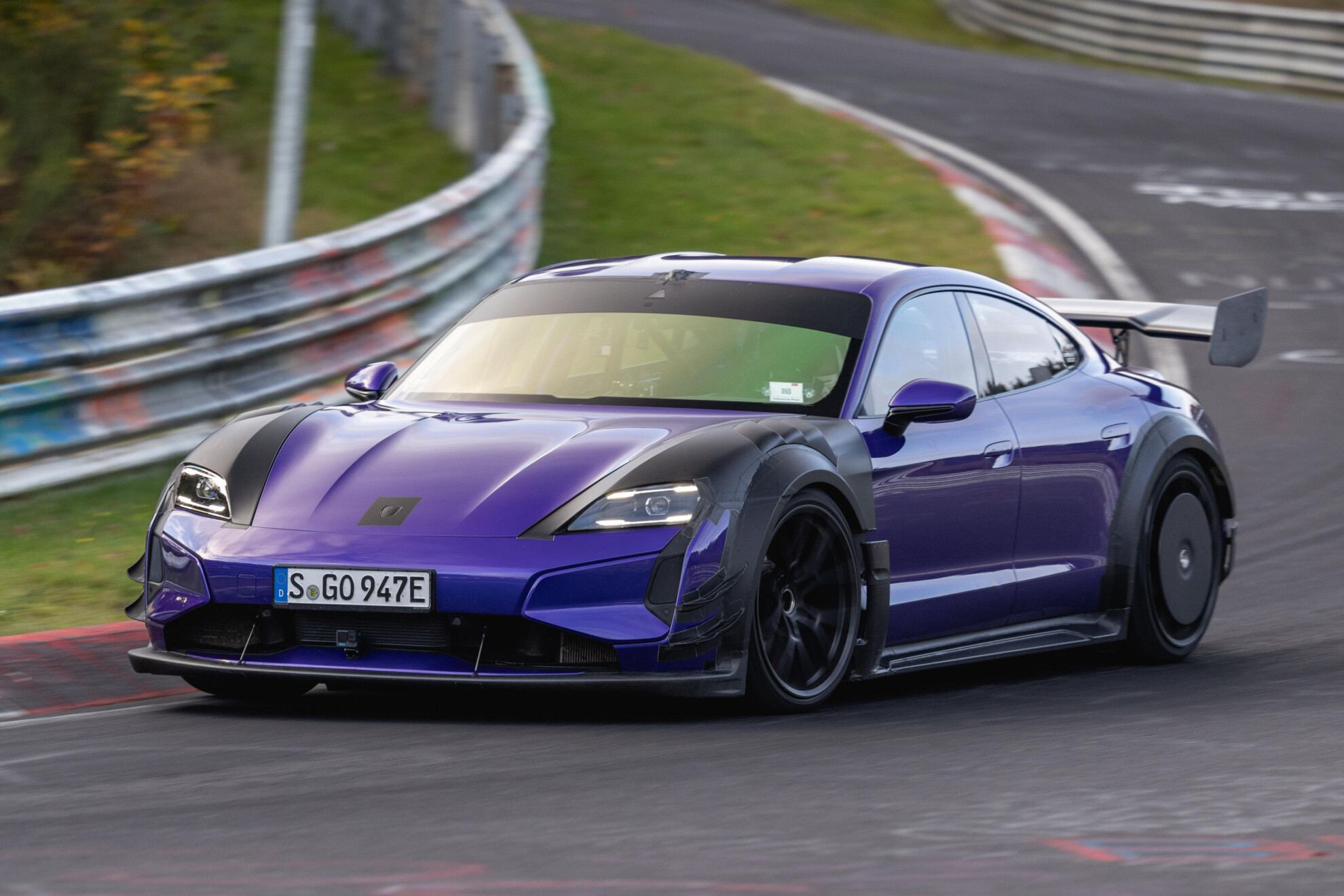
Porsche’s all-electric Taycan has set a new production car lap record at the Nürburgring Nordschleife, clocking a time of 7 minutes 7.55 seconds. This marks the first time an electric sedan has beaten the fastest combustion-engine supercars on the world’s most demanding racetrack, immediately reshaping the performance EV hierarchy.
What Happened
Porsche has shattered the production car lap record at the Nürburgring Nordschleife, with a pre-production Taycan completing the 20.8-kilometer circuit in 7 minutes 7.55 seconds. The time, achieved on Monday, May 11, 2026, under clear skies and moderate temperatures, beats the previous record held by the Mercedes-AMG One by over three seconds, marking an electric sedan’s first outright victory on the Green Hell.
Key Facts
- The Taycan lapped the Nürburgring Nordschleife in 7 minutes 7.55 seconds, beating the Mercedes-AMG One’s time of 7 minutes 10.9 seconds set in November 2024.
- The record was set by Porsche factory driver Lars Kern, who previously piloted the Taycan Turbo GT to a 7 minutes 7.55 second time in 2024—that car was a special variant, while this is a standard production Taycan.
- The lap was completed on standard Michelin Pilot Sport Cup 2 R tires, not track-only rubber, and the car was unmodified from its production specification.
- The Nürburgring lap time was verified by TÜV Rheinland, the official German technical inspection authority, using GPS telemetry and video verification.
- The previous electric production car record at the Nürburgring was held by the Rimac Nevera with a time of 7 minutes 5.30 seconds, but that car is a hypercar with over 1,900 horsepower and a price tag exceeding €2 million.
- Porsche’s Taycan used a dual-motor all-wheel-drive system producing approximately 1,000 horsepower in its top trim, with a 105 kWh battery pack.
- The lap was completed at an average speed of 175.6 km/h (109.1 mph), with a top speed of 306 km/h (190 mph) on the Döttinger Höhe straight.
Breaking It Down
The significance of this record extends far beyond bragging rights. Porsche has achieved what no other manufacturer has: an electric four-door sedan that is faster around the Nürburgring than the most extreme combustion-engine hypercars. The Mercedes-AMG One, a Formula 1-derived hybrid hypercar limited to 275 units and costing over $2.7 million, was the previous benchmark. The Taycan, a car that starts at roughly $150,000 and seats five, has now outperformed it.
7 minutes 7.55 seconds is faster than the Lamborghini Aventador SVJ (6:44.97), the Porsche 911 GT3 RS (6:49.33), and the Ferrari 296 GTB (7:02.00) when comparing the sub-7-minute club—but crucially, the Taycan’s time places it among the elite of combustion supercars while being a production electric sedan.
The engineering achievement lies in the battery thermal management system. The Nürburgring’s 73 corners, elevation changes, and high-speed sections generate immense heat in an EV’s battery pack. Porsche engineers optimized the liquid-cooled battery to maintain peak power output for the full 20.8 km lap, avoiding the thermal throttling that plagues most electric vehicles on track. The 800-volt architecture allows for sustained high-power discharge without overheating, a critical advantage over competitors like the Tesla Model S Plaid, which has struggled with battery cooling during sustained high-performance driving.
The tire choice also played a decisive role. The Michelin Pilot Sport Cup 2 R tires are the same rubber used by the Porsche 911 GT3 RS, a car designed specifically for track performance. This demonstrates that Porsche’s chassis engineers have solved the weight distribution challenge inherent to EVs. The Taycan’s floor-mounted battery gives it a lower center of gravity than the 911, enabling exceptional cornering grip despite a curb weight exceeding 2.2 tonnes.
What Comes Next
Porsche has not yet announced a production date for the record-setting Taycan variant, but the company confirmed it is a 2027 model year car. The timing suggests a late 2026 or early 2027 market launch.
- Tesla response: Tesla CEO Elon Musk has already tweeted that the Model S Plaid will attempt a Nürburgring lap with a new track package including upgraded brakes and cooling. Expect a test within 60–90 days.
- Rimac Nevera counter: Rimac is developing a track-focused Nevera R variant with revised aerodynamics and a 120 kWh battery. A Nürburgring attempt is likely in Q4 2026.
- Production timeline: Porsche will begin accepting orders for the record-setting Taycan variant in September 2026, with first deliveries in January 2027.
- Regulatory impact: The European Union’s Euro 7 emissions standards, set to take full effect in 2027, will further incentivize automakers to invest in high-performance EVs, making this record a marketing template for the industry.
The Bigger Picture
This record is part of a broader electrification of motorsport trend. The Nürburgring lap time has become the de facto benchmark for production car performance, and Porsche’s victory signals that electric powertrains have reached parity with—and in some cases surpassed—combustion engines in pure performance metrics. The Formula E championship, the Extreme E off-road series, and the FIA World Endurance Championship’s upcoming hydrogen class all point toward a future where the fastest cars on Earth are not powered by gasoline.
Simultaneously, this development accelerates the battery technology race. The Taycan’s ability to sustain high power output for a full Nürburgring lap—something that required thermal management breakthroughs—will trickle down to mainstream EVs. Expect to see 800-volt architectures and advanced liquid cooling become standard in performance EVs from BMW, Mercedes-Benz, and Hyundai within 18 months. The Porsche Taycan has not just set a lap record; it has set a technical benchmark that the entire industry must now match.
Key Takeaways
- [Record-Breaking Performance]: The Taycan’s 7:07.55 lap makes it the fastest production electric sedan at the Nürburgring, beating combustion hypercars.
- [Thermal Engineering Win]: The 800-volt architecture and advanced battery cooling enabled sustained peak power for the full 20.8 km lap.
- [Production Car Victory]: This is a standard production car, not a limited-edition special, making the achievement more commercially relevant.
- [Industry Catalyst]: Expect a wave of Nürburgring attempts from Tesla, Rimac, and others within 12 months as the EV performance arms race intensifies.