TL;DR
Prego, the Campbell Soup Company's iconic pasta sauce brand, has announced a pivot from consumer food goods to consumer surveillance hardware with the "Prego Preserver," a lid-shaped device that records family dinner conversations. This radical move, effective immediately, signals a new phase of ambient data harvesting by legacy brands seeking revenue in saturated markets. The announcement matters now because it directly challenges existing privacy norms and regulatory frameworks for in-home audio collection.
What Happened
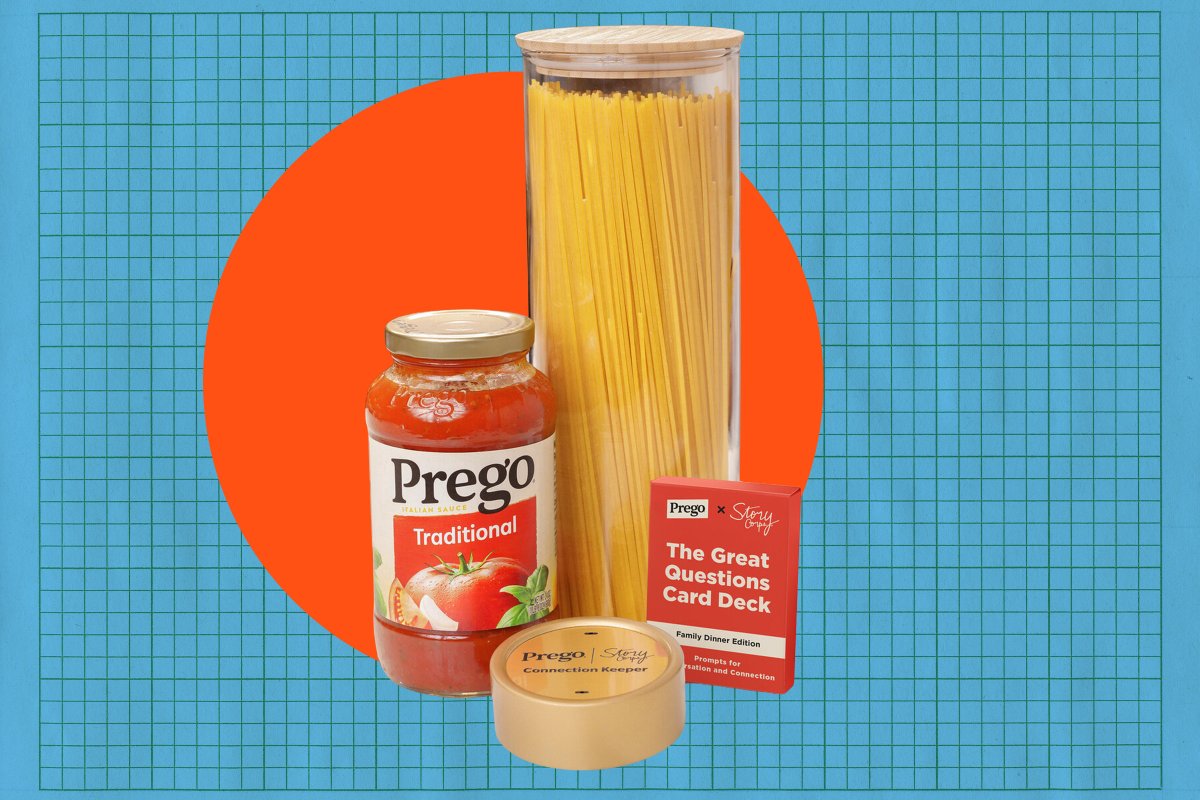
On Tuesday, April 21, 2026, Prego announced it was exiting the pasta sauce business entirely to launch a line of smart home devices. The flagship product, the "Prego Preserver," is a circular, red-and-white device designed to sit at the center of a dining table, passively recording, transcribing, and archiving family conversations under the brand's new tagline: "We Preserve Family."
Key Facts
- Campbell Soup Company confirmed the immediate discontinuation of all Prego pasta sauce products, with remaining inventory to be sold off by Q3 2026.
- The "Prego Preserver" device will begin a limited beta rollout in 10,000 U.S. households starting June 1, 2026, with a full consumer launch planned for the 2026 holiday season.
- The device uses a multi-directional microphone array and onboard AI to identify individual speakers, filter ambient noise, and create searchable transcripts of dinner conversations.
- Data storage is handled via a subscription model starting at $9.99/month, which includes cloud storage for audio files and transcripts, as well as "sentiment analysis" reports.
- CEO Mark Clouse of Campbell Soup Company stated the decision was based on "decades of brand equity centered on the family dinner table" and "evolving consumer demand for memory preservation."
- The company has established a new subsidiary, Prego Technologies Inc., to oversee the device's development and data management, headquartered in San Jose, California.
- Prego's patent filings, reviewed by Futurism, show technology designed to detect keywords related to product preferences, vacation planning, and financial discussions.
Breaking It Down
Prego's pivot is not a mere brand extension; it is a fundamental corporate reinvention that leverages a trusted household name to enter one of the most ethically fraught sectors of consumer tech. By leveraging the emotional resonance of "family dinner," Prego Technologies is attempting to normalize constant audio surveillance in the one room traditionally seen as a private sanctuary. The strategic bet is that consumers will trade profound privacy for perceived sentimental value, a calculus that has so far been limited to devices like smart speakers that offer clear utility (e.g., playing music, setting timers). Prego is offering a more abstract, emotional utility: the prevention of memory loss.
The company's financial disclosures indicate it expects the high-margin subscription data services from the Preserver to surpass its entire pasta sauce division's peak annual revenue of $850 million within three years.
This projected revenue shift underscores the core driver of the move: the stagnant growth and razor-thin margins of the packaged food industry versus the lucrative, recurring revenue of data and subscription services. Campbell Soup Company is effectively sacrificing a mature cash cow to hunt for a new one in the digital pasture. The Preserver is not just a device; it is a data acquisition terminal. The monthly fee grants access to the service, but the true asset being built is a proprietary database of intimate, unstructured conversational data—a dataset far richer in behavioral insight than any social media post or search history.
The regulatory and competitive landscape is immediately altered. Prego is not competing with Rao's or Barilla; it is now a direct, if niche, competitor to Amazon (with its Alexa-enabled Echo devices) and Google (Nest Hub) in the ambient computing space. However, Prego's focused "dinner table" positioning allows it to potentially bypass some of the scrutiny faced by general-purpose smart speakers. Its success hinges on regulators and consumers viewing it not as a surveillance device, but as a digital scrapbook. This framing will be its first and greatest challenge.
What Comes Next
The announcement is only the first step in a high-stakes transition. The coming months will be defined by technical validation, regulatory scrutiny, and market acceptance—or rejection.
- The Beta Test & Data Policy Scrutiny (June 1, 2026): The 10,000-household beta will be the first real-world test of the technology's accuracy and the clarity of its data consent process. Privacy advocates, including the Electronic Frontier Foundation, have already pledged to dissect the user agreement and data flow. Any beta user reports of unclear opt-ins or data sharing will trigger immediate backlash.
- FTC and Congressional Inquiry (Likely by Q3 2026): The Federal Trade Commission and Senate subcommittees on consumer protection and privacy will almost certainly demand briefings from Prego Technologies Inc. The key question will be whether the device falls under the Audio Recording Privacy Act or similar state laws (like California's CCPA), and how "informed consent" is maintained for all conversation participants, including guests and children.
- The Holiday 2026 Launch & Consumer Verdict: The full market launch will reveal if there is genuine consumer demand. Marketing will heavily target grandparents and parents of young children. Its success will depend on overcoming the inherent "creepiness factor," a hurdle that even established tech giants still struggle with.
- Potential Expansion of the "Preserver" Ecosystem: If the core device gains traction, Prego has telegraphed plans for related products, including a "Family Recipe Identifier" that extracts cooking instructions from conversations and a "Milestone Marker" that automatically edits highlight reels from audio transcripts. Each expansion will further blur the line between service and surveillance.
The Bigger Picture
Prego's drastic shift is a symptom of two powerful, converging trends. First, The Datafication of Intimacy, where every human experience—from sleep to meals to conversation—becomes a source of quantifiable, monetizable data. Brands are no longer just selling products for experiences; they are selling tools to capture the experience itself, creating a closed loop where the tool's value is derived from the data it extracts.
Second, it reflects Legacy Brand Pivots into Tech. As traditional industries face margin compression, heritage brands with high trust and recognition are seeking to convert that brand equity into tech market entry. We've seen similar, if less extreme, moves with Kodak into cryptocurrency or RadioShack's various rebrands. Prego's attempt is among the most audacious, directly transplanting a food brand's "family" association into the smart home ecosystem. This trend risks consumer confusion and brand dilution but offers a potential shortcut to market acceptance if the narrative is successfully managed.
Key Takeaways
- Radical Corporate Pivot: Prego has ceased operations as a food brand to become a consumer surveillance hardware and data subscription company, a virtually unprecedented shift for a legacy CPG name.
- Privacy Frontier: The "Prego Preserver" explicitly targets the culturally sacred space of the family dinner table, testing societal limits for in-home audio recording and setting a new benchmark for ambient data collection.
- Business Model Transformation: Campbell Soup Company is betting its future on high-margin, recurring data revenue, abandoning the low-growth food segment in a move that other stagnant legacy brands will study closely.
- Imminent Regulatory Battle: The device will immediately become a focal point for regulators and privacy watchdogs, with its launch likely to influence upcoming federal debates on comprehensive consumer data privacy laws.