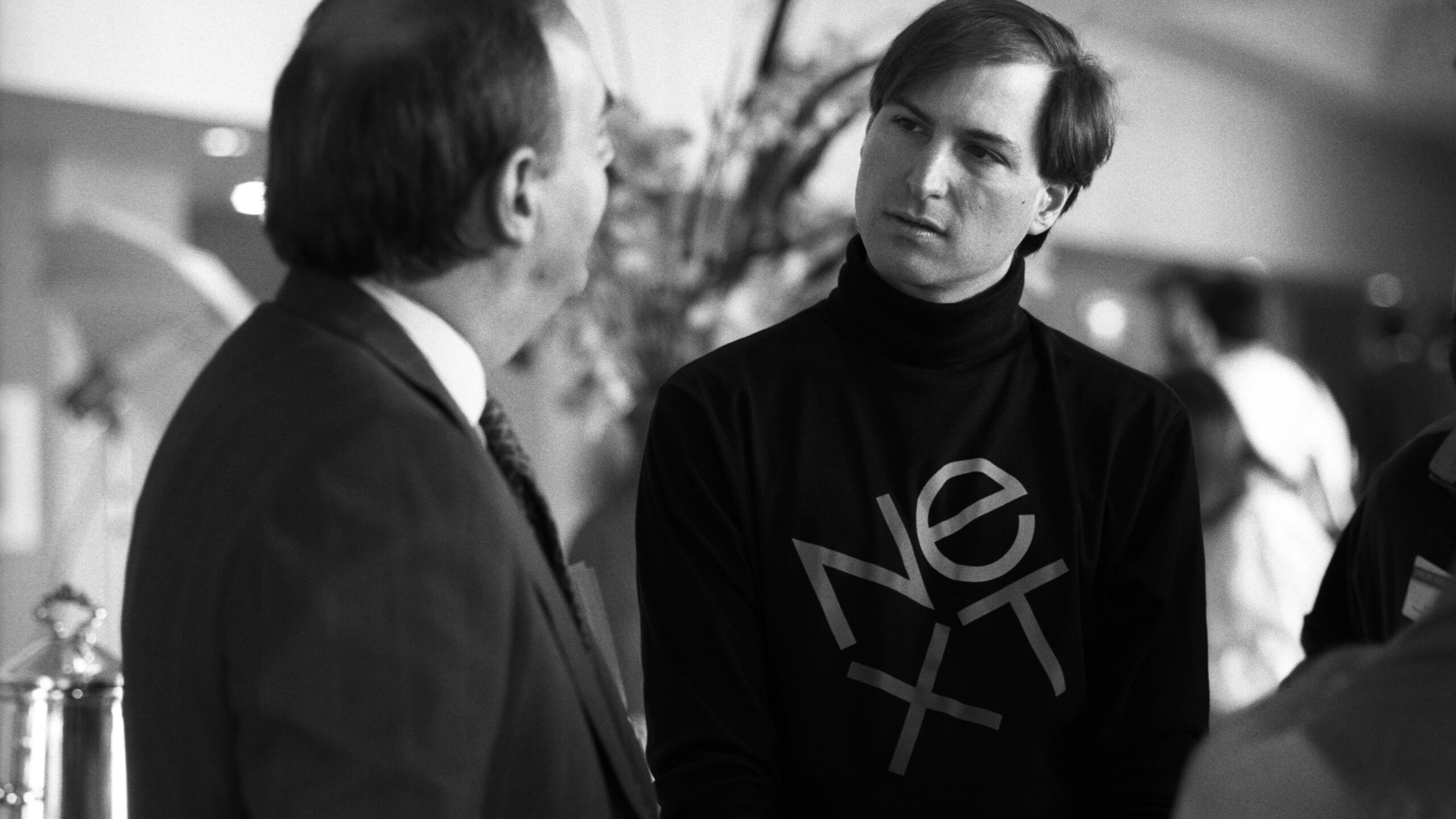
TL;DR
Steve Jobs in Exile, a new profile by Ars Technica, examines the transformative years Jobs spent at NeXT after his ouster from Apple in 1985. The article reveals how the failure of NeXT's hardware business paradoxically laid the technical and philosophical groundwork for the products that would later define Apple's resurgence, including the iMac and iPhone. This matters now because the NeXT story is often glossed over in Jobs' mythology, yet it was the crucible that forged the operating system and design thinking that still power Apple's core products today.
What Happened
Steve Jobs, then 30 years old and freshly exiled from the company he co-founded, stood in a San Francisco hotel suite in 1985 and asked his small, shell-shocked team a single question: “Why don’t we just frickin’ call Apple?” That moment, captured in a new Ars Technica profile titled Steve Jobs in Exile, encapsulates the audacity and desperation of the NeXT years — a period often dismissed as a failure, but which the article argues was the most creatively fertile and strategically decisive decade of Jobs’ career.
Key Facts
- The profile centers on NeXT Computer Inc., founded by Jobs in 1985 after he was forced out of Apple following a power struggle with then-CEO John Sculley.
- Jobs invested $7 million of his own money to launch NeXT, later securing an additional $20 million from Ross Perot.
- The NeXT computer, launched in 1988 at a price of $6,500, featured a magneto-optical drive, a digital signal processor, and the NeXTSTEP operating system — but sold only about 50,000 units total.
- NeXT’s hardware division was shuttered in 1993, but the company pivoted to software, selling NeXTSTEP and its Objective-C development environment to enterprise customers.
- In December 1996, Apple acquired NeXT for $429 million, bringing Jobs back to the company he founded — initially as a consultant, then as interim CEO in 1997.
- The NeXTSTEP operating system became the foundation for macOS, iOS, watchOS, and tvOS, making it the single most important software lineage in consumer technology.
- Jobs’ NeXT-era obsession with industrial design, typography, and user experience — including the hiring of designer Paul Rand for NeXT’s logo — directly prefigured the design philosophy of the iMac, iPod, and iPhone.
Breaking It Down
The Ars Technica profile reframes the NeXT years not as a detour but as a necessary apprenticeship in failure. Jobs had been fired from Apple for, among other things, his perfectionism and inability to ship products on schedule. At NeXT, he doubled down on those instincts — demanding a cube-shaped magnesium chassis, a custom operating system, and a price point that alienated the educational market he was targeting. The result was a commercial flop that burned through investor cash and nearly destroyed his reputation.
NeXT sold roughly 50,000 computers in its entire hardware run — fewer than Apple sold in a single week of Mac sales in 1985. That number is the single most damning statistic of the NeXT era, but it also reveals something crucial: Jobs was building for a future that didn’t yet exist. The NeXT computer was too expensive, too esoteric, and too far ahead of its time. But the software stack — NeXTSTEP, based on the Mach kernel and BSD Unix — was architecturally superior to anything else on the market. When Apple bought NeXT in 1996, it wasn’t buying a hardware company; it was buying an operating system that could scale across devices for decades.
The profile’s most striking insight is that the NeXT years fundamentally changed Jobs as a leader. At Apple in the early 1980s, he was a brash visionary who bullied engineers and ignored market realities. At NeXT, he was still demanding, but he had learned to channel his perfectionism into software and design rather than hardware manufacturing. The article notes that Jobs’ time at NeXT coincided with his marriage to Laurene Powell and the birth of his children — personal milestones that softened his edges without dulling his intensity. The Jobs who returned to Apple in 1997 was not the same man who had left. He was more patient, more strategic, and more willing to let great products speak for themselves.
The profile also highlights a lesser-known figure from the NeXT years: Avie Tevanian, the software engineer who led development of the NeXTSTEP kernel and later became Apple’s chief software architect. Tevanian’s work at NeXT directly enabled the creation of macOS X, which launched in 2001 and saved Apple from the aging, crash-prone Mac OS 9. Without NeXT, Apple’s operating system would have likely died on the vine — and the iPhone, which runs on a variant of that same OS, would never have been possible.
What Comes Next
The Ars Technica profile arrives at a moment when Apple is again facing questions about its future after Jobs. The company’s Vision Pro headset, launched in 2024, has struggled to find a mass market — echoing the NeXT computer’s own failure to scale. The profile implicitly asks: is Apple repeating the NeXT pattern of building brilliant but unaffordable hardware?
- WWDC 2026, scheduled for June 8–12, will likely feature updates to Apple Intelligence, the company’s generative AI suite. The NeXT legacy of Objective-C and Swift development tools will be central to how developers build AI features into apps.
- The 30th anniversary of the NeXT acquisition (December 2026) will trigger a wave of retrospectives. Expect renewed scrutiny of how Apple’s current leadership — CEO Tim Cook and software chief Craig Federighi — compares to the Jobs-Tevanian partnership.
- Apple’s transition to ARM-based silicon, completed in 2023, was the final step in a process that began with NeXT’s Unix-based OS. The next frontier is neural processing — and Apple’s ability to integrate AI into its OS will determine whether it can maintain the software advantage NeXT gave it.
- The Vision Pro’s successor, rumored for a 2027 release, will test whether Apple has learned the NeXT lesson: that a technologically superior product must also be affordable and useful to a broad audience.
The Bigger Picture
The NeXT story is a case study in two broader technology trends. The first is the second-act founder narrative. Jobs is the most famous example, but the pattern repeats across the industry: Elon Musk at Tesla after PayPal, Reed Hastings at Netflix after his first startup failure, Jack Dorsey at Twitter after being ousted from his own company. The NeXT years prove that founders who fail publicly often develop the resilience and strategic clarity needed to succeed on a much larger scale.
The second trend is the long half-life of operating systems. NeXTSTEP, born in 1988, still runs on every iPhone, iPad, and Mac sold today. This is not an accident — it is the result of architectural decisions made in the late 1980s that prioritized modularity, security, and developer experience. As the tech industry rushes toward AI-native operating systems and spatial computing, the NeXT legacy is a reminder that the most durable technology platforms are built on foundations of rigorous engineering, not hype.
Key Takeaways
- [NeXT as Crucible]: Jobs’ decade at NeXT was not a failure but a necessary period of maturation, where he learned to balance vision with execution — a lesson that directly enabled Apple’s resurrection.
- [Software Survivability]: The NeXTSTEP operating system, acquired by Apple in 1996, now powers over 2 billion devices worldwide, making it one of the most successful software investments in history.
- [Design Obsession]: Jobs’ NeXT-era obsession with industrial design — from the cube-shaped chassis to Paul Rand’s logo — set the template for Apple’s post-1997 design language.
- [Cautionary Parallel]: The Vision Pro’s high price and niche appeal echo the NeXT computer’s market failure, raising the question of whether Apple is again building for a future that hasn’t arrived.