TL;DR
Takashi Tezuka, the legendary Nintendo designer behind Super Mario Bros. and The Legend of Zelda, brought a radically outsider perspective to game design—drawing from film, theater, and real-world experiences rather than arcade conventions. This approach, which he applied to the original 1986 Zelda on the Famicom Disk System, created the blueprint for open-world adventure gaming without the analytical overthinking that plagues modern game development.
What Happened
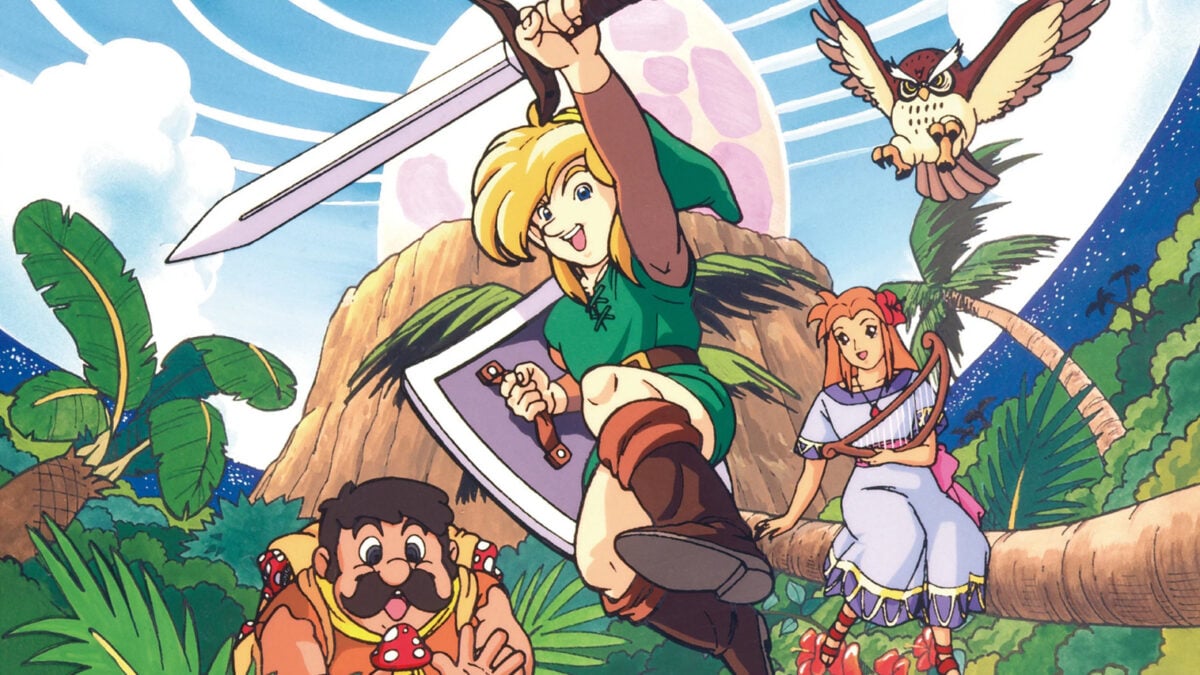
Kotaku published a feature on May 9, 2026, examining how Takashi Tezuka—a Nintendo designer who originally had little interest in video games—reinvented The Legend of Zelda by ignoring established arcade design principles. Instead of optimizing for score-chasing or reflex-based challenges, Tezuka built the game around exploration, discovery, and a sense of real-world adventure, drawing inspiration from his childhood experiences exploring forests and caves near his home in Kyoto.
Key Facts
- Takashi Tezuka joined Nintendo in 1984 as a graphic designer, not a gamer, and had minimal exposure to arcade titles before working on Super Mario Bros.
- The original The Legend of Zelda was released in Japan on February 21, 1986, exclusively on the Famicom Disk System—a peripheral that allowed for larger, save-enabled games.
- Tezuka served as director of The Legend of Zelda, while Shigeru Miyamoto produced the title; the game sold 6.5 million copies worldwide by 2004.
- The game’s overworld map was inspired by Tezuka’s memories of exploring the mountains and forests of rural Kyoto as a child, not by other video games.
- The Legend of Zelda introduced the concept of a persistent save file on console—a revolutionary feature in 1986—allowing players to continue their adventure across multiple sessions.
- Tezuka’s design philosophy explicitly rejected arcade tropes like lives, timers, and score displays, focusing instead on player-driven exploration and nonlinear progression.
- The game’s second quest—a harder version of the entire game hidden after completion—was included because Tezuka wanted to reward dedicated players with a fresh experience, a concept virtually unheard of in 1986.
Breaking It Down
Takashi Tezuka’s outsider status is the central paradox of his career. He joined Nintendo not as a passionate gamer but as a graphic designer with a background in film and theater. This distance from gaming culture gave him a crucial advantage: he wasn’t constrained by what games “should” be. While contemporaries were copying Pac-Man and Space Invaders, Tezuka was asking what a game could feel like if it were a walk in the woods.
In a 2023 interview with Nintendo Power (as cited by Kotaku), Tezuka stated: “I didn’t think about game design in terms of rules or systems. I thought about what would be fun if I were a child exploring a cave with a flashlight.”
This mindset produced The Legend of Zelda’s most radical feature: its nonlinear overworld. Players could wander into dungeons far beyond their current abilities, discover hidden secrets by burning bushes or pushing random blocks, and stumble upon the game’s ultimate weapon, the Silver Arrow, without any explicit instruction. Modern game design would call this “emergent gameplay” or “player agency”—Tezuka simply called it “what kids do when they play outside.”
The game’s save system was another accidental innovation. The Famicom Disk System used rewritable magnetic disks, allowing players to save their progress—a luxury the cartridge-based Super Mario Bros. lacked. Tezuka leaned into this capability, designing Zelda as a multi-session experience. He deliberately made the world large enough that players would need to return to it over days or weeks, fostering a sense of ongoing adventure rather than a single arcade session. This design choice directly contradicted the prevailing wisdom that games should be completable in one sitting.
Perhaps most telling is Tezuka’s approach to difficulty. The game’s second quest—accessible by using the name “ZELDA” as a save file—wasn’t a marketing gimmick or a way to pad playtime. It was Tezuka’s personal gift to players who had already mastered the first quest. He wanted them to feel the same sense of discovery again, but with the knowledge that they were now experienced adventurers. This player-first thinking, unburdened by metrics or engagement algorithms, produced a game that has been re-released on every Nintendo console since the NES.
What Comes Next
The Kotaku feature arrives at a moment when the game industry is wrestling with its own overthinking. Live-service titles and procedurally generated worlds often prioritize player retention over genuine discovery. Tezuka’s philosophy—design from experience, not data—is gaining renewed attention from indie developers and even some AAA studios.
- Nintendo’s next Zelda title, likely a follow-up to 2023’s Tears of the Kingdom, will face intense scrutiny for how it balances player freedom with narrative structure. Expect analysts to compare its design philosophy directly to Tezuka’s original approach.
- A new documentary about Tezuka’s career is rumored to be in production at a major streaming service, possibly timed to the 40th anniversary of The Legend of Zelda in 2026.
- Game design conferences (GDC, Develop:Brighton) will likely feature panels revisiting Tezuka’s “non-gamer” approach as a counterpoint to data-driven design.
- Indie developers on platforms like Steam and itch.io are already citing Tezuka’s Zelda as a key influence for their own exploration-focused games, with at least three announced titles explicitly referencing “cave exploration” and “Kyoto forest” aesthetics in their pitch materials.
The Bigger Picture
This story connects to two broader trends. First, the “anti-analytical” backlash in game design: a growing number of developers and critics argue that the industry’s obsession with player metrics, engagement loops, and systems design has squeezed the joy out of games. Tezuka’s Zelda is held up as proof that intuition and real-world experience can produce more compelling games than A/B testing.
Second, the return of “limited” design. Modern games are often criticized for being too long, too bloated, too full of content. Tezuka’s Zelda—a single disk with a 128-kilobyte ROM—achieved legendary status by being small and intentional. As game budgets balloon and development cycles stretch to five years or more, the idea of a small team making a focused, personal game on limited hardware is increasingly appealing to both developers and players.
Key Takeaways
- Outsider Advantage: Tezuka’s lack of gaming background let him ignore arcade conventions, creating a game based on real-world exploration rather than existing game tropes.
- Nonlinear Design: The Legend of Zelda’s open world was not a technical choice but a philosophical one—Tezuka wanted players to feel like children exploring a forest.
- Save System Innovation: The Famicom Disk System’s save capability enabled Tezuka to design a multi-session adventure, a radical departure from arcade-style single-sitting play.
- Enduring Influence: Tezuka’s player-first, data-averse approach is experiencing a revival as developers seek alternatives to metrics-driven design.