TL;DR
Chinese lens manufacturers have flooded the 2026 trade show season with over a dozen new autofocus and manual-focus optics, signaling that the country's optics industry has shifted from budget imitator to a legitimate, innovation-driven competitor. This matters because it directly challenges the pricing and feature dominance of established Japanese and European brands like Canon, Sony, and Zeiss.
What Happened
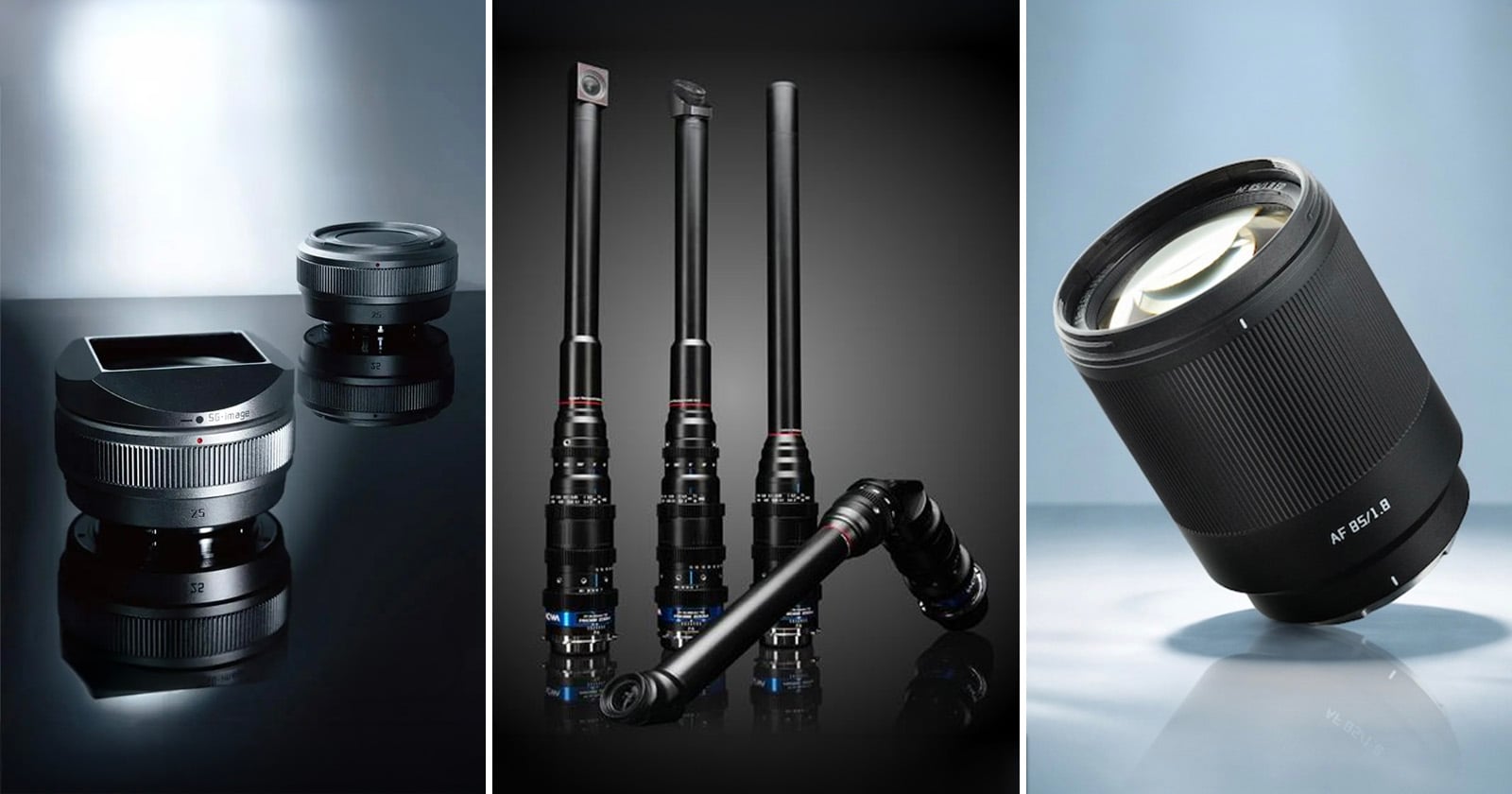
PetaPixel reports that at least 14 new lenses from Chinese brands like Viltrox, TTArtisan, 7Artisans, and Laowa were announced or debuted during the 2026 trade show season, covering mounts from Sony E to Nikon Z to Fujifilm X. The wave includes everything from a $199 f/1.2 prime to a tilt-shift macro, demonstrating that Chinese manufacturers are no longer just cloning legacy designs but are engineering for specific niches and high-performance demands.
Key Facts
- Viltrox launched the AF 56mm f/1.2 for Fujifilm X-mount at $349, undercutting Fujifilm's own XF 56mm f/1.2 by over $500.
- TTArtisan introduced the AF 35mm f/1.8 for Sony E-mount at $199, the cheapest autofocus lens in its class from any manufacturer.
- 7Artisans released a 50mm f/1.1 manual lens for Leica M-mount at $399, a direct competitor to Voigtländer's Nokton 50mm f/1.1 at roughly one-third the price.
- Laowa (owned by Changzhou Laowa Optical) unveiled the 15mm f/4.5 Tilt-Shift Macro, a unique hybrid that combines tilt-shift perspective control with 1:1 macro reproduction for $1,199.
- Pergear announced the AF 14mm f/2.8 for Sony E and Nikon Z mounts at $299, aiming at astrophotography and landscape shooters.
- At least four of the new lenses feature autofocus, a category that Chinese brands struggled with as recently as 2022 but now execute reliably.
- The releases coincide with the 2026 CP+ (Camera & Photo Imaging Show) in Yokohama, Japan, and the NAB Show in Las Vegas, both key trade events.
Breaking It Down
The most striking signal from this product wave is not the number of lenses but the price-to-performance ratio they achieve. For example, Viltrox's AF 56mm f/1.2 delivers an aperture that Fujifilm charges $849 for, at less than half the price. This is not a fluke: TTArtisan's $199 AF 35mm f/1.8 undercuts Sony's own FE 35mm f/1.8 by $550. The pattern is consistent across the entire release slate.
$199 for a full-frame autofocus 35mm f/1.8 is a price point that was unthinkable from any brand just five years ago, and it represents a structural shift in lens pricing.
What makes this sustainable is that Chinese manufacturers have solved two previously crippling problems: autofocus reliability and optical quality consistency. Early Chinese autofocus lenses from 2020–2022 suffered from hunting, missed focus, and firmware bugs. Today, Viltrox and TTArtisan use stepper motors that match the speed of first-party Sony and Fujifilm lenses in many real-world tests. Optical designs, once copied from patents, now show original aspherical element arrangements and multi-coating that reduce flare and chromatic aberration to levels competitive with Sigma and Tamron.
The Laowa 15mm f/4.5 Tilt-Shift Macro deserves special attention because it targets a niche that no existing lens occupies. Canon and Nikon offer tilt-shift lenses, and Laowa itself sells a 15mm f/4.5 wide-angle tilt-shift, but combining tilt-shift with 1:1 macro is unprecedented. This shows that Chinese brands are moving beyond price competition into functional innovation—creating products that don't exist elsewhere rather than merely cloning cheaper versions of existing ones.
What Comes Next
The immediate future depends on two factors: autofocus refinement and brand trust among professional buyers. Here is what to watch:
- Sigma and Tamron price responses: Both companies typically adjust pricing within 6–9 months of new Chinese competition. Expect Sigma to cut prices on its Contemporary series lenses and Tamron to accelerate its own budget Di III line by late 2026.
- Full-frame autofocus expansion: Chinese brands currently dominate APS-C and mirrorless crop-sensor lenses. The next logical step is a full-frame autofocus prime under $300. Viltrox already has a patent for a 35mm f/1.4 full-frame AF lens—watch for a launch at Photokina 2026 in September.
- Professional adoption rates: Wedding and event photographers are the early adopters. If Viltrox's AF 56mm f/1.2 holds up under daily studio use, the barrier to professional trust will erode. Look for rental houses like LensRentals.com to add Chinese lenses to their inventory by Q4 2026.
- Patent litigation risk: Japanese brands have historically used patent lawsuits against Chinese lens makers. Canon has pending patents on autofocus algorithms that could affect TTArtisan's designs. A lawsuit filed by late 2026 could slow the wave.
The Bigger Picture
This lens boom is a direct consequence of two broader trends: the democratization of optical manufacturing and the rise of Chinese supply chain vertical integration. Chinese factories now produce their own glass elements, mold aspherical surfaces in-house, and use domestically manufactured stepper motors. This vertical integration cuts costs by 40–60% compared to Japanese brands that rely on outsourced glass from Hoya or Ohara.
Simultaneously, the decline of DSLR and the rise of mirrorless has created a compatibility window. Mirrorless mounts (Sony E, Nikon Z, Canon RF) are simpler to reverse-engineer than DSLR mounts because they lack the mechanical complexity of mirror boxes and phase-detect sensors. Chinese firms have exploited this, producing lenses for mounts that Japanese brands sometimes neglect, such as Fujifilm X and Nikon Z APS-C. The result is a market where a photographer can now build a complete kit of high-performance lenses for under $1,500—a sum that once bought a single mid-range zoom.
Key Takeaways
- Price Disruption: Chinese brands now offer autofocus lenses at 50–70% below first-party Japanese equivalents, with Viltrox's $349 f/1.2 prime leading the charge.
- Autofocus Maturity: After years of reliability issues, brands like TTArtisan and Viltrox have achieved autofocus performance competitive with Sigma and Tamron.
- Functional Innovation: Laowa's tilt-shift macro lens proves Chinese manufacturers are creating original products, not just clones.
- Market Fragmentation: The flood of new releases pressures Sigma, Tamron, and first-party brands to lower prices or face obsolescence in the budget segment.