TL;DR
Dory has launched a $149 E Ink sign called the Dory Sign, a minimalist smart display that shows only essential information like calendar events and weather. The company's CEO has publicly guaranteed the device won't become a brick if Dory goes out of business, addressing a major consumer fear in the smart home market.
What Happened
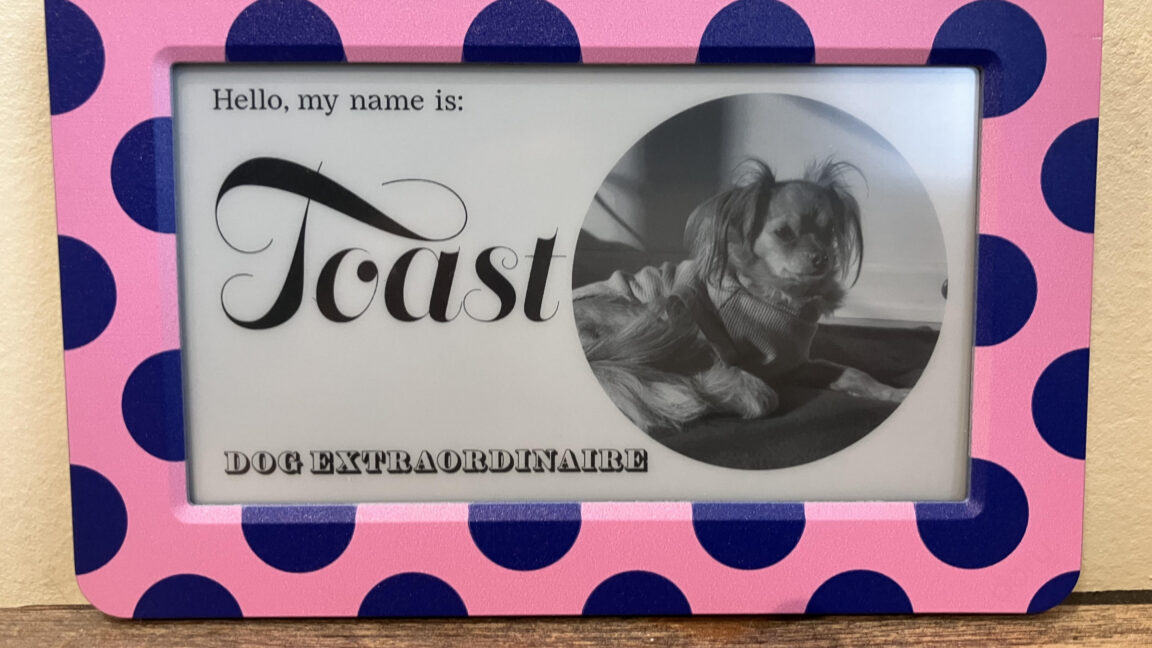
Dory, a startup founded by former Apple and Tesla engineers, unveiled the Dory Sign on Monday, a $149 E Ink smart display designed to show only the most critical daily information — calendar appointments, weather forecasts, and to-do lists — without the distractions of a full tablet or smartphone. The device, which uses a 7.5-inch black-and-white E Ink screen, promises up to six months of battery life on a single charge and connects via Wi-Fi to sync with Google Calendar, Apple Calendar, and other services.
Key Facts
- The Dory Sign costs $149 and uses a 7.5-inch E Ink display with no backlight, mimicking the look of paper.
- Battery life is rated at six months on a single charge, enabled by the low-power E Ink technology.
- The device syncs with Google Calendar, Apple Calendar, Microsoft Outlook, and Todoist out of the box.
- Dory's CEO Alex Chen explicitly stated in the launch announcement that the signs will not be bricked if Dory goes out of business, citing a local-only sync fallback mode.
- The sign measures 6.1 inches by 4.5 inches and weighs 8.4 ounces, designed to sit on a desk or mount on a wall.
- Dory has raised $12 million in venture funding from Sequoia Capital and Andreessen Horowitz, according to the company.
- Pre-orders opened on May 18, 2026, with shipping expected to begin in August 2026.
Breaking It Down
The Dory Sign enters a crowded but fragmented market of smart displays, from Amazon's Echo Show to Google's Nest Hub. What sets it apart is its radical simplicity: no camera, no microphone, no touchscreen beyond a single capacitive button for refreshing the display. Instead of offering apps, video calls, or music streaming, the Dory Sign does exactly one thing — show you what's next on your calendar — and does it with the battery longevity of a calculator. This is a deliberate design philosophy that positions the device as an antidote to notification overload, not another source of it.
Six months of battery life is more than 180 times longer than the typical smart display, which requires daily or weekly charging, and represents a fundamental rethinking of what a "connected" device should consume.
That battery figure is not just a marketing bullet point; it is a structural advantage. E Ink displays consume power only when the image changes, meaning the Dory Sign can sit idle for weeks without draining. For comparison, an Amazon Echo Show 15 draws about 12 watts continuously, costing roughly $15 per year in electricity. The Dory Sign's power draw is negligible by comparison. This makes it feasible to place the sign in locations where power outlets are scarce — a kitchen counter, a hallway wall, a home office — without worrying about cables or charging schedules.
The bricking guarantee from CEO Alex Chen is perhaps the most strategically important element of the launch. The smart home graveyard is littered with devices that lost cloud support when their makers shut down: Revolv (acquired and killed by Google in 2016), Logitech Harmony (discontinued in 2021), and most recently SmartThings' older hubs. By promising that the Dory Sign will fall back to local-only sync — pulling calendar data directly from the user's device via a companion app — Dory is preemptively addressing the single biggest objection to buying a connected gadget from a startup. Chen's claim is not just a feature; it is a trust-building mechanism designed to convert skeptics into buyers.
What Comes Next
- August 2026: Dory begins shipping pre-orders to early adopters. The first wave of customer reviews will determine whether the device's minimalist pitch resonates or if users demand more features like color E Ink or multiple calendar views.
- Late 2026: Dory is expected to announce an API for third-party integrations, potentially expanding beyond calendars to support services like Notion, Trello, or Slack. This would allow the sign to show project deadlines or meeting reminders.
- Early 2027: Analysts at IDC predict that E Ink display shipments for non-e-reader applications will grow by 35% year-over-year, driven by products like the Dory Sign, Boox's digital signage, and Waveshare's modular displays. Dory's success will depend on capturing a meaningful share of this emerging category.
- Potential competitor response: Amazon and Google may introduce low-power, distraction-free display modes on their existing smart screens, or launch dedicated E Ink products of their own. Watch for announcements at Amazon's September hardware event and Google's October Pixel event.
The Bigger Picture
The Dory Sign is the latest example of Intentional Computing, a trend where devices deliberately limit functionality to reduce cognitive load and screen time. This runs counter to the past decade of "more is better" smart home design, where every device tried to become a general-purpose computer. Products like the Light Phone II (a minimalist smartphone), Remarkable (a digital paper tablet), and now the Dory Sign represent a growing consumer desire for tools that do less but do it better.
The bricking guarantee also reflects a broader shift toward Consumer Trust Engineering in hardware. After years of planned obsolescence, subscription lock-in, and cloud-dependent devices that die when companies fail, startups are increasingly marketing durability and longevity as competitive advantages. Fairphone (modular smartphones), Framework (repairable laptops), and now Dory are all betting that consumers will pay a premium for products that don't become e-waste when the company stumbles. Whether this bet pays off at scale remains to be seen, but the early signals — Dory's $12 million in funding from top-tier VCs — suggest investors are willing to find out.
Key Takeaways
- [Product Launch]: Dory's $149 E Ink sign offers six months of battery life and a radical focus on calendar and weather information, launching in August 2026.
- [Bricking Guarantee]: CEO Alex Chen's promise that the device will work locally if Dory fails is a direct response to consumer distrust of cloud-dependent smart home gadgets.
- [Market Timing]: The device enters a growing E Ink display market projected to grow 35% annually, but faces potential competition from Amazon and Google.
- [Design Philosophy]: The Dory Sign exemplifies the Intentional Computing trend, prioritizing simplicity and battery life over feature bloat.