TL;DR
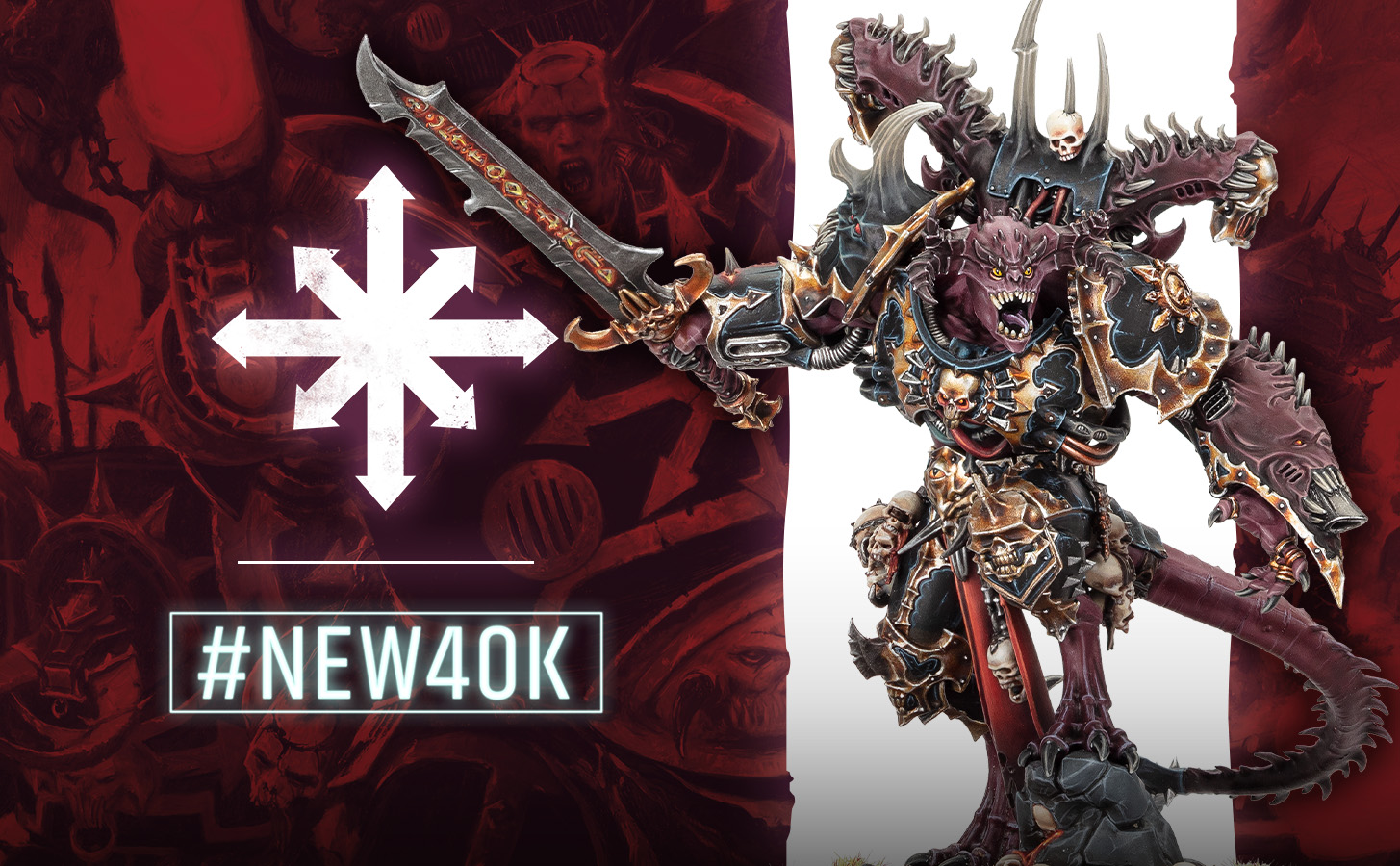
Games Workshop has released new detachments for Chaos Space Marines and Chaos Daemons in Warhammer 40,000, significantly expanding tactical options for Chaos players. These rules updates arrive as part of the ongoing 10th Edition lifecycle, directly impacting competitive play and narrative campaigns.
What Happened
On Friday, May 8, 2026, Warhammer Community published a major Faction Focus article detailing new detachments for Chaos Space Marines and Chaos Daemons. The release introduces multiple detachment options that fundamentally alter how these armies can be built and played, marking the first substantial rules expansion for Chaos factions since the launch of Codex: Chaos Space Marines in 2023.
Key Facts
- The new detachments include three for Chaos Space Marines and two for Chaos Daemons, each themed around specific Dark Gods or playstyles.
- Chaos Space Marines gain the "Harbingers of Decay" detachment (Nurgle-aligned), "Warpsmith Covenant" (focusing on Daemon Engines and vehicles), and "Raptor Cult" (emphasizing jump pack infantry and deep strike).
- Chaos Daemons receive the "Legion of the Damned Soul" detachment (generalist buffs for all Daemon units) and "The Great Game" detachment (rewarding aggressive, multi-god army compositions).
- The "Raptor Cult" detachment allows all Jump Pack infantry units to re-roll charge rolls and gain +1 to hit in melee on the turn they deep strike, a massive boost for units like Raptors and Warp Talons.
- "Warpsmith Covenant" grants all Daemon Engine units a 5+ invulnerable save and the ability to heal D3 wounds each turn, addressing a longstanding fragility issue for Chaos vehicle-heavy lists.
- The "Great Game" detachment for Daemons imposes a mandatory 50/50 split between two different Chaos God alignments, forcing players to field mixed-god armies rather than monofaction lists.
- All detachments are free digital downloads via Warhammer Community, with no purchase required, following Games Workshop’s pattern of releasing rules updates outside of physical codex cycles.
Breaking It Down
The new Chaos Space Marine detachments directly address two persistent weaknesses in the faction’s 10th Edition performance: mobility and durability. Since Codex launch, competitive Chaos Space Marine lists have overwhelmingly relied on Chosen squads in Rhinos or Land Raiders, with jump pack infantry rarely seeing table time. The Raptor Cult detachment changes that calculation entirely. By granting re-rollable charge rolls from deep strike—a mechanic previously exclusive to Space Marine Jump Intercessors—Raptors and Warp Talons now pose a credible first-turn threat that opponents must screen against from deployment.
The Raptor Cult detachment’s charge re-rolls increase the probability of a successful 9-inch deep strike charge from 27% to over 48%, nearly doubling the odds.
This statistical shift transforms Raptor squads from niche harassment units into primary scoring threats. Combined with the detachment’s +1 to hit in melee on the turn they arrive, a 10-model Raptor unit equipped with plasma pistols and power fists can now delete medium infantry and threaten light vehicles on the drop. Competitive players will need to reevaluate their screening strategies, as even a single failed charge by one unit can be salvaged by a second wave—the detachment’s rules apply to all jump pack units, not just one per turn.
The Warpsmith Covenant detachment solves a different problem: the vulnerability of Chaos Daemon Engines to anti-tank fire. Forgefiends, Maulerfiends, and Venomcrawlers have always struggled to survive past turn two against dedicated shooting armies like Tau or Imperial Knights. The new 5+ invulnerable save effectively gives these units a 20% damage reduction against weapons that previously ignored their armor saves, while the healing ability lets them shrug off chip damage from smaller arms fire. This detachment may finally make Daemon Engine spam a viable competitive archetype, especially when combined with Warpsmith characters who can further repair vehicles.
For Chaos Daemons, the Great Game detachment represents a deliberate design choice to encourage mixed-god armies—a playstyle that has been mechanically punished in previous editions. By requiring a 50/50 split between two gods, Games Workshop is signaling that monofaction Daemon lists (all Khorne, all Tzeentch, etc.) are no longer the optimal build. This shift has major implications for the secondary market, as players who invested heavily in single-god collections may need to acquire new models to field this detachment effectively. The detachment’s reward—stackable buffs for charging units from different gods—creates a "snowball" effect where mixed forces become more dangerous as the game progresses.
What Comes Next
The release of these detachments is almost certainly part of a larger rollout plan. Based on Games Workshop’s pattern since 10th Edition launched, the following developments are likely:
-
Balance Dataslate Update (June 2026): Games Workshop typically updates its balance dataslate every three months. The new Chaos detachments will likely be monitored for win rates, with potential points adjustments in the June slate if any detachment proves too dominant. The Raptor Cult detachment, in particular, may see Raptor unit costs increased by 5–10 points per model if it pushes Chaos Space Marines above a 55% tournament win rate.
-
Physical Codex Release (Q3 2026): While these detachments are digital-only now, Games Workshop historically folds successful digital detachments into subsequent codex printings. A combined Chaos Space Marines/Chaos Daemons codex or a "Codex Supplement: Chaos Rising" could arrive in late 2026, bundling these rules with new unit releases.
-
Narrative Campaign Integration (Summer 2026): The "Harbingers of Decay" detachment’s Nurgle theme aligns with rumors of an upcoming narrative campaign set in the Scourge Stars region of the Warhammer 40,000 galaxy. Expect these detachments to feature prominently in Crusade rules and event-specific missions.
-
Competitive Event Bans: Major tournaments like the Las Vegas Open 2027 and AdeptiCon 2027 may impose restrictions on the Great Game detachment if its mixed-god requirement proves difficult to balance. Some organizers have already signaled they may require players to declare their detachment choice before the tournament, preventing last-minute list swaps.
The Bigger Picture
This rules release reflects two broader trends in tabletop wargaming: digital-first rules distribution and faction hybridization. Games Workshop’s decision to release these detachments as free PDFs, rather than waiting for a physical codex, continues the industry shift toward digital content delivery that accelerated during the COVID-19 pandemic. Competitors like Privateer Press (Warmachine) and Corvus Belli (Infinity) have adopted similar models, with free digital rules updates now standard across the industry. This approach lowers the barrier to entry for new players and allows developers to respond to balance feedback in weeks rather than months.
The faction hybridization trend is equally significant. By designing the Great Game detachment to require mixed-god armies, Games Workshop is moving away from the "monofaction" design philosophy that dominated 8th and 9th Editions. This mirrors developments in other games: Games Workshop’s own Age of Sigmar has embraced "Grand Alliance" lists that mix different factions, while Star Wars: Legion and Marvel Crisis Protocol encourage players to build armies from multiple affiliations. The message is clear: the future of competitive wargaming rewards flexibility and list-building creativity over rigid adherence to a single subfaction.
Key Takeaways
- [Raptor Cult Meta Shift]: The new detachment nearly doubles the success rate of deep strike charges for Chaos Space Marine jump pack units, forcing opponents to fundamentally alter their deployment strategies.
- [Daemon Engine Viability]: The Warpsmith Covenant detachment’s 5+ invulnerable save and healing mechanic finally makes vehicle-heavy Chaos lists competitive against dedicated anti-tank armies.
- [Mixed-God Mandate]: The Great Game detachment’s 50/50 god split requirement signals a permanent shift away from monofaction Daemon armies, with secondary market implications for single-god collectors.
- [Digital-First Precedent]: Free digital detachment releases continue to replace physical codex supplements, accelerating the industry trend toward live-service rules systems.