TL;DR
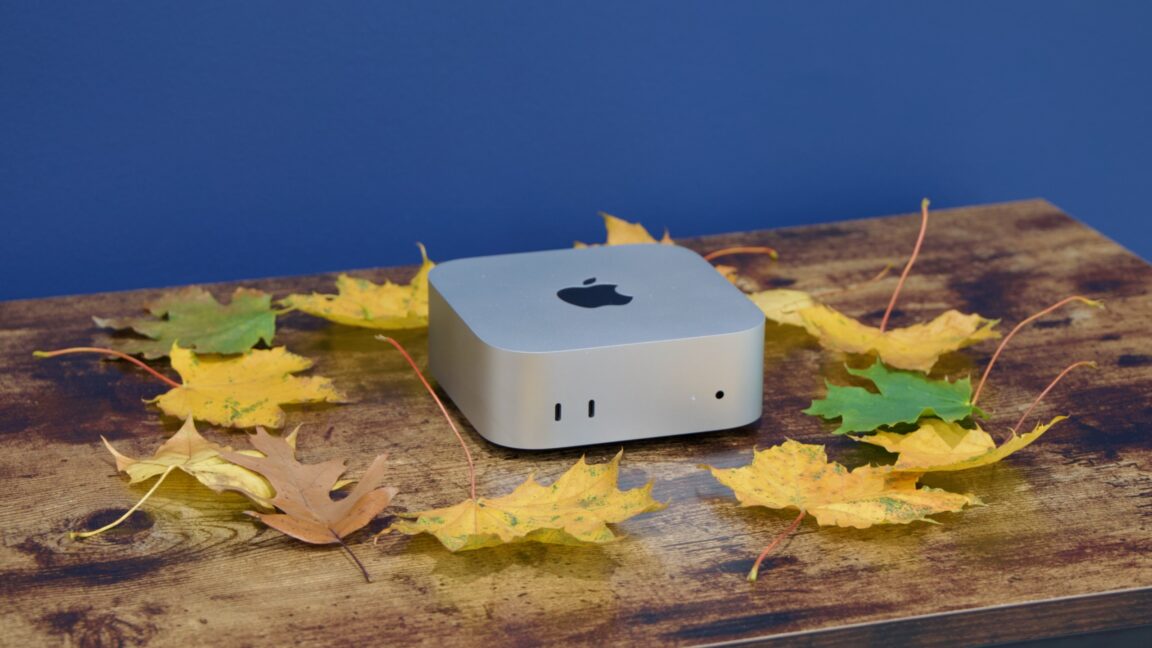
Apple's Mac supply chain is showing signs of strain beyond the widely reported MacBook Neo and desktop shortages, with specific configurations of the MacBook Pro 14-inch and Mac mini now facing extended delivery times of 3–4 weeks in multiple regions. This matters because it signals that component shortages are spreading beyond Apple's newest products, threatening the company's ability to meet back-to-school and enterprise demand in Q3 2026.
What Happened
Ars Technica has identified that five distinct Mac models are now experiencing supply constraints as of Friday, May 8, 2026, with the situation deteriorating most sharply for the MacBook Pro 14-inch with M4 Max chip and the Mac mini with M4 Pro processor. The shortages are worst in Europe and Asia-Pacific, where delivery estimates have stretched to 4–6 weeks for custom configurations, while the U.S. market is seeing 2–3 week delays on the same SKUs.
Key Facts
- The MacBook Pro 14-inch with M4 Max chip and 64GB unified memory is the most constrained SKU, with delivery estimates of 5 weeks in Germany and 4 weeks in Japan.
- Mac mini units with M4 Pro processors and 512GB storage are showing 3-week delays in the U.K. and Australia, up from 1 week in early April.
- MacBook Air 15-inch with 24GB RAM configurations are also slipping to 2-week delivery windows in North America, though base models remain in stock.
- Apple's online store in France and Italy now lists "Currently Unavailable" for the MacBook Pro 16-inch with M4 Max and 1TB storage, a SKU that was readily available in March.
- Third-party retailers like Best Buy and B&H Photo report zero inventory for the MacBook Pro 14-inch M4 Max in Space Black, with restock dates pushed to late May.
- The shortages coincide with Apple's reported 12% year-over-year decline in Mac shipments for Q1 2026, per IDC data, as the company navigates the transition to M4-series chips.
- Component shortages for high-bandwidth memory and advanced display drivers are the primary bottlenecks, according to supply chain sources cited by Ars Technica.
Breaking It Down
The spread of shortages beyond the headline-grabbing MacBook Neo and desktop lines reveals a deeper structural problem in Apple's supply chain. The MacBook Neo, which launched in March 2026 with a radical foldable design, has been backordered since its first week, with delivery estimates now at 8–10 weeks globally. But the new data shows that even mature product lines like the Mac mini and MacBook Pro are being squeezed, suggesting that Apple's component allocation strategy is favoring the Neo at the expense of its traditional workhorses.
Delivery times for the MacBook Pro 14-inch M4 Max have doubled from 2 weeks in March to 5 weeks in May across key European markets, a 150% increase that mirrors the trajectory seen before the MacBook Neo launch.
This pattern is particularly concerning because the MacBook Pro and Mac mini are the backbone of Apple's pro creative and enterprise customer base—segments that generate higher average selling prices and more recurring revenue through services. If these customers cannot get machines in time for summer project cycles or back-to-school purchasing (which begins in June for many educational institutions), they may defect to Windows workstations from Dell or Lenovo, which are not facing similar constraints on high-end configurations.
The geographical disparity is also telling. Europe and Asia-Pacific are bearing the brunt of the shortages, while North America remains relatively well-supplied. This suggests that Apple is prioritizing its home market—a rational short-term move, but one that risks alienating international customers and regulators. The European Commission has already signaled interest in supply chain resilience, and Apple's uneven allocation could invite scrutiny under digital market regulations.
The component-level bottlenecks point to a specific vulnerability: high-bandwidth memory (HBM) used in the M4 Max and M4 Pro chips is in short supply globally, as Samsung and SK Hynix struggle to meet demand from both Apple and the AI data center market. Apple's custom display drivers for the Liquid Retina XDR panels are also constrained, as the sole supplier LG Display has shifted some production capacity to OLED panels for the iPad Pro line.
What Comes Next
-
WWDC 2026 (June 8–12): Apple is expected to announce the M5 chip family, which could either alleviate or exacerbate supply constraints. If Apple transitions its Mac lineup to M5 quickly, it may need to write down M4 inventory, but if it holds back, shortages could persist through Q3.
-
Back-to-school season (June–August): Education buyers typically place large orders in June. If Apple cannot fulfill MacBook Air and MacBook Pro orders for school districts and universities, Chromebook and Windows laptop makers could gain share in the education market for the first time since 2020.
-
Component supply resolution (late Q3 2026): Samsung has announced a new HBM3E production line coming online in August 2026, which could ease memory constraints. LG Display has indicated it will restore display driver production for Macs by September.
-
Potential price adjustments: Apple may raise prices on constrained SKUs or offer configuration downgrades to steer customers toward available inventory, as it did during the 2022 supply crisis.
The Bigger Picture
This story sits at the intersection of two broader trends: supply chain fragmentation and AI-driven component competition. Apple's reliance on Samsung and SK Hynix for high-bandwidth memory puts it in direct competition with Nvidia and AMD, which are buying up every available HBM module for AI accelerators. As AI demand continues to grow—Nvidia alone is expected to consume 40% of global HBM supply in 2026—consumer electronics companies like Apple will face persistent shortages for premium memory chips.
The second trend is product line proliferation. Apple now sells seven distinct Mac families (MacBook Air, MacBook Pro, MacBook Neo, iMac, Mac mini, Mac Studio, Mac Pro), each with multiple configurations. This complexity strains supply chains, as each SKU requires dedicated components, testing, and assembly lines. By contrast, Apple's iPhone lineup has become simpler over time, with fewer SKUs and higher inventory turnover. The Mac division may need to consolidate its offerings to avoid recurring shortages, even if that means discontinuing lower-volume models like the Mac Studio or Mac Pro.
Key Takeaways
- [Shortage Spread]: Shortages are no longer limited to the MacBook Neo—five Mac models are affected, with the MacBook Pro 14-inch M4 Max facing 5-week delays in Europe.
- [Component Bottleneck]: High-bandwidth memory and custom display drivers are the primary constraints, driven by competition from AI chipmakers like Nvidia.
- [Geographic Disparity]: Europe and Asia-Pacific are hit hardest, suggesting Apple is prioritizing North American supply, which risks regulatory and customer backlash.
- [Q3 Risk]: Back-to-school and enterprise orders are at risk if supply does not improve by June, potentially ceding market share to Windows competitors in education and creative pro segments.