TL;DR
Apple is equipping the upcoming AirPods Pro 4 (Ultra) with integrated cameras to enable real-time visual AI features such as live translation and object recognition. This marks a fundamental shift from audio-only earbuds to wearable visual computing devices, with a target launch in late 2026.
What Happened
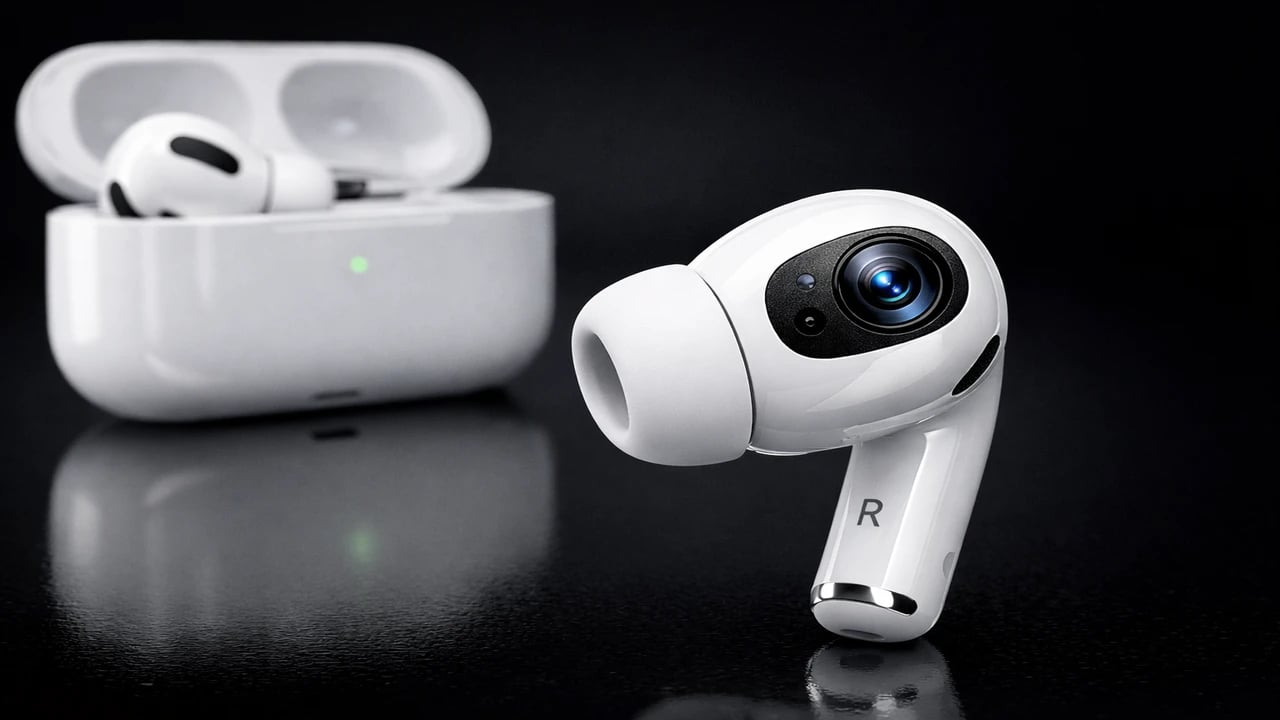
Apple is embedding cameras into the next-generation AirPods Pro 4 (Ultra), transforming the earbuds from a passive audio accessory into an active visual computing platform. The move, detailed by Geeky Gadgets on May 14, 2026, will allow users to point at text, signs, or objects and receive instant translations, contextual information, or AI-driven assistance without pulling out an iPhone.
Key Facts
- The AirPods Pro 4 (Ultra) will feature integrated cameras — likely small, low-resolution sensors — positioned on the earbud stems or housings to capture the user's forward field of view.
- Real-time translation is a marquee capability: point the earbuds at a foreign-language menu or sign, and the audio translation plays directly into the user's ear.
- The cameras will feed data into Apple's Visual AI system, likely powered by a custom neural engine or the A18/A19-series chip inside the earbuds or tethered iPhone.
- Apple is targeting a late 2026 release for the AirPods Pro 4 (Ultra), according to the report.
- The cameras are expected to support object recognition — identifying landmarks, products, or even people (with privacy safeguards) in real time.
- The feature set builds on Apple's existing Visual Look Up and Live Text capabilities, but moves them from the iPhone screen to a hands-free, audio-based interface.
- The move positions the AirPods as a direct competitor to Meta's Ray-Ban Stories smart glasses and other wearable AI form factors, but without requiring a head-mounted display.
Breaking It Down
Apple's decision to put cameras in earbuds, not glasses, is a radical bet that the ear — not the eye — is the better primary interface for ambient AI.
The core insight is that audio is a less intrusive modality than visual overlays. Smart glasses force users to wear a visible, often socially awkward device on their face, and they demand constant screen engagement. Earbuds, by contrast, are already socially normalized: millions of people wear them in public daily. By adding a camera, Apple creates a "point-and-ask" interaction: the user simply looks at something, and the earbuds whisper the answer. This reduces friction to near-zero. The AirPods Pro 4 (Ultra) effectively become a real-time, always-on AI assistant that requires no hand gestures, no screen taps, and no voice commands beyond a simple "what is this?"
The technical challenge is immense. A camera in an earbud must operate in wildly varying lighting, handle rapid head motion, and process video frames with minimal latency — all while consuming tiny amounts of power. Apple's H-series chips, already among the most efficient in the industry, will need a significant upgrade. The H3 or a new H4 chip inside the AirPods Pro 4 (Ultra) will likely include a dedicated neural engine core for on-device visual processing, offloading heavy lifting to the paired iPhone only when necessary. Battery life is the critical constraint: adding a camera could cut current AirPods Pro usage (roughly 6 hours with ANC) by 30–50% unless Apple makes a breakthrough in power efficiency or battery density.
Privacy is the explosive issue. A camera in your ear is a camera pointed at everyone around you. Apple will almost certainly require explicit user initiation — the camera likely activates only when the user performs a deliberate action, such as tapping the stem or saying a trigger phrase. The company's on-device processing philosophy means no video frames should leave the device without user consent. Still, the social implications are profound: a world where a significant fraction of people in public spaces are wearing cameras in their ears, even if only activated occasionally, will raise new norms and regulations around consent and surveillance.
What Comes Next
-
WWDC 2026 (June) : Apple is expected to preview the AirPods Pro 4 (Ultra) software framework, including a new Visual AI API for developers. Third-party apps — from restaurant menu scanners to museum guide apps — will be key to proving the platform's utility beyond Apple's own features.
-
Regulatory scrutiny (late 2026) : The European Union's AI Act and various US state privacy laws will force Apple to publish detailed transparency reports on camera activation, data processing, and deletion policies. Expect privacy advocacy groups to file complaints within weeks of launch.
-
Competitor responses (2026–2027) : Meta will likely accelerate its Ray-Ban Stories roadmap, adding audio-only AI features to compete. Samsung and Google are rumored to be developing their own camera-equipped earbuds, though neither has confirmed a timeline.
-
Battery and form factor refinements (2027) : First-generation AirPods Pro 4 (Ultra) may have reduced battery life. Apple will likely release a second revision within 12–18 months with improved power management, possibly enabled by a new low-power image sensor from Sony (Apple's longtime camera sensor partner).
The Bigger Picture
This move accelerates two converging trends: ambient computing and audio-first AI interfaces. Ambient computing — the idea that technology should recede into the background and respond to context, not commands — has been a holy grail since Mark Weiser's 1991 paper. Apple's camera earbuds are a practical, low-friction implementation: the device is invisible until needed, and the output is entirely audio, requiring no screen. This contrasts sharply with the spatial computing approach of Apple's own Vision Pro, which demands a bulky headset and a fully immersive visual interface.
The second trend is the commoditization of computer vision. Once the domain of expensive robotics labs, real-time object recognition and translation are now cheap enough — in both silicon and software — to fit inside a $250 consumer earbud. Apple's move signals that visual AI is no longer a premium smartphone feature; it is becoming a pervasive utility, as common as GPS or Bluetooth. The AirPods Pro 4 (Ultra) could be the device that makes "point and ask" as natural as "tap and scroll."
Key Takeaways
- Visual Earbuds Arrive: Apple is adding cameras to the AirPods Pro 4 (Ultra) for real-time translation and object recognition, launching in late 2026.
- Audio-First AI Wins: Earbuds offer a less intrusive AI interface than smart glasses, leveraging existing social acceptance of wearing headphones in public.
- Privacy Is the Crux: On-device processing and deliberate activation are essential to avoid backlash over constant, hidden camera use in public spaces.
- Ecosystem Lock-In Deepens: The Visual AI features will require a recent iPhone (likely iPhone 17 or later), further tying users into Apple's hardware and services.