TL;DR
Acura is actively evaluating whether to end its factory GTP program after the 2026 IMSA WeatherTech SportsCar Championship season. This potential departure of a cornerstone manufacturer comes at a critical juncture for the hybrid-powered class, which is balancing rapid growth against the immense financial and technical costs of competition.
What Happened
The future of one of IMSA’s most successful factory efforts is now in question. Acura, a foundational manufacturer in the sanctioning body’s top prototype category since 2018, has confirmed it is conducting a strategic review that could see it withdraw its factory support from the GTP class at the conclusion of the 2026 season.
Key Facts
- Acura has participated in IMSA’s top prototype class for nine consecutive seasons, starting in the DPi era (2018-2021) and continuing into the current LMDh-based GTP category (2023-present).
- The evaluation is being led by American Honda Motor Co., Inc., Acura’s parent company, which must weigh the program’s significant success against its substantial and escalating operational costs.
- In the GTP era alone, Acura has secured 8 race wins, the 2023 Manufacturers’ Championship, and the 2024 Drivers’ and Teams’ Championships with the #10 Wayne Taylor Racing with Andretti entry.
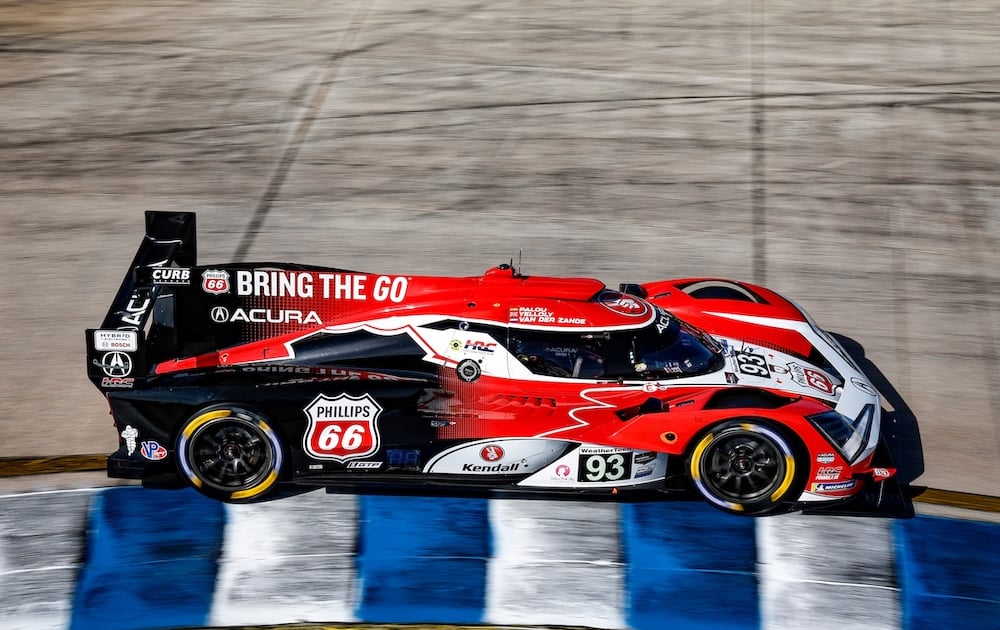
- The current factory program involves two ARX-06 GTP cars: the #10 run by Wayne Taylor Racing with Andretti and the #40 run by Wayne Taylor Racing.
- The news was first reported by RACER on Friday, April 17, 2026, citing senior sources within Honda Performance Development (HPD).
- Acura’s potential exit would follow the departure of another manufacturer, Peugeot, which left the IMSA GTP class after the 2025 season to focus on the FIA World Endurance Championship.
- The 2026 IMSA season is the final year of the current homologation cycle for the Acura ARX-06, a natural decision point for manufacturers to commit to a new multi-year cycle or withdraw.
Breaking It Down
Acura’s deliberation is not a reaction to competitive failure but a strategic calculation in the face of success. The brand has been arguably the most consistent force in the GTP class since its inception, developing the complex ARX-06 hybrid powertrain in-house at Honda Performance Development and translating that into championships. This makes the evaluation all the more significant; it suggests the costs of maintaining a winning program at the cutting edge of LMDh technology may be outstripping the perceived return on investment, even for a proven victor.
Acura’s potential exit would reduce the GTP manufacturer count to three—BMW, Cadillac, and Porsche—just two seasons after the class launched with five factory brands.
This stark figure underscores the fragility of the current manufacturer boom in top-level sports car racing. The GTP/LMDh platform was specifically designed to control costs and attract OEMs, yet it is still proving to be a major financial undertaking. Acura’s review signals that the promised cost-effectiveness of the LMDh formula has its limits, especially when development races intensify and the need for continuous performance updates persists. The departure of Peugeot in 2025, while framed as a strategic reallocation, set a precedent. A second manufacturer exit in as many years would shift the narrative around the class from explosive growth to a challenging consolidation phase.
The decision rests on a complex matrix of factors beyond the winner’s circle. American Honda leadership must weigh the marketing value and technology showcase of GTP against other global motorsport priorities, including its Formula 1 program with Aston Martin and its electrification roadmap. Furthermore, the commercial and technical partnership with Wayne Taylor Racing and Andretti Global is a major asset. The structure of any future program—whether a full factory withdrawal, a reduction to a single car, or a shift to a customer-focused, factory-supported model—will be critical. The health of IMSA’s ecosystem, including the value of television rights and sponsor attraction with a smaller manufacturer grid, will also factor into the final calculus.
What Comes Next
The evaluation process is expected to unfold over the coming months, with a final decision likely required by mid-summer to allow teams adequate preparation time for the 2027 season. All parties are operating under the assumption that the 2026 campaign will proceed as planned with a full two-car factory effort.
- Internal Strategic Review (April – July 2026): American Honda and HPD executives will conduct a comprehensive analysis, weighing motorsport strategy, marketing objectives, and budgetary considerations. A key milestone will be the conclusion of the current ARX-06 homologation period.
- Manufacturer & IMSA Discussions (Ongoing): IMSA and the Automobile Club de l’Ouest (ACO), which co-sanctions the LMDh regulations, will be keenly involved in discussions to understand Acura’s concerns and present the long-term stability and value of the series.
- Team and Partner Contingency Planning (Summer 2026): Wayne Taylor Racing and Andretti Global will need clarity on their 2027 operational and financial landscape. They may explore options to acquire the ARX-06 chassis and run them as privateer entries, or seek a new manufacturer partnership.
- Official Announcement Deadline (Late Q3 2026): An official decision on Acura’s factory status for the 2027 IMSA WeatherTech SportsCar Championship is expected by September or October 2026, aligning with typical team and driver contract cycles.
The Bigger Picture
Acura’s situation highlights the intense pressure on Manufacturer Cost-Benefit Analysis in Hybrid Racing. The GTP class represents a massive investment in hybrid technology, but as the development war stabilizes, manufacturers are scrutinizing whether the track-to-road technology transfer and brand exposure justify annual budgets estimated to be in the tens of millions. This is a global trend affecting both IMSA’s GTP and the FIA WEC’s Hypercar class, where the balance between sporting glory and corporate ROI is constantly being measured.
Furthermore, this evaluation touches on the Sustainability and Road-Relevance of Racing Platforms. Manufacturers are under immense shareholder and regulatory pressure to invest in future road car technologies, primarily full electrification and software-defined vehicles. While the LMDh’s hybrid system is a showcase, some OEMs may be questioning if a racing program centered on a spec hybrid unit and internal combustion engine aligns with a public-facing strategy increasingly focused on pure EVs and autonomous driving. The potential reallocation of Acura’s racing budget could signal a shift in priority toward other technological frontiers.
Key Takeaways
- Strategic Crossroads: Acura is at a pivotal point, weighing a highly successful GTP program against its global motorsport portfolio and financial commitments, with a decision due later in 2026.
- GTP Stability Test: The potential exit of a second manufacturer in two years poses a significant test for the long-term stability and appeal of the IMSA GTP class, potentially resetting the grid’s manufacturer dynamic.
- Cost Reality Check: Even the cost-capped LMDh formula entails substantial and escalating operational expenses, prompting even successful manufacturers to conduct rigorous ROI analyses.
- Team Landscape Shift: The futures of powerhouse teams Wayne Taylor Racing and Andretti Global in GTP are now indirectly tied to this review, forcing early contingency planning for 2027 and beyond.