TL;DR
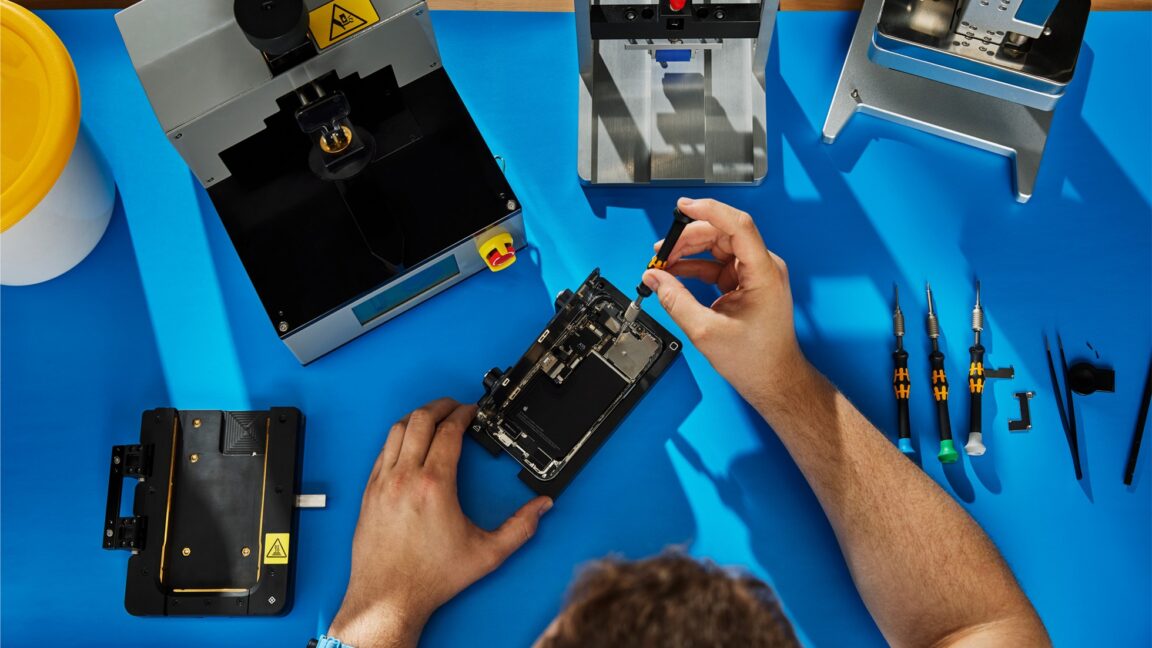
A new teardown analysis of 2026's flagship laptops finds that Apple's MacBook Neo and Lenovo's ThinkPad Z16 Gen 3 are the most difficult for consumers to repair, scoring just 2/10 and 3/10 respectively. This comes as the European Union's landmark Right to Repair regulations are set to take full effect, putting immense pressure on manufacturers to redesign products for longevity or face significant penalties.
What Happened
A comprehensive repairability analysis of premium laptops has delivered a damning verdict on the industry's sustainability pledges, revealing a stark gap between corporate rhetoric and hardware reality. The study, conducted by the independent repair advocacy firm iFixit in partnership with the US Public Interest Research Group (PIRG), systematically disassembled and scored ten of the year's most prominent laptops, finding that the most expensive and powerful models from Apple and Lenovo were also the most hostile to user repair.
Key Facts
- The 2026 Apple MacBook Neo received the lowest repairability score of 2 out of 10, criticized for its fully soldered storage and RAM, proprietary pentalobe screws, and a complex, glued-together display assembly.
- Lenovo's flagship ThinkPad Z16 Gen 3 scored only 3/10, penalized for its use of copious amounts of adhesive, a non-removable battery, and a motherboard that requires complete removal to access basic components like the SSD.
- In contrast, Framework's Laptop 16 (2026) achieved the highest score of 9/10, praised for its modular, tool-free component swaps and detailed, public repair manuals.
- The analysis, published on April 7, 2026, evaluated devices on criteria including disassembly complexity, component modularity, and manual availability.
- The report explicitly notes that the MacBook Neo's design, while poor, is still "a step in the right direction" from Apple's previous models due to its more accessible battery and a slightly improved internal layout.
- These findings arrive just nine months before the EU's Right to Repair Regulation mandates repairability scoring for all new devices sold in the bloc, starting January 1, 2027.
- Dell's XPS 15 (2026) and HP's Spectre x360 16 scored a middling 5/10 and 4/10, respectively, showing incremental but insufficient progress across much of the industry.
Breaking It Down
The analysis underscores a persistent and costly contradiction in the consumer electronics market. While Apple and Lenovo aggressively market their devices as premium, durable investments, their design choices actively prevent the very repairs that would extend those devices' functional lifespans. This forces consumers into a binary choice: pay exorbitant out-of-warranty fees to the manufacturer or replace the entire device. The environmental impact is substantial, contributing to the estimated 53.6 million metric tons of e-waste generated globally in 2025.
"The MacBook Neo is a step in the right direction, though." This single line in the report is perhaps the most analytically significant. It acknowledges a subtle but critical shift in Apple's fortress-like design philosophy. The Neo's battery, while not user-replaceable in the traditional sense, is no longer chemically welded into the chassis and can be removed with a reasonable amount of effort and the correct tools. This change is almost certainly a direct, pre-emptive response to regulatory pressure, particularly from the EU. It signals that even the most recalcitrant manufacturers are beginning to calculate that the cost of redesign is lower than the cost of non-compliance with looming laws.
The stark contrast with Framework's 9/10 score is not merely about technical design; it represents a fundamental business model schism. Framework operates on the premise that long-term customer loyalty is won through upgradeability and repair, treating the device as a platform. Apple, Lenovo, and others continue to prioritize thinness, perceived build quality, and margin-protecting part pairing, treating the device as a sealed appliance. The iFixit/PIRG report provides quantitative proof that the latter model inherently generates more waste and higher total cost of ownership.
Furthermore, the poor scores for Lenovo's ThinkPad are particularly notable given the brand's historical reputation for serviceability in its enterprise-focused T-series laptops. The Z16's design indicates that the push for ultra-premium, Apple-like aesthetics in consumer-facing lines is overriding traditional engineering values, even within companies once known for them. This suggests the repairability crisis is a cross-industry trend, not isolated to a single player.
What Comes Next
The regulatory clock is now the dominant force shaping laptop design. The iFixit/PIRG report serves as a public benchmark against which the industry's compliance with new laws will be measured.
- January 1, 2027, EU Enforcement: The EU's Right to Repair regulation becomes fully enforceable. All new laptops sold must have an official, A-to-G repairability score. Manufacturers scoring consistently in the "F" range (like Apple and Lenovo's current flagships) will face fines, sales restrictions, and massive public relations damage.
- 2026-2027 Product Cycle Redesigns: The laptops teardown in this report were likely designed 18-24 months ago. The next generation of devices from Apple, Lenovo, Dell, and HP—already in advanced stages of development—will be the first truly designed under the shadow of the EU law. Expect announcements in late 2026 and early 2027 to heavily feature "new, more repairable designs."
- Legislative Domino Effect: With the EU setting the standard, other jurisdictions are accelerating their own bills. Key decisions are expected in 2026 on proposed right-to-repair laws in New York, California, and Canada, which could create a de facto North American standard if passed.
- Consumer Class Action Scrutiny: Low repairability scores and high repair costs could fuel litigation. A key event to watch is the potential certification of a class-action lawsuit in the US alleging that soldered storage constitutes planned obsolescence, as devices cannot be economically upgraded when the base storage becomes insufficient.
The Bigger Picture
This repairability report is a single data point in two much larger, converging technological and societal trends. The first is the crisis of electronic waste, where the environmental externalities of constant hardware turnover are no longer acceptable to regulators or a growing segment of consumers. Legislation is the blunt instrument forcing the industry to internalize these costs.
Second, it reflects the battle over consumer sovereignty in the digital age. The fight for the right to repair is fundamentally about who controls a device after purchase. Manufacturers have used software locks, proprietary parts, and physical design to maintain control and monetize the post-sale lifecycle. The regulatory push, supported by advocates like iFixit, seeks to return agency to the owner, aligning with broader movements for digital ownership in areas like software subscriptions and cloud storage.
Key Takeaways
- Regulation is Driving Design: The faint praise for Apple's MacBook Neo proves that EU law is already altering product development years before enforcement, setting a new global design mandate.
- The Premium Repair Penalty: The analysis confirms that high price and high performance do not correlate with high repairability; in fact, the current market shows an inverse relationship, charging consumers more for less autonomy.
- A Business Model Divide: The chasm between Framework's (9/10) and Apple's (2/10) scores represents a fundamental strategic split between modular, open platforms and sealed, service-revenue appliances.
- The 2027 Cliff Edge: January 1, 2027, is the hard deadline for the industry. The next 18 months of laptop announcements will reveal which companies have genuinely embraced repairability and which are attempting minimal, compliant redesigns.

![Gemini overlay and Gemini Live start rolling out big Android redesign [Gallery] - 9to5Google — technology news on Trend Pulse](https://i0.wp.com/9to5google.com/wp-content/uploads/sites/4/2026/03/gemini-android-app-icon.jpg?resize=1200%2C628&quality=82&strip=all&ssl=1)