TL;DR
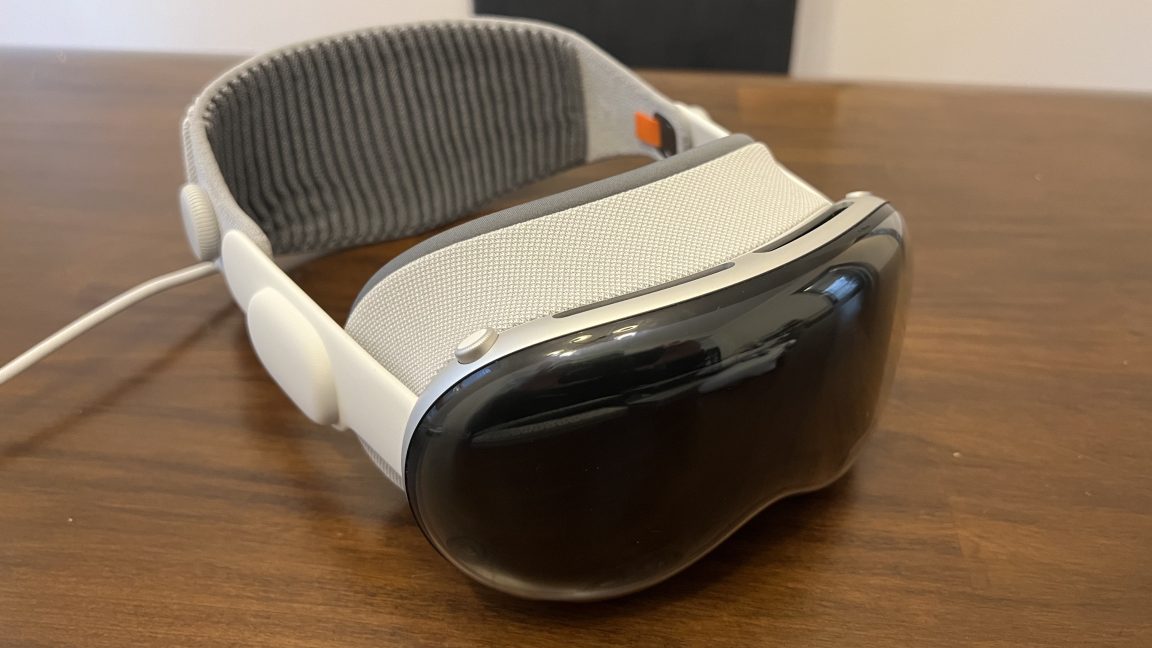
Valve has released a native Steam Link application for Apple's Vision Pro, allowing users to stream their PC game libraries directly to the mixed reality headset. This official app replaces the need for jankier third-party workarounds and marks a significant, pragmatic collaboration between two historically competitive platforms in the high-end computing space.
What Happened
In a move that bridges two distinct ecosystems, Valve has launched a native Steam Link app for the Apple Vision Pro. Available now on the visionOS App Store, the application enables seamless streaming of a user’s entire Steam game library from a Windows, macOS, or Linux PC directly to Apple's $3,499 spatial computer, transforming any room into a large-scale, immersive gaming environment.
Key Facts
- Valve released the native Steam Link app for visionOS on Tuesday, April 7, 2026, making it freely available for download.
- The app is designed to replace third-party streaming solutions that users previously relied on, which were described in reports as more cumbersome and less reliable.
- Steam Link streams gameplay from a user’s primary gaming PC to the Vision Pro, supporting both traditional gamepad input and the Vision Pro’s native hand- and eye-tracking controls where applicable.
- This marks a rare official collaboration between Valve, the dominant PC gaming storefront operator, and Apple, whose macOS has a limited native gaming library.
- The Vision Pro’s high-resolution micro-OLED displays and precise tracking are leveraged to project games onto virtual screens, including environments that can simulate a massive, theater-sized display.
- Valve’s development follows the established Steam Link technology already available on smartphones, tablets, TVs, and Valve’s own Steam Deck, but optimized for visionOS’s spatial framework.
- No modifications to existing Steam accounts or game purchases are required; the app functions as a remote play client for a user’s existing library.
Breaking It Down
The release of an official Steam Link app is less a revolutionary new feature and more a critical infrastructure play that legitimizes the Apple Vision Pro as a viable endpoint for serious gaming. For months, users experimented with sideloading the iPad version of Steam Link or using generic desktop streaming apps within the Vision Pro’s virtual desktop mode. These methods often introduced unacceptable latency, compatibility issues, or a clunky user experience. By delivering a native visionOS app, Valve has effectively solved the last-mile delivery problem for PC gaming on Apple’s platform, ensuring optimized performance and a seamless interface tailored for spatial computing.
The native Steam Link app directly undercuts the value proposition of third-party alternatives that emerged to fill this gap, potentially consolidating the entire Vision Pro PC gaming user base into Valve’s official ecosystem.
This strategic move allows Valve to extend the reach of its Steam platform without needing to port thousands of games to Apple’s architecture. For Apple, it instantly adds a vast library of content to the Vision Pro without the company having to invest directly in game publishing or court developers for native visionOS ports—a notoriously difficult ask given the headset’s current niche market size. It’s a symbiotic relationship: Valve gains access to a high-end, affluent user base, and Apple gets to check the “gaming” box on its Vision Pro feature list with content from the most extensive PC catalog available.
The implications for platform competition are subtle but profound. Valve and Apple have historically been in a low-grade cold war over gaming, with Apple promoting its App Store and Metal API while Steam dominates on open PC platforms. This collaboration suggests a pragmatic détente. Valve recognizes that the Vision Pro, despite its price, represents a new class of premium display hardware. Apple, in turn, acknowledges that the sheer volume of software on Steam is an irresistible draw for professional and prosumer customers who might use the headset for work but want to game on it as well. It’s a recognition that interoperability can be more valuable than walled-garden exclusivity in driving early adoption of a new hardware category.
What Comes Next
The launch of the native app is the beginning, not the end, of this integration. The focus will now shift to performance optimization, control scheme evolution, and potential deeper ties between the two platforms.
- Performance Metrics and Updates: Over the next quarter, expect detailed benchmarks from reviewers and users comparing latency, visual fidelity, and battery life impact of the native app versus the old workarounds. Valve will likely issue rapid updates to fine-tune the streaming codec for visionOS and add support for more advanced control schemes.
- Controller and Input Standardization: A key area to watch is how Valve and Apple handle controller support. Will the Vision Pro’s hand-tracking be mapped to simulate a standard gamepad for simpler games? Will there be official support for pairing the Steam Controller or other peripherals directly via visionOS? The development of a unified input standard for spatial gaming will be critical.
- Potential for Deeper Steam Integration: The logical next step could be a version of Steam’s Big Picture Mode reimagined for spatial computing. This would move the experience beyond simply mirroring a desktop to offering a fully native, navigable 3D interface for browsing and launching games within the Vision Pro environment.
- Apple’s Response in visionOS 3.0: With Apple’s Worldwide Developers Conference (WWDC) typically in June, all eyes will be on visionOS 3.0 announcements. Will Apple introduce system-level APIs that further facilitate game streaming, such as lower-latency video decoding or dedicated gamepad pairing profiles? Their official stance on this Valve partnership in their keynote will be highly telling.
The Bigger Picture
This development is a clear signal in the trend of Spatial Computing as a Aggregated Display Frontier. The Vision Pro is not being positioned solely as a device for native apps, but as an unparalleled personal display capable of aggregating content from any source—Mac desktops, Windows PCs, game consoles (via other streaming methods), and now, officially, the entire Steam ecosystem. The "killer app" for early spatial computing may not be a single piece of software, but the device’s ability to faithfully host the software ecosystems users already rely on.
Furthermore, it highlights the growing business strategy of Pragmatic Ecosystem Interoperability. The old model of strict platform exclusivity is softening in the face of niche, high-cost hardware. Companies like Apple and Valve are demonstrating that allowing key services to cross platform boundaries can accelerate hardware adoption and increase overall platform stickiness. For the Vision Pro to succeed, it cannot be an island; it must be a bridge. Valve’s move is a masterclass in meeting customers where they are—on Steam—and bringing them into a new hardware experience with minimal friction.
Key Takeaways
- Official Solution for Gaming: Valve’s native Steam Link app provides the first official, high-fidelity pathway to play PC games on the Apple Vision Pro, eliminating the need for unreliable third-party workarounds.
- Strategic Ecosystem Bridge: The release represents a pragmatic collaboration between Valve and Apple, leveraging each company’s strengths—Steam’s vast content library and Apple’s cutting-edge display technology—to benefit the user.
- Validation of Spatial Display Use Case: This move solidifies the Vision Pro’s role as a premium aggregated display, emphasizing its utility for hosting existing high-end computing experiences (like PC gaming) in immersive environments, not just running native spatial apps.
- Future of Input and Interface: The success of this app will drive innovation in control schemes for spatial computing, testing how traditional gamepad-based games can integrate with or transition to hand- and eye-tracking inputs.

![Gemini overlay and Gemini Live start rolling out big Android redesign [Gallery] - 9to5Google — technology news on Trend Pulse](https://i0.wp.com/9to5google.com/wp-content/uploads/sites/4/2026/03/gemini-android-app-icon.jpg?resize=1200%2C628&quality=82&strip=all&ssl=1)