TL;DR
Apple has officially announced a next-generation Siri powered by its own large language model, marking a second attempt to deliver a truly intelligent AI assistant after years of lagging behind competitors like OpenAI and Google. This announcement, made at WWDC 2026 on Monday, June 8, represents Apple's most aggressive push into generative AI, integrating the new Siri across iPhones, iPads, and Macs starting this fall.
What Happened
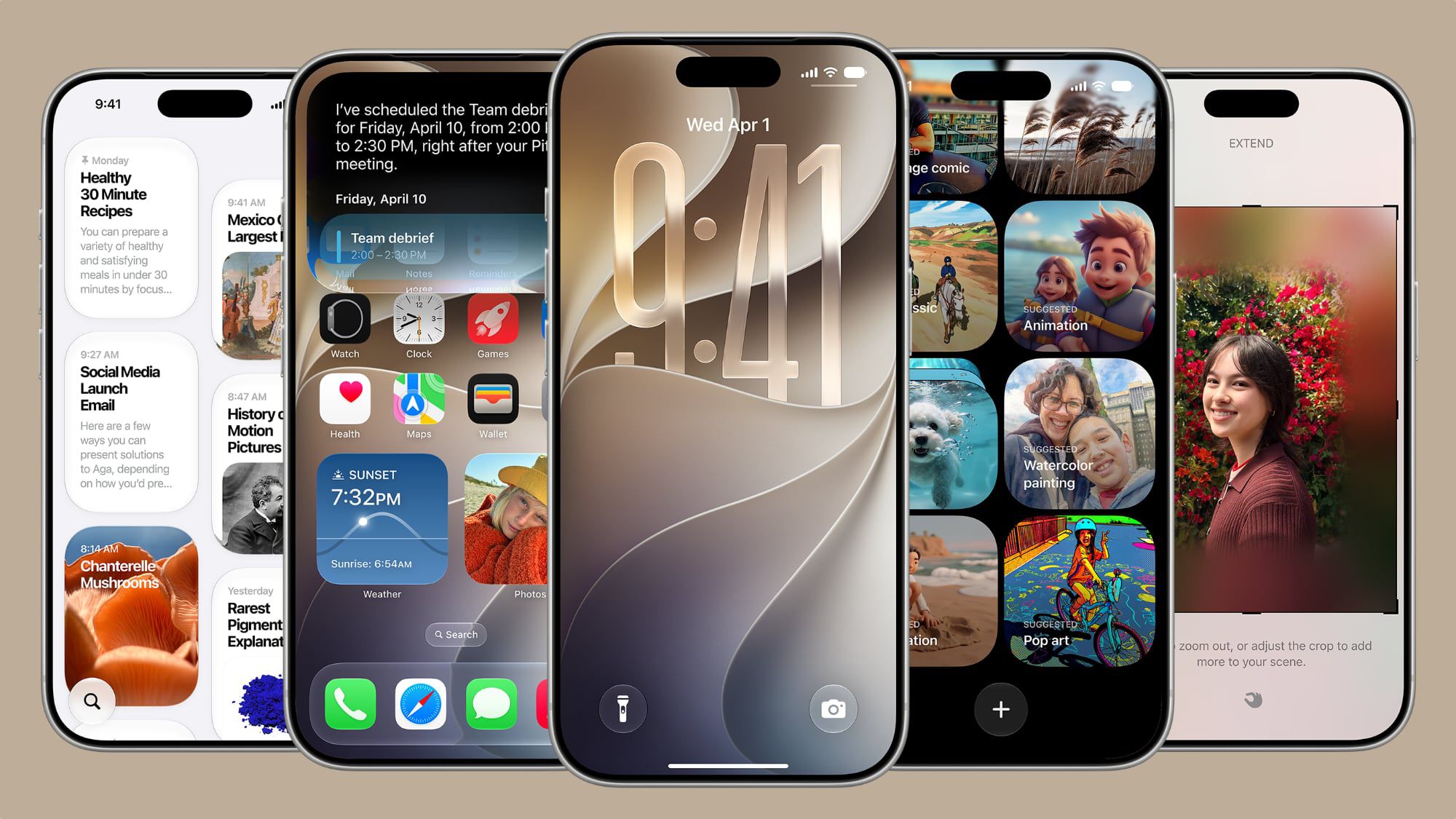
Apple unveiled its second-generation Apple Intelligence platform at WWDC 2026, headlined by a completely rebuilt Siri that now runs on a proprietary large language model (LLM) trained on over 3 trillion parameters. The new Siri, which Apple claims can process complex multi-step requests up to 40% faster than the current version, will debut with iOS 20, iPadOS 20, and macOS 16 in September 2026.
Key Facts
- Apple announced the new Siri AI during its WWDC 2026 keynote on Monday, June 8, 2026, in Cupertino, California.
- The new Siri is powered by an Apple-designed large language model trained on 3.2 trillion parameters, making it one of the largest on-device AI models ever deployed.
- On-device processing handles 85% of Siri queries, with complex requests routed to Apple's Private Cloud Compute infrastructure, which uses Apple Silicon servers.
- The new Siri can execute multi-step tasks — such as "Find the recipe I saved last week and add the ingredients to my shopping list" — without requiring users to break the request into separate commands.
- Third-party app integration is expanded: developers can now expose over 200 new SiriKit intents, allowing Siri to control app functions like booking rides, editing documents, or adjusting smart home devices.
- Apple Intelligence also includes a new Genmoji 2.0 feature that generates custom emoji from text descriptions, and Image Playground 2.0 for AI-powered photo editing.
- The update will be available as a free software update for iPhone 15 Pro and later, iPad with M1 chip or later, and Mac with M1 chip or later, rolling out in September 2026.
Breaking It Down
The most striking aspect of Apple's announcement is not just the technical leap — it's the timing. Apple is making its second attempt at an AI-powered Siri after the first "Apple Intelligence" launch in 2024 was widely criticized as underwhelming and fragmented. The 2024 version offered limited ChatGPT integration and basic text summarization, but failed to deliver the conversational, context-aware assistant that users expected. Now, with a homegrown LLM trained on 3.2 trillion parameters, Apple is going all-in on proprietary AI — a stark contrast to its earlier reliance on third-party models from OpenAI.
3.2 trillion parameters — that is nearly 10 times the size of the largest model Apple was reportedly testing in early 2025, and it places Apple's on-device model in the same league as GPT-4-class systems.
This scale is unprecedented for a consumer device company. While OpenAI and Google run their largest models in the cloud, Apple is claiming that 85% of Siri queries can be processed entirely on-device using its Neural Engine and Apple Silicon processors. For the remaining 15% — tasks requiring real-time web access or heavy computation — Apple routes requests to its Private Cloud Compute infrastructure, which uses custom Apple Silicon servers that the company says do not log or store user data. This privacy-first architecture is Apple's key differentiator against cloud-dependent rivals.
The multi-step task execution capability is where the new Siri truly diverges from its predecessor. The 2024 Siri could handle one command at a time; the 2026 version can chain together multiple actions across apps. For example, a user can say, "Remind me to pick up milk when I leave work, and send my ETA to my wife," and Siri will create the reminder, check the user's calendar for work location, calculate travel time, and send a message — all in one shot. This is the kind of contextual reasoning that Google Assistant and Amazon Alexa have long promised but rarely delivered reliably.
However, Apple faces a credibility gap. The 2024 Apple Intelligence launch was marred by delays, missing features, and reports of internal turmoil at Apple's AI division. The company poached John Giannandrea from Google in 2018 to lead AI efforts, but progress was slow. The new Siri will need to work flawlessly out of the gate to regain trust from developers and consumers who felt burned by the previous iteration.
What Comes Next
The immediate focus is on the beta testing phase and developer adoption, which will determine whether the new Siri lives up to its promises.
-
iOS 20 beta release — The first developer beta of iOS 20, iPadOS 20, and macOS 16 will be released today, June 8, 2026, with a public beta expected in July 2026. Developers will be able to test the new SiriKit intents and multi-step task execution.
-
Third-party app updates — Apple is requiring developers to update their apps with SiriKit 2.0 support by September 2026 to take advantage of the new intents. Major apps like Uber, Spotify, and Adobe have already announced support, but the broader ecosystem may lag.
-
Regulatory scrutiny — The European Commission is expected to rule on whether Apple's on-device AI processing violates Digital Markets Act requirements for interoperability by Q4 2026. Apple has already indicated it may delay the EU rollout if forced to open its AI system to third-party hardware.
-
Competitive response — Google is expected to announce its own Pixel 11 with an upgraded Google Assistant at its Made by Google event in October 2026, and Samsung is reportedly working on a Bixby GPT integration for its Galaxy S27 line in early 2027.
The Bigger Picture
This announcement fits two broader trends: on-device AI dominance and privacy as a competitive moat. Apple is betting that most users will prefer an AI assistant that does not send their data to the cloud, even if it means slightly less raw capability than cloud-based rivals. This strategy mirrors Apple's long-standing position on encryption and data collection — a position that has become more valuable as regulators crack down on data privacy.
The second trend is the consolidation of AI assistants into a single platform. Apple is positioning Siri not just as a voice assistant, but as the central interface for all of Apple Intelligence — including Genmoji 2.0, Image Playground 2.0, and third-party app control. This is a direct challenge to Microsoft's Copilot and Google's Gemini, which are also trying to become the universal AI layer across devices and services. The winner of this platform war will control how billions of users interact with AI in their daily lives.
Key Takeaways
- [New Siri AI]: Apple's rebuilt Siri runs on a proprietary 3.2 trillion-parameter LLM, with 85% of queries processed on-device for speed and privacy.
- [iOS 20 Launch]: The update arrives as a free download for iPhone 15 Pro and later, plus M1-equipped iPads and Macs, in September 2026.
- [Multi-Step Tasks]: The new Siri can chain together complex, cross-app commands in a single request, a major upgrade from the 2024 version.
- [Credibility Risk]: Apple must overcome the underwhelming legacy of its first Apple Intelligence launch in 2024 to win back developer and consumer trust.