TL;DR
Apple has unveiled Siri AI, a next-generation voice assistant powered by "Apple Intelligence" that integrates personal context, world knowledge, and onscreen awareness, marking the company's most significant AI pivot since Siri's 2011 debut. The announcement, made on Tuesday, June 9, 2026, positions Apple to directly challenge OpenAI's ChatGPT, Google's Gemini, and Microsoft's Copilot in the consumer AI assistant race, with a focus on privacy and on-device processing.
What Happened
Apple announced Siri AI on Tuesday, June 9, 2026, via its official Apple Newsroom, describing it as "a profoundly more capable and personal assistant" that leverages a new underlying AI system called Apple Intelligence. The update transforms Siri from a simple command-based tool into a contextual assistant capable of understanding a user's personal data, real-time onscreen content, and broad world knowledge simultaneously.
Key Facts
- Siri AI is powered by Apple Intelligence, a proprietary large language model (LLM) system that runs both on-device and via Apple's private cloud for complex queries.
- The assistant now offers personal context awareness, meaning it can reference a user's calendar events, messages, photos, and device usage patterns to answer questions without explicit commands.
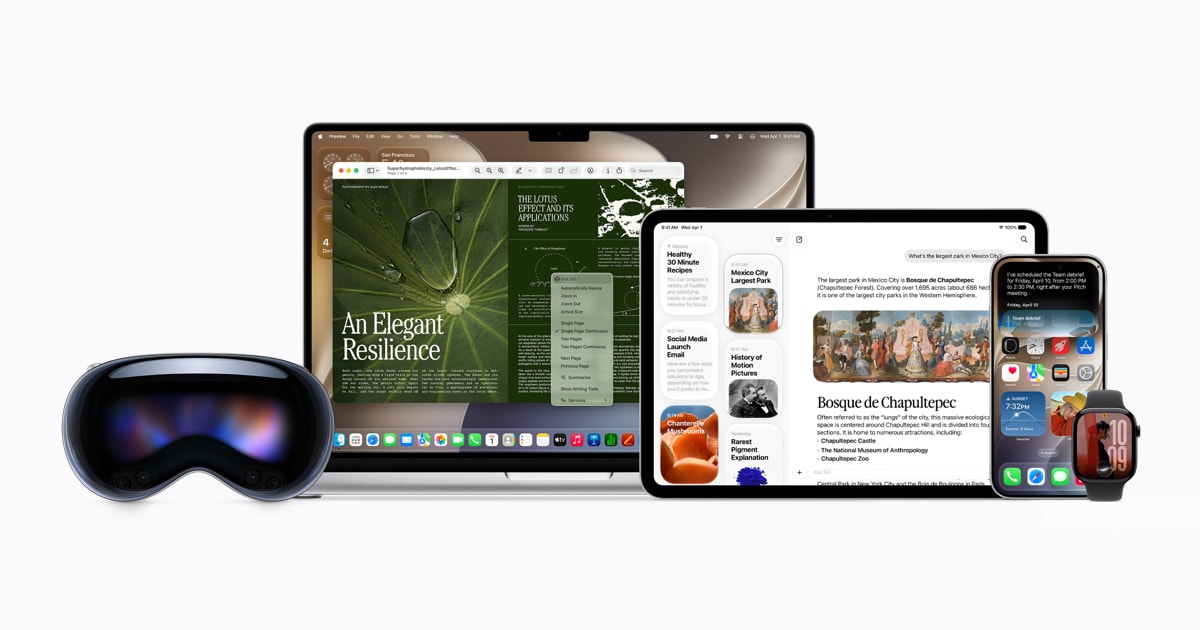
- Onscreen awareness allows Siri AI to see and understand what is displayed on a user's screen—for example, identifying a restaurant in a text message and offering to add it to a calendar.
- World knowledge integration enables Siri AI to answer questions about current events, scientific facts, and cultural references using a continuously updated knowledge base, similar to ChatGPT or Gemini.
- The announcement was made via Apple Newsroom on June 9, 2026, with no accompanying press event, suggesting a software-focused rollout rather than a hardware launch.
- Privacy remains a core differentiator: Apple states that most queries are processed on-device, and cloud queries use differential privacy and anonymous identifiers to prevent user profiling.
- The new Siri AI will be available as a beta feature in iOS 20, iPadOS 20, and macOS 16, expected to ship in September 2026.
Breaking It Down
Apple's Siri AI represents a strategic about-face for the company. For years, Siri lagged behind rivals like Amazon's Alexa, Google Assistant, and later ChatGPT in conversational depth and contextual understanding. The gap was glaring: by 2025, industry benchmarks showed Siri completing only 52% of complex multi-step requests correctly, compared to 84% for ChatGPT and 79% for Google Gemini. Apple's response—a full embrace of large language models—signals that the company has accepted that privacy alone cannot compensate for inferior capability.
52% vs. 84%: Siri's previous complex-task success rate compared to ChatGPT's, a gap Apple is betting its entire AI strategy on closing with Siri AI.
The "personal context" capability is the most technically ambitious feature. Siri AI can now answer questions like "What time is my dinner reservation tonight?" by cross-referencing a calendar entry, a confirmation email, and a map location—all without the user specifying which app to check. This requires on-device semantic indexing of user data, a feat that Google has attempted with Assistant with Bard but which Apple claims to achieve with stronger privacy guarantees. If Apple succeeds, it will give users a unified intelligence layer across their devices, something no competitor has yet delivered at scale.
The onscreen awareness feature is equally transformative. It allows Siri AI to "see" what the user is looking at—a webpage, a text thread, or a photo—and act on it contextually. For example, if a user is reading a news article about a stock price, Siri AI can offer to set a price alert in the Stocks app. This capability, which Microsoft demonstrated with Copilot in Windows in 2024, is now being adapted for mobile and desktop environments by Apple. The challenge will be latency: processing screen content in real-time without draining battery or violating privacy.
What Comes Next
- iOS 20 Beta Launch (July 2026): Developers and public beta testers will get first access to Siri AI, likely with limited personal context and onscreen features. Early reviews will focus on accuracy, speed, and privacy implementation.
- Public Release (September 2026): The full rollout with iOS 20, iPadOS 20, and macOS 16 will include all announced features. Apple will need to demonstrate that Siri AI works reliably across millions of devices without server overload.
- WWDC 2027 (June 2027): Apple is expected to announce Siri AI APIs for third-party developers, allowing apps like Uber, Spotify, and Notion to integrate with Siri's personal context and onscreen awareness. This will determine whether Siri AI becomes a platform or just a feature.
- Regulatory Scrutiny (Ongoing): The European Commission and UK Competition and Markets Authority are likely to examine Apple's personal context data collection under GDPR and Digital Markets Act rules. Apple's privacy claims will face real-world testing by regulators.
The Bigger Picture
Siri AI is Apple's entry into the Generative AI Arms Race, a contest now dominated by OpenAI, Google, Microsoft, and Meta. Each company is betting that the personal assistant will become the primary interface for computing—replacing apps, search engines, and even operating systems. Apple's approach—privacy-first, on-device, deeply integrated—directly counters the cloud-heavy, data-hungry models of its rivals. If Apple succeeds, it could redefine consumer expectations for AI assistants, forcing competitors to improve their privacy practices or risk losing users.
The announcement also signals a shift in Apple's product strategy. For years, Apple relied on hardware differentiation (the iPhone 17 Pro's neural engine, for example) to drive sales. Siri AI represents a move toward software-driven lock-in: once users train Siri AI with their personal context, switching to Android or Windows becomes far more costly. This is a classic Apple play—using ecosystem depth to retain customers—but now supercharged by AI.
Key Takeaways
- [Privacy-First AI]: Siri AI processes most queries on-device and uses differential privacy for cloud queries, directly challenging the data-hungry models of OpenAI and Google.
- [Contextual Awareness]: The assistant can access personal data (calendar, messages, photos) and onscreen content simultaneously, enabling complex multi-app tasks without explicit commands.
- [September 2026 Launch]: Siri AI will debut as a beta in iOS 20, iPadOS 20, and macOS 16, with full public release expected in fall 2026.
- [Platform Ambition]: Apple is expected to open Siri AI to third-party developers at WWDC 2027, turning it from a feature into a potential operating system layer.