TL;DR
Google and Back Market have launched a $3 ChromeOS Flex USB Kit, targeting the 500 million Windows 10 users facing an end-of-support deadline in October 2026. This ultra-low-cost solution aims to convert aging Windows hardware into secure, cloud-first ChromeOS devices, directly challenging Microsoft's upgrade path and reshaping the e-waste conversation.
What Happened
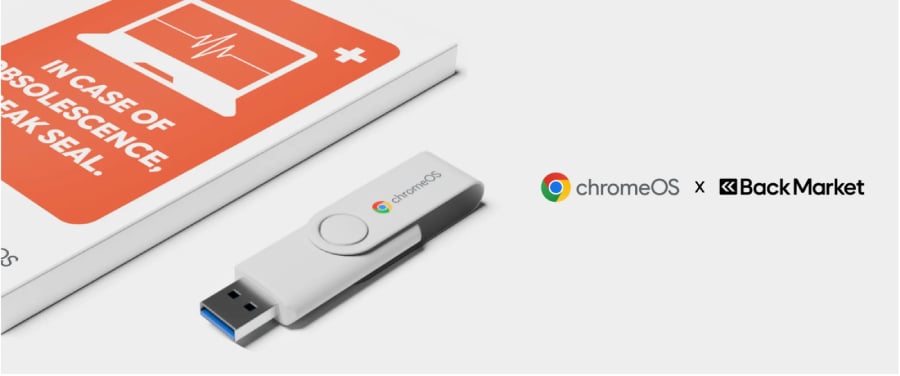
In a move that directly targets the looming Windows 10 support cliff, Google has partnered with refurbished electronics marketplace Back Market to launch a $3 ChromeOS Flex USB Kit. Announced on April 7, 2026, the kit provides a near-instant, budget-friendly pathway for users to convert compatible older PCs into ChromeOS machines, offering a lifeline for hardware that would otherwise become obsolete or a security risk.
Key Facts
- Announcement Date: The partnership and product were officially announced on Tuesday, April 7, 2026.
- Core Product: The $3 ChromeOS Flex USB Kit contains a bootable USB drive pre-loaded with ChromeOS Flex and simple installation instructions.
- Target Audience: The initiative explicitly targets the estimated 500 million global users still running Windows 10 as its end-of-life approaches.
- Key Partners: The kit is a collaboration between Google (providing ChromeOS Flex) and Back Market (handling distribution, sales, and promoting device refurbishment).
- Strategic Timing: The launch comes just six months before Microsoft’s scheduled end of support for Windows 10 on October 14, 2026, a date when security updates will cease.
- Primary Goal: The kit is designed to revive older PCs that may struggle with Windows 11’s stricter hardware requirements (like TPM 2.0 and modern CPUs).
- Ecosystem Play: Successful conversion turns a Windows PC into a cloud-centric ChromeOS device, integrating users into Google’s ecosystem of Workspace, Drive, and Android apps.
Breaking It Down
This $3 kit is not merely a product launch; it is a strategic incursion into Microsoft’s core user base at its most vulnerable moment. By pricing the kit at the cost of a cheap USB stick, Google has eliminated virtually all financial friction for experimentation. It reframes the "Windows 10 problem" from an expensive hardware upgrade or a risky, unsupported operating system into a simple, secure, and nearly free software swap. For the millions of users and small businesses with functionally adequate hardware barred from Windows 11, this is a compelling alternative to purchasing new devices.
The partnership with Back Market is as significant as the $3 price point, directly linking operating system migration to the circular economy.
This collaboration is a masterstroke in narrative framing. Back Market’s entire business model is built on extending the life of electronics, making it the ideal partner to contextualize this OS transition as an act of sustainability rather than just technical necessity. Google isn’t just offering an alternative OS; it is positioning ChromeOS Flex as the responsible choice, aligning with growing regulatory and consumer pressure to combat e-waste. Every kit sold through Back Market reinforces the message that throwing away a "Windows 10 PC" is a choice, not an inevitability.
The financial and ecosystem implications for Google are profound. The upfront revenue is negligible, but the potential user acquisition cost is astonishingly low. Converting a user from Windows to ChromeOS represents a long-term strategic victory, potentially moving them from Microsoft’s Office 365 and Azure-centric world into Google Workspace, Google Drive, and the Google Play ecosystem. For small businesses and educational institutions managing fleets of aging devices, the total cost of ownership argument becomes overwhelmingly favorable overnight.
However, the strategy is not without risks. ChromeOS Flex is a streamlined, cloud-dependent operating system. Users heavily reliant on specific, powerful local Windows applications—especially in fields like design, engineering, or accounting—may find it unsuitable. Google’s bet is that for a critical mass of users performing core tasks in a web browser, the trade-off of application compatibility for enhanced security, simplicity, and cost savings will be acceptable. This move pressures Microsoft to either reconsider its Windows 11 hardware requirements or intensify its own campaigns to highlight the limitations of cloud-only environments.
What Comes Next
The launch of the kit sets in motion a six-month period of intense competition and user decision-making leading up to the Windows 10 deadline. The market will now test Google’s value proposition against Microsoft’s entrenched ecosystem.
- Microsoft’s Formal Response: Watch for an official reaction from Microsoft. Will it dismiss ChromeOS Flex as unsuitable for "real" work, offer last-minute concessions or extended security updates for Windows 10, or even adjust Windows 11 requirements? Its public statements and any policy shifts in the coming months will be critical.
- Enterprise and Institutional Adoption: The real battleground will be institutional IT departments. Large-scale pilots in school districts, local governments, and small-to-midsize businesses will begin immediately. Their success or failure stories, particularly regarding management through the Google Admin console and legacy peripheral support, will dictate broader rollout plans before October.
- Market Share Metrics in Q3 2026: Analysts will closely monitor ChromeOS’s global desktop operating system share throughout the summer. Any statistically significant uptick, especially in regions with high volumes of older hardware, will be directly attributed to this campaign and signal its success.
- The October 14, 2026 Deadline: This date remains the pivotal event. The weeks following the end of Windows 10 support will reveal user behavior: how many converted to ChromeOS Flex, how many upgraded hardware to Windows 11, how many risked running an unsupported OS, and how many simply stopped using their PCs.
The Bigger Picture
This move intersects with several dominant trends reshaping the technology landscape. First, it is a direct assault in the ongoing Operating System Platform Wars. Google is no longer just competing in the education or low-cost notebook segment; it is using a legacy OS transition as a beachhead to attack Microsoft’s dominance in the mainstream consumer and business desktop market. The war has moved from new devices to the installed base of old ones.
Second, it leverages and accelerates the Shift to Cloud-Centric Computing. ChromeOS Flex is the purest expression of this trend, treating the local device as a secure portal to web applications and cloud storage. Google’s bet is that local processing and storage are becoming commodities, and the real value—and security—lies in the cloud layer. This initiative forces a mass audience to confront that model head-on.
Finally, it capitalizes on the Circular Economy and Right-to-Repair movement. By partnering with Back Market, Google aligns itself with legislation emerging in the EU and elsewhere that mandates longer device lifespans and repairability. Framing a software solution as an anti-e-waste tool is a powerful new tactic in tech marketing, turning a competitive upgrade play into a publicly beneficial sustainability initiative.
Key Takeaways
- Strategic Market Attack: Google is exploiting Microsoft’s Windows 10 end-of-life deadline with a perfectly timed, frictionless product to convert users at scale.
- Sustainability as a Lever: The partnership with Back Market reframes an operating system migration as an act against e-waste, giving Google a powerful ethical and marketing edge.
- Ecosystem Acquisition Play: The $3 kit is a loss-leader for long-term user value, aiming to migrate millions into Google’s cloud productivity and services ecosystem.
- Validation for Cloud-Only Model: The success or failure of this campaign will be a major real-world test of whether a cloud-dependent OS can satisfy the needs of mainstream Windows users.