TL;DR
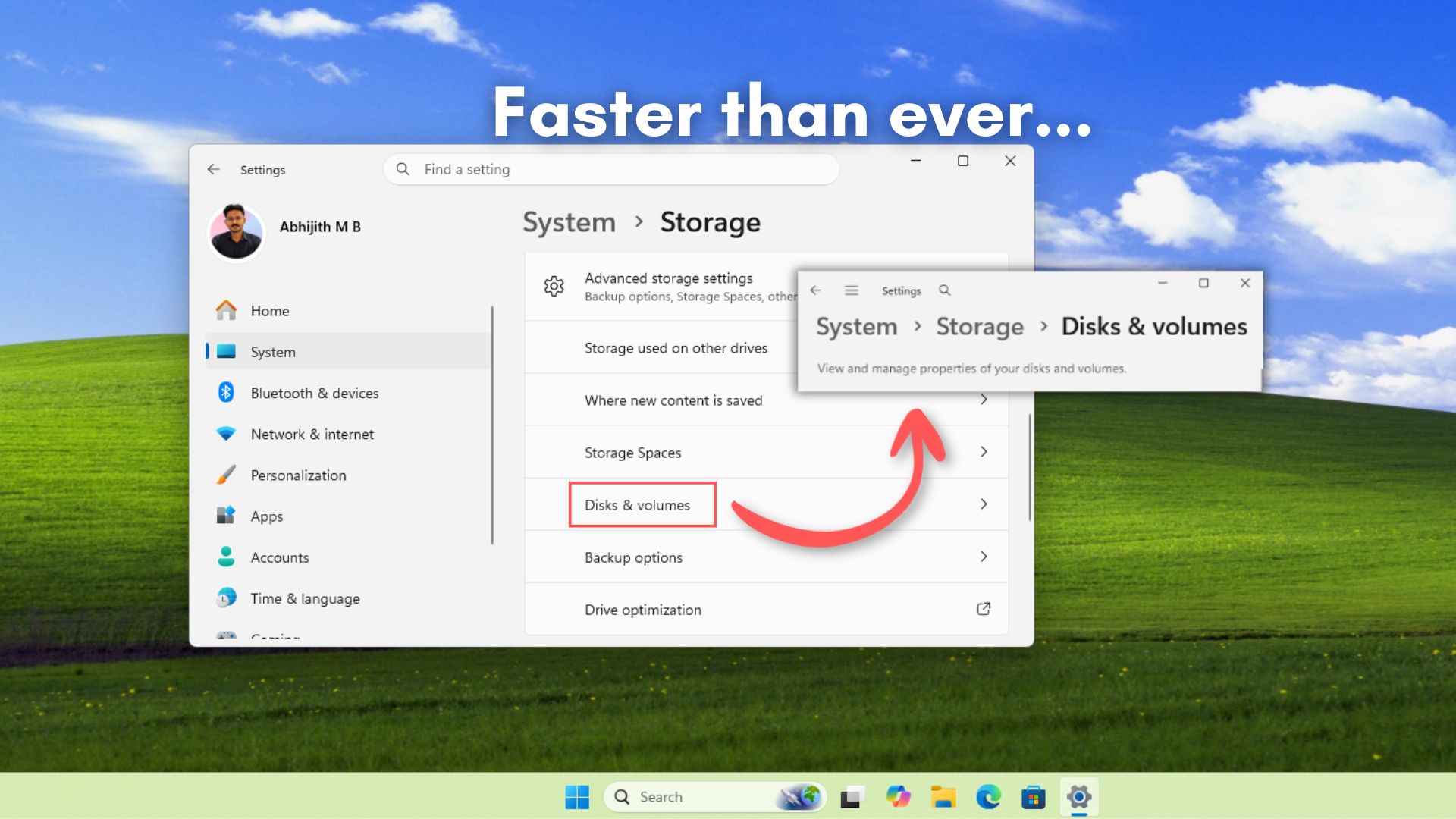
Microsoft has released a Windows 11 Insider Preview build that dramatically accelerates the loading of disk properties and removes the 30-year-old 32GB partition creation limit for the FAT32 file system. These changes directly address two of the most persistent and tangible user frustrations with Windows storage management, signaling a renewed focus on modernizing foundational system components.
What Happened
In a significant update to its testing channel, Microsoft has deployed a Windows 11 Insider Preview build (Build 26097) that delivers long-awaited fixes for two notorious storage system limitations. The update brings a performance overhaul to the Disk Properties dialog and finally abolishes a decades-old artificial restriction on the FAT32 file system, marking a pivotal shift in how the operating system handles core storage tasks.
Key Facts
- The update was released to the Dev and Canary Channels on Monday, April 13, 2026, as part of Windows 11 Insider Preview Build 26097.
- The Disk Properties dialog, notorious for freezing for several seconds while calculating folder sizes, now loads instantly for most local drives.
- Microsoft has removed the 32GB partition creation limit for the FAT32 file system within the Windows Format dialog, a restriction first introduced with Windows 95 OSR2 in 1997.
- The underlying FAT32 file system specification technically supports volumes up to 2TB, but Microsoft’s formatting tool had enforced the 32GB cap for nearly 30 years.
- These improvements are part of a broader storage subsystem overhaul, with Microsoft noting it has "optimized the calculation of folder sizes" in the properties sheet.
- The changes are currently available only to Windows Insiders and are not yet part of the stable, publicly available version of Windows 11.
- The source of this information is a detailed report from Windows Latest, a publication specializing in Microsoft news.
Breaking It Down
Microsoft’s decision to finally address these two specific pain points is a calculated move that speaks to a maturation of Windows 11’s development priorities. For years, the laggy Disk Properties sheet has been a minor but universal annoyance, a symbol of legacy code dragging down the user experience. Its optimization suggests Microsoft is now willing to invest engineering resources into refining long-neglected, low-level system interfaces, not just flashy front-end features. This is a quality-of-life improvement that will be felt daily by power users managing storage, IT professionals auditing disk usage, and everyday users confused by an unresponsive window.
The 32GB FAT32 limit has been a purely artificial software barrier for three decades, despite the file system's technical capability to handle volumes 64 times larger.
This is the most analytically significant aspect of the update. The 32GB limit was never a hardware or fundamental file system constraint; it was a decision made in the late 1990s to steer users toward the newer, more robust NTFS file system as hard drives grew. While NTFS is superior for modern Windows installations, the persistence of this limit in Windows' own formatting tool became an anachronism. It actively hindered users needing FAT32 for maximum compatibility with embedded systems, gaming consoles, media players, and older devices that do not support exFAT or NTFS. Removing it acknowledges that FAT32 still has vital, niche utility in a cross-platform world, and that the OS should not arbitrarily limit user choice for a legacy rationale.
The combined impact of these fixes reveals a strategy focused on technical debt reduction. By speeding up the properties sheet and removing outdated format restrictions, Microsoft is polishing the rough edges of its core platform. This work is less glamorous than AI feature announcements but is critical for perceived system reliability and professionalism. It also indirectly benefits Microsoft’s hardware partners, as snappier storage management makes systems feel more responsive, enhancing the out-of-box experience on new PCs.
Furthermore, this update subtly reinforces the value proposition of the Windows Insider Program. By delivering these tangible, user-requested improvements to its most engaged testers first, Microsoft validates the feedback loop of the program. It demonstrates that participating in pre-release builds can mean early access to genuine usability enhancements, not just untested or half-baked features.
What Comes Next
The journey of these storage improvements from Insider builds to the general public is the immediate next phase. Microsoft will monitor feedback and telemetry from Insiders on the stability of the new properties calculation engine and the real-world use of larger FAT32 volumes.
Following that, the industry will watch for three key developments:
- The integration of these changes into a stable release of Windows 11, likely via a monthly "C" update or the annual feature update (expected in the second half of 2026). The timeline will depend on the absence of major bugs reported by Insiders.
- Potential expansion of the storage optimizations. If the new method for calculating folder sizes is successful, Microsoft may apply similar performance fixes to other system components known for sluggishness, such as the legacy Control Panel applets or network drive enumeration.
- Third-party software adaptation. Utility and disk management software developers, like those behind CCleaner or partition managers, may need to adjust their tools, which sometimes bypass Windows dialogs. The change also reduces one advantage third-party FAT32 formatters held over Windows' native tool.
- Clarification on exFAT's role. With FAT32's capacity limit gone, Microsoft may increase its promotion of the exFAT file system—which it invented and controls—as the modern, cross-platform successor for flash storage, especially as drive capacities continue to climb.
The Bigger Picture
This update connects to the broader trend of legacy system modernization. As Microsoft pushes Windows 11 forward with advanced AI capabilities and a new architecture, it cannot afford for the base system to feel old and slow. Streamlining decades-old components is essential to making the entire platform feel cohesive and modern. This is part of a multi-year effort seen in the retirement of old APIs, the gradual migration of settings to the new app, and now, the optimization of fundamental storage UI.
Secondly, it reflects the growing importance of cross-platform interoperability. The persistence of FAT32 is entirely driven by the need for removable media to work across Windows, macOS, Linux, game consoles, and smart devices. By unshackling its formatting tool, Microsoft is tacitly admitting that Windows does not exist in a vacuum. User workflows often span ecosystems, and the OS must facilitate, not obstruct, that data mobility. This aligns with other efforts like improved support for open media formats and the Windows Subsystem for Linux.
Key Takeaways
- Performance Polish: Microsoft is targeting tangible, everyday performance bottlenecks in Windows 11, with the instant-loading Disk Properties dialog being a prime example of reducing user-facing friction.
- End of an Era: The removal of the 32GB FAT32 format limit ends a 30-year-old artificial constraint, empowering users to create large, universally compatible removable drives without third-party tools.
- Insider-Led Refinement: This update underscores that the Windows Insider Program is a crucial channel for deploying and validating foundational system improvements, not just new features.
- Technical Debt Priority: The changes signal a committed effort to address long-standing technical debt in core Windows components, which is critical for the OS's long-term health and user perception.