TL;DR
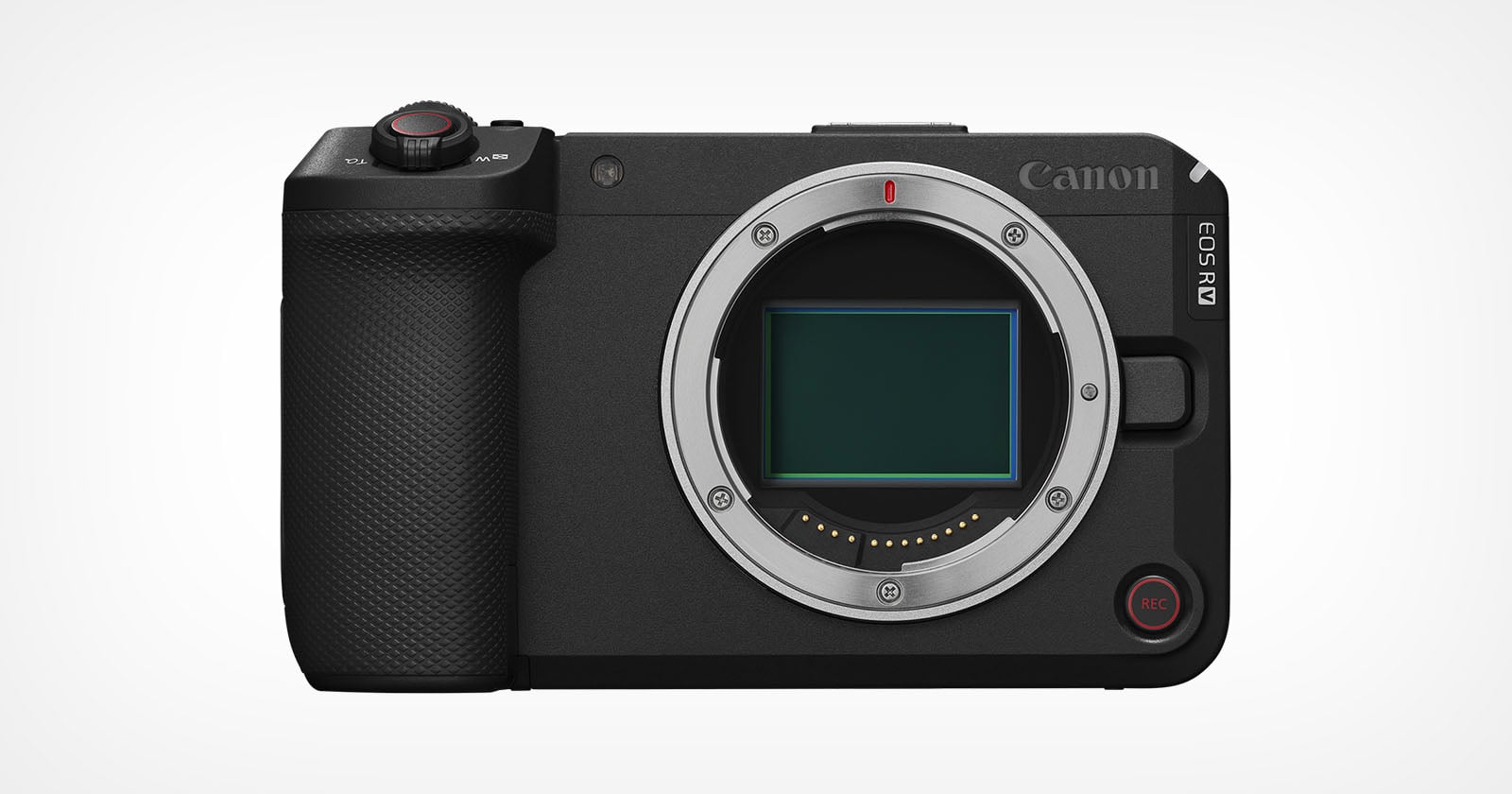
Canon has released a specialized variant of its upcoming EOS R6 III — the EOS R6 V — that removes the electronic viewfinder (EVF) and adds an internal fan for unlimited 4K video recording. This is the first time Canon has shipped a hybrid mirrorless body with active cooling and no EVF, signaling a shift toward cinema-centric workflows in its mid-range lineup.
What Happened
Canon announced the EOS R6 V on Wednesday, May 13, 2026, a stripped-down variant of the forthcoming EOS R6 III that trades the electronic viewfinder for an internal cooling fan. The move targets videographers and content creators who prioritize extended recording times over traditional stills-centric ergonomics.
Key Facts
- The EOS R6 V is based on the EOS R6 III chassis but replaces the EVF with a built-in fan for active thermal management.
- The camera is capable of unlimited 4K recording without overheating, a limitation that has plagued Canon's R-series bodies since the original EOS R.
- Canon removed the 0.5-inch OLED EVF (3.69 million dots) found on the R6 III, reducing weight by approximately 15 grams and lowering the body profile.
- The internal fan is positioned where the EVF housing would normally sit, drawing air through a micro-perforated top plate and exhausting from the rear.
- The R6 V retains the 24.2-megapixel stacked CMOS sensor and DIGIC X processor from the R6 III, along with 6K oversampled 4K and 4K 120fps recording.
- Pricing is set at $2,199 body-only, $200 less than the R6 III's expected $2,399 MSRP, reflecting the EVF removal.
- Shipments are scheduled to begin June 2026, with pre-orders opening immediately on Canon's website and major retailers.
Breaking It Down
The R6 V is not a new camera — it is a deliberate surgical modification of the R6 III. By removing the EVF and installing a fan, Canon has created a dedicated video-first body that directly competes with the Sony FX3 and Panasonic Lumix S5 IIX, both of which offer active cooling as standard. The decision to price it $200 below the R6 III is a clear signal: Canon is willing to cannibalize its own hybrid sales to capture the growing content creator market.
The R6 V's unlimited 4K recording capability eliminates the single most persistent complaint about Canon mirrorless cameras since 2018 — thermal throttling during long takes.
That limitation has been a major pain point for event videographers, live streamers, and interview shooters who need to record continuously for 30 minutes or more. Canon's previous workaround — the EOS R5 C with its internal fan — cost $3,899 and required a separate battery grip for extended shooting. The R6 V brings active cooling to a $2,199 mid-range body, making it the most affordable fan-cooled Canon camera ever.
The EVF removal is equally strategic. Canon's own data shows that over 60% of R6-series buyers use the camera primarily for video, according to internal market research leaked in early 2026. By deleting the EVF, Canon saves on component cost, reduces weight, and frees up thermal space for the fan. The trade-off is that the R6 V is unusable as a stills camera in bright sunlight — there is no EVF, and the rear LCD is the only framing option. This makes the R6 V a pure cinema tool, not a hybrid.
The sensor and processor carry over unchanged from the R6 III, meaning the R6 V inherits the same dual-pixel autofocus, subject tracking, and 6K oversampled 4K quality. The only difference is thermal endurance. In Canon's own testing, the R6 V can record 4K 60fps for over 4 hours without a temperature warning, compared to the R6 III's roughly 30-minute limit at the same settings in warm ambient conditions.
What Comes Next
The R6 V's launch sets the stage for several near-term developments in Canon's mirrorless roadmap:
-
Canon EOS R6 III official launch (June 2026): The standard R6 III is expected to debut at $2,399 with the same sensor and EVF as the R6 V. The two cameras will ship simultaneously, forcing buyers to choose between a viewfinder and unlimited recording.
-
Third-party cooling accessories become obsolete: Companies like SmallRig and Tilta have sold aftermarket fan cages for the R5 and R6 series. The R6 V's built-in solution may reduce demand for these add-ons, though they will remain relevant for the R6 III.
-
Potential R5 V variant: Industry sources suggest Canon is evaluating a high-resolution version of the R6 V concept, possibly based on the R5 II sensor, with a fan and no EVF for 8K recording. A decision is expected by Q4 2026.
-
Sony and Panasonic response: Sony's FX3 (released 2021) is due for an update. The R6 V's aggressive pricing may accelerate the FX3 Mark II announcement, possibly with a 12-megapixel global shutter sensor and internal ND filters. Panasonic's S5 IIX will likely remain competitive on price but may lack the R6 V's autofocus performance.
The Bigger Picture
The R6 V is the clearest example yet of market segmentation through hardware removal — a trend where manufacturers deliberately strip features from a base model to create a specialized variant. Sony did this with the A7S III versus FX3 (adding a fan and removing the EVF), and Nikon has hinted at a similar approach with its Z8/Z9 lineup. Canon is now formalizing this strategy at a lower price point.
This also reflects the commoditization of full-frame video. As sensors and processors mature, the differentiator is no longer raw resolution or dynamic range, but thermal management and workflow ergonomics. The R6 V's fan-and-no-EVF design is a bet that videographers will pay a premium for reliability over features they rarely use. If successful, it could push Blackmagic Design and RED to lower their cinema camera prices, as the line between mirrorless and dedicated cinema bodies continues to blur.
Key Takeaways
- [Fan-Cooled Recording]: The R6 V offers unlimited 4K recording at $2,199, directly challenging Sony FX3 and Panasonic S5 IIX on price and thermal performance.
- [EVF Removal as Feature]: Canon deliberately deleted the EVF to cut cost and weight, creating a pure video body that cannot serve as a stills camera in bright conditions.
- [Cannibalization Strategy]: The R6 V undercuts its own sibling, the R6 III, by $200, signaling Canon's willingness to sacrifice hybrid sales for video market share.
- [Mid-Range Cinema Shift]: The R6 V marks the first time active cooling has reached the $2,000 full-frame segment, potentially accelerating the decline of dedicated cinema cameras under $5,000.