TL;DR
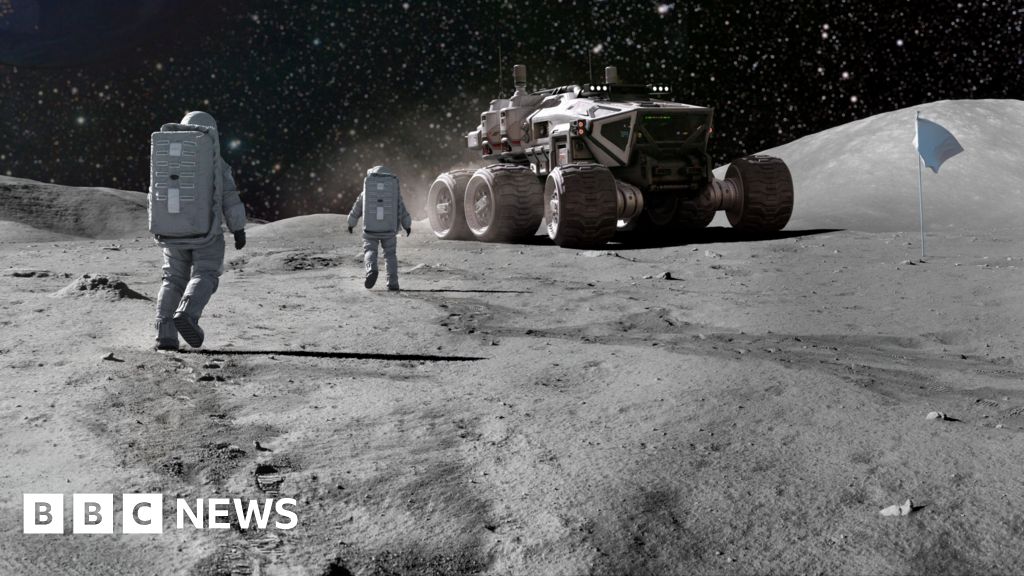
Helium-3 is a rare, non-radioactive isotope with immense potential for nuclear fusion energy and quantum computing, but it is virtually absent on Earth. Its demand is forecast to soar by 2030, driving serious plans to mine it from the lunar surface, where it has been deposited by the solar wind for billions of years.
What Happened
China's Chang'e-6 mission is expected to return lunar soil samples from the far side of the Moon in late 2026, providing the first direct measurements of Helium-3 concentrations in that region. This comes as NASA and private firms like MoonEx and Interlune accelerate plans for robotic mining operations, with the global Helium-3 market projected to grow from $2.1 billion in 2025 to $4.8 billion by 2032, according to a recent report by MarketsandMarkets.
Key Facts
- Helium-3 is a stable, non-radioactive isotope of helium with two protons and one neutron, making it ideal as a fuel for aneutronic fusion reactors — producing minimal radioactive waste compared to deuterium-tritium fusion.
- The Moon's surface is estimated to contain 1.1 million metric tons of Helium-3 in its regolith, enough to power the entire Earth for over 10,000 years at current global energy consumption levels, per NASA's 2023 assessment.
- A single Space Shuttle payload bay (about 25 metric tons) of Helium-3 could supply all U.S. electrical power for one year, according to a 2024 study by the Lunar and Planetary Institute.
- Private company Interlune, founded by former Blue Origin executives, raised $56 million in Series A funding in January 2026 to develop a robotic lunar mining system targeting Helium-3 extraction by 2029.
- The Chinese Academy of Sciences successfully tested a Helium-3 fusion reactor in March 2025, achieving plasma temperatures of 100 million degrees Celsius for 120 seconds — a key milestone for commercial fusion.
- Japan's JAXA and Ispace announced a joint mission in April 2026 to deploy a rover that will map Helium-3 concentrations in the Mare Tranquillitatis region, with launch planned for 2028.
- Helium-3 is also critical for cryogenic quantum computing — companies like Google and IBM use it to cool superconducting qubits to near absolute zero, with demand from this sector alone expected to triple by 2030.
Breaking It Down
The core challenge is not whether Helium-3 exists on the Moon — it does, in vast quantities — but whether it can be extracted economically. Lunar regolith contains only about 0.01 parts per million of Helium-3, meaning miners would need to process 100,000 metric tons of soil to yield just 1 kilogram of the isotope. At current terrestrial prices of $3,000 per gram, that kilogram is worth $3 million — but the cost of launching mining equipment, processing the regolith, and returning the product to Earth remains astronomically higher.
"Processing 100,000 metric tons of lunar soil to produce one kilogram of Helium-3 would require energy equivalent to 500 metric tons of rocket fuel — a ratio that makes no sense unless you have a permanent base with solar power and in-situ resource utilization." — Dr. Sarah Kim, former NASA lunar resources lead, quoted in a 2025 SpaceNews analysis.
This energy-to-yield ratio is the central economic paradox. Interlune and MoonEx are betting on solar-powered robotic harvesters that can operate continuously during the two-week lunar day, heating regolith to 600°C to release trapped Helium-3. But even optimistic models from the University of Colorado Boulder (2025) show that a single harvester would need to run for 3.5 years to produce enough Helium-3 to pay back its launch and operational costs at current prices.
The wild card is fusion energy. If Helium-3 fusion can be commercialized — and the Chinese test in March 2025 suggests progress — demand could explode. A single 1-gigawatt fusion plant would consume 167 kilograms of Helium-3 per year. At that rate, the entire known terrestrial supply (estimated at 0.5 metric tons, mostly from nuclear weapons decay) would be exhausted in 3 years. The Moon becomes not just an option but a necessity.
Meanwhile, the quantum computing sector is already creating a price floor. IBM and Google currently pay $2,500–$3,500 per gram for Helium-3 used in dilution refrigerators. With quantum processors expected to grow from 1,000 qubits today to 100,000 qubits by 2030, demand for Helium-3 from this sector alone could reach 200 kilograms per year — a 40-fold increase from 2025 levels.
What Comes Next
The next 24 months will determine whether lunar Helium-3 mining moves from concept to concrete project. Here are the specific milestones to watch:
- December 2026: Chang'e-6 sample return. If the far-side samples show Helium-3 concentrations above 0.015 ppm (the current average for near-side samples), it could justify targeted mining in that region. Results expected by March 2027.
- Q2 2027: Interlune plans to announce its first commercial customer for Helium-3. The company has hinted at a quantum computing firm needing 5 kilograms by 2030 — a deal worth approximately $15 million at current prices.
- 2028: JAXA-Ispace rover launch. This mission will use a neutron spectrometer to map Helium-3 across 50 square kilometers of Mare Tranquillitatis, providing the first high-resolution resource map. Data release expected late 2029.
- 2030–2032: The U.S. Artemis Accords signatories are expected to finalize lunar mining rights protocols at the United Nations Committee on the Peaceful Uses of Outer Space (COPUOS) meeting in Vienna, November 2027. Without clear property rights, no company will invest the $2–5 billion needed for a full-scale lunar mining operation.
The Bigger Picture
This story sits at the intersection of two major trends: Space Resource Commercialization and Fusion Energy Renaissance. The Artemis Accords, now signed by 42 nations, explicitly permit lunar resource extraction — a legal framework that didn't exist a decade ago. Meanwhile, private fusion companies like Commonwealth Fusion Systems (raised $3 billion) and TAE Technologies (raised $1.2 billion) are racing to prove that aneutronic fusion using Helium-3 is viable, not just a theoretical curiosity.
A third trend — Quantum Computing Scaling — is creating immediate, non-fusion demand for Helium-3 that could bootstrap the lunar mining industry. If quantum computing firms become anchor customers, paying premium prices for small quantities, they could subsidize the infrastructure needed for large-scale Helium-3 extraction. This mirrors how satellite TV (DirecTV, 1994) subsidized the launch infrastructure that later enabled Starlink (2019). The same capital equipment — lunar landers, regolith processors, solar arrays — can serve both a $50 million quantum market in 2030 and a $5 billion fusion market in 2040.
Key Takeaways
- [Lunar Reserves Are Massive]: The Moon holds an estimated 1.1 million metric tons of Helium-3, enough to power Earth for 10,000 years at current energy use, but extraction requires processing 100,000 tons of soil per kilogram.
- [Economic Viability Hinges on Energy]: The energy cost of mining and processing lunar regolith currently exceeds the value of the Helium-3 recovered, unless permanent solar-powered bases are established — a $2–5 billion upfront investment.
- [Quantum Computing Is the Near-Term Driver]: Demand from cryogenic quantum computers is expected to triple by 2030, creating a high-price market that could fund initial lunar mining operations before fusion reactors become viable.
- [Regulatory Clarity Is Critical by 2027]: The UN COPUOS meeting in November 2027 will decide lunar mining property rights under the Artemis Accords — without clear ownership rules, no company will commit the billions needed for full-scale operations.