TL;DR
A detailed teardown of LG Electronics' unreleased LG Rollable smartphone reveals an engineering marvel so advanced that it overshadows the conventional "slab" flagship phones of 2026. This post-mortem analysis of a canceled 2021 project highlights a stark innovation gap in the current market and raises urgent questions about the industry's risk aversion and design stagnation.
What Happened
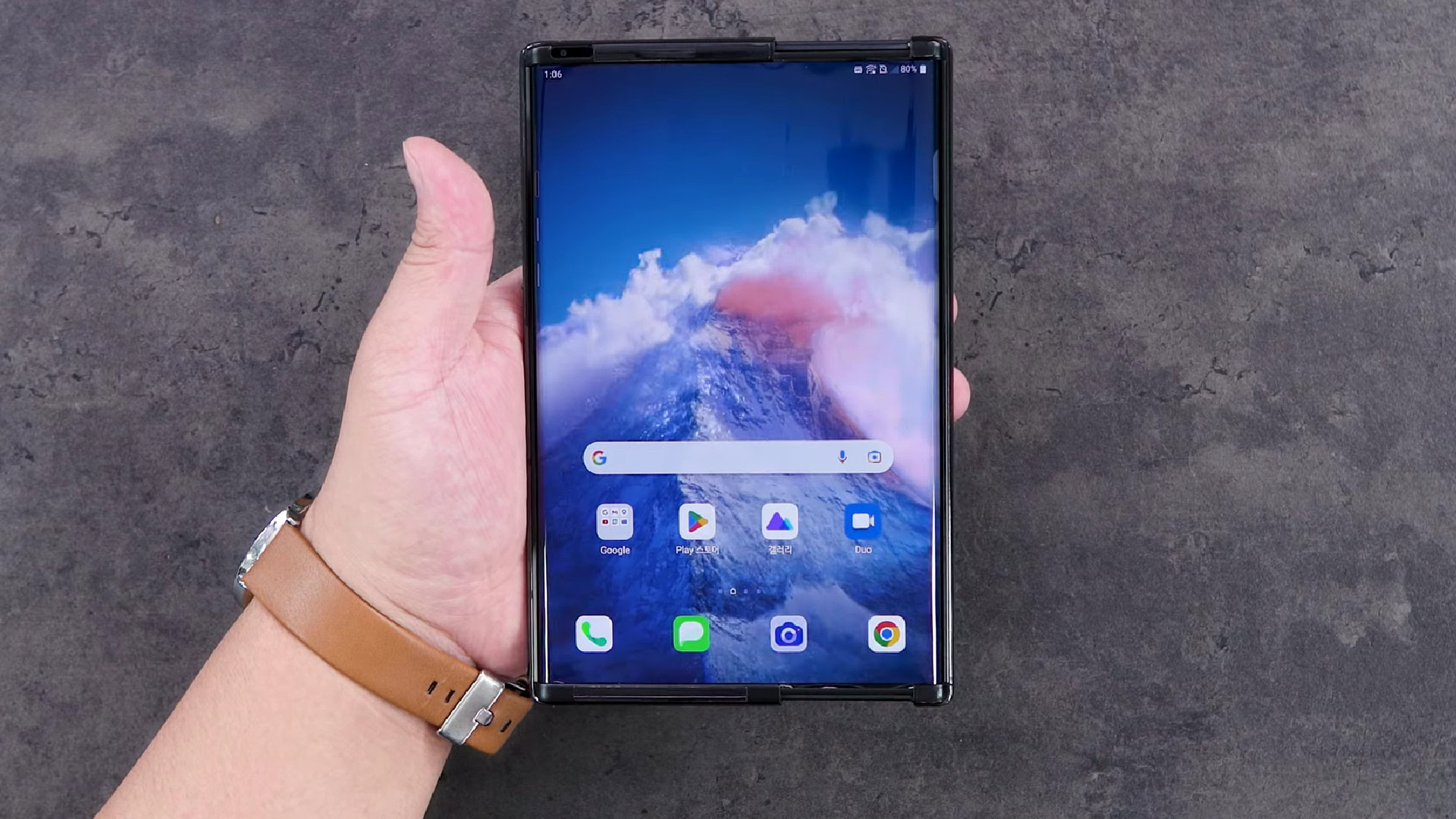
On Monday, April 6, 2026, the technology repair specialists at iFixit, in collaboration with Android Authority, published a comprehensive teardown video of a fully functional prototype of the LG Rollable (model LM-R910N), a revolutionary smartphone LG developed and canceled in 2021. The dissection exposed a breathtakingly complex internal architecture dedicated to a seamless expanding display, a feat of engineering that makes the incremental upgrades of today's 2026 smartphones appear "super boring" by direct comparison.
Key Facts
- The teardown subject was a final-stage prototype of the LG Rollable, a device fully canceled in April 2021 following LG Electronics' announcement to exit the global smartphone business.
- The core mechanism relied on a dual-track geared system and a "Sliding Frame" made of reinforced fiberglass, which moved the entire internal logic board and battery to allow the flexible OLED display to unspool from a housing cylinder.
- The device featured a 6.8-inch display that expanded to a 7.4-inch screen, with the teardown confirming the panel was supplied by BOE, not LG's own display division.
- iFixit awarded the device a repairability score of 1 out of 10, citing the immense complexity, extensive adhesive, and high risk of catastrophic failure during reassembly.
- The prototype contained a Qualcomm Snapdragon 888 processor and a 4,200mAh battery, flagship specs for its 2021 target launch window.
- The engineering effort represented a multi-year, multi-million dollar R&D investment by LG, which was ultimately abandoned as non-viable for mass production and market survival.
- The teardown's 2026 publication date serves as a deliberate contrast, framing the device against the current generation of smartphones from Samsung, Apple, and Google.
Breaking It Down
The iFixit teardown is less a eulogy for a single device and more a stark audit of the smartphone industry's trajectory over the past five years. The LG Rollable was not a concept mock-up; it was a working prototype that solved, with remarkable mechanical elegance, the profound challenge of creating a reliable, durable expanding screen. The geared sliding mechanism and the moving internal chassis represent a level of integrated mechanical and electrical design that has been entirely absent from mainstream flagship releases since its cancellation.
The device's internal layout is so dedicated to the rollable form factor that over 40% of the main logic board's surface area is dedicated solely to managing the display's expansion, contraction, and stabilization.
This statistic underscores the device's singular purpose. Unlike modern foldables, which often feel like tablets forced to become phones, the Rollable's design was inherently phone-first. The engineering priority was the transformational user experience—a screen that grew on demand—not the compromise of fitting a tablet into a pocket. This stands in direct contrast to the design philosophy of 2026's top devices, where innovation is often siloed into improved camera sensors or marginally faster chips, leaving the fundamental form factor unchanged for nearly two decades.
The revelation also serves as an indictment of the industry's consolidated state. LG's exit in 2021 removed a key player known for technological experimentation, from the modular LG G5 to the dual-screen LG Wing. With its departure and the scaling back of ambitious projects from other manufacturers, the competitive pressure to pursue such radical hardware innovation diminished. The market is now dominated by Samsung's Galaxy Z Fold/Flip series and Apple's iPhone, two giants whose incremental annual cycles have defined the innovation ceiling for the broader industry. The Rollable prototype proves that more dramatic alternatives were not only possible but were nearly realized.
What Comes Next
The teardown's viral impact is likely to catalyze several immediate developments in the smartphone and display technology sectors.
- Increased Scrutiny on Samsung and Huawei's Roadmaps: All eyes will now turn to Samsung Display and Huawei, the only companies currently believed to have active rollable display programs. Expect intensified analyst pressure for updates at Samsung's SID Display Week 2026 event in May, with leaks about potential 2027 device launches becoming more frequent.
- Re-evaluation of "Innovation" in 2026 Flagship Launches: The upcoming launch cycles for the Google Pixel 9 and iPhone 16 in Fall 2026 will be judged against this new, five-year-old benchmark. Tech media and consumers will demand more than iterative spec bumps, potentially forcing marketing narratives to shift toward software and AI features instead of hardware.
- A Surge in Patent and Prototype Revelations: This teardown may embolden former employees and supply chain partners of defunct projects (from companies like LG, Microsoft, and even Apple's secret labs) to share more details about shelved "moonshot" devices, creating a wave of retrospective "what-if" analyses.
- Accelerated Development for Niche Manufacturers: Companies like TCL or Xiaomi, which have shown rollable concept devices, may fast-track development to capitalize on the renewed market interest and position themselves as the true heirs to LG's innovative spirit, potentially aiming for a late-2027 commercial release.
The Bigger Picture
This story connects directly to two powerful, ongoing trends in consumer technology. First, the Innovation Plateau in Mature Markets. The smartphone is the definitive mature tech product, with global saturation leading to elongated replacement cycles. In this environment, corporations prioritize profitability and supply chain efficiency over disruptive risk. The LG Rollable teardown vividly illustrates the type of high-cost, high-reward project that gets axed when shareholder focus shifts entirely to quarterly margins, leading to a homogenization of design across the industry.
Second, it highlights the tension between Modularity vs. Integration. The industry has largely abandoned user-repairable, modular designs (exemplified by LG's own failed G5 and Google's Project Ara) in favor of highly integrated, sealed units that offer better durability and performance. The Rollable is the apex of this integration—a device so specialized it is nearly impossible to repair. This teardown reinforces that the pinnacle of mechanical innovation often comes at the direct expense of repairability and longevity, forcing a difficult ethical and environmental trade-off that the industry has yet to solve.
Key Takeaways
- The Innovation Gap is Real: A canceled 2021 prototype possesses more groundbreaking hardware engineering than the mainstream flagships of 2026, highlighting a five-year period of significant design stagnation.
- LG's Exit Had Consequences: The departure of LG from the smartphone market removed a crucial experimental counterweight, allowing the remaining giants to settle into safer, more incremental upgrade cycles.
- Rollables Are Technically Feasible: The teardown proves that reliable, mechanically complex rollable phones were within reach years ago, shifting the question from "if" to "when" and "at what cost" they will finally launch.
- Repairability Sacrificed for Form: The most ambitious future form factors, as shown by the Rollable's repairability score of 1/10, will likely be disposable by design, creating a new frontier for right-to-repair advocacy.