TL;DR
During the climactic final broadcast of the World of Warcraft "Race to World First" for the Fates of Eternity raid, the U.S. esports team Liquid triggered a completely unknown and undocumented secret final phase of the end boss, the Primordial Arbiter. This live, unscripted revelation, witnessed by over 450,000 concurrent viewers, created a moment of pure, emergent spectacle that many believed the modern, highly data-mined game could no longer produce, fundamentally challenging perceptions of live-service game design and esports broadcasting.
What Happened
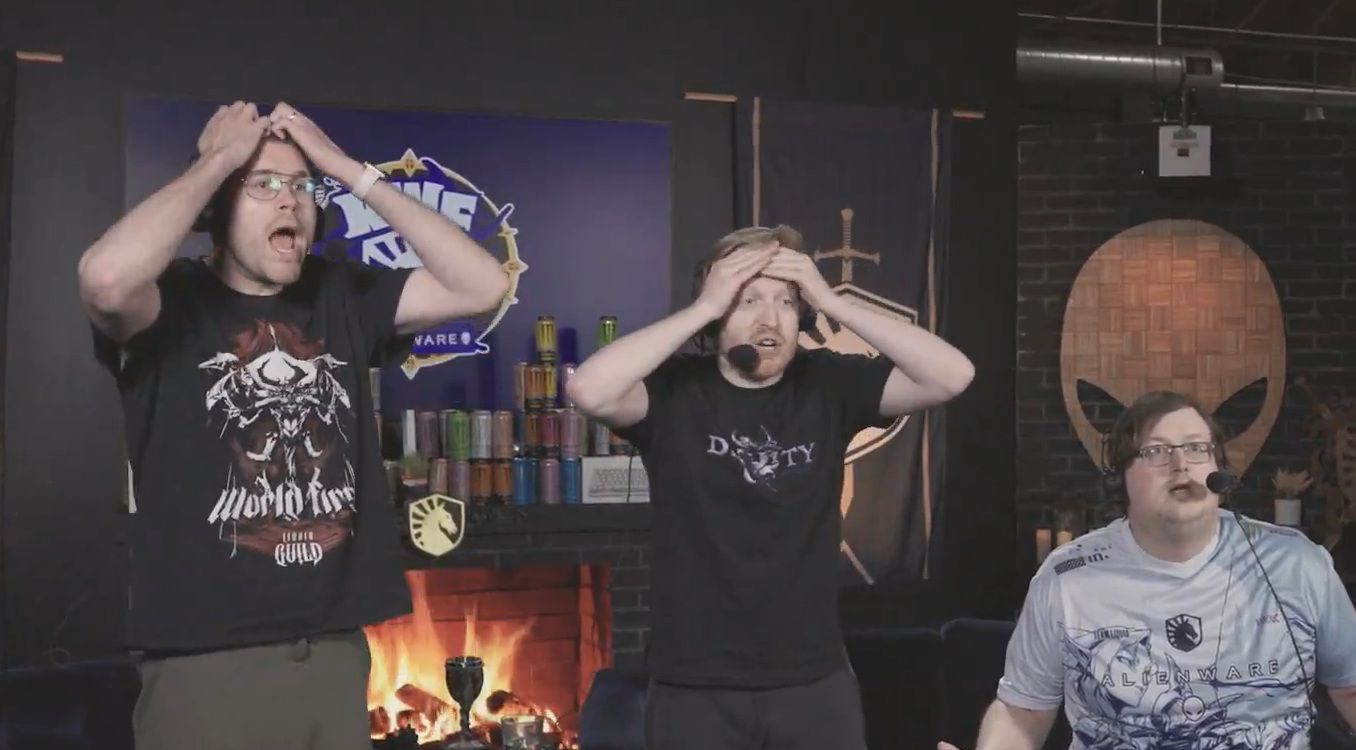
As the elite raiders of Team Liquid executed their final, seemingly victorious pull of the Primordial Arbiter boss, a collective roar erupted from their voice comms. The boss’s health bar hit zero, the victory fanfare began to play for the 20-player squad—and then the screen shattered. A previously unseen health bar, representing a staggering 40% of the boss’s total life, materialized on screen, plunging the team and hundreds of thousands of live viewers into stunned chaos. In that instant, a meticulously planned esports broadcast transformed into a genuine, unrehearsed discovery of monumental proportions.
Key Facts
- The event occurred on Monday, April 6, 2026, during the global "Race to World First" (RWF) esports event for World of Warcraft’s latest raid, Fates of Eternity.
- The team that triggered the secret phase was the North American powerhouse Liquid (often stylized as Team Liquid), one of the favorites to win the entire competition.
- The secret phase was activated upon the Primordial Arbiter’s first "death," revealing a second health bar equal to 40% of the original, introducing entirely new mechanics not seen in over two weeks of global testing.
- The reveal was broadcast live on multiple platforms, with Twitch viewership for the official World of Warcraft channel peaking at over 450,000 concurrent viewers during the event.
- The development team at Blizzard Entertainment had successfully kept the phase a complete secret, with no data found by the game’s extensive datamining community during the raid’s Public Test Realm (PTR) cycle.
- The RWF is a multi-million dollar esports ecosystem, supported by sponsors like Red Bull, with the winning team historically receiving prize pools and sponsorship bonuses exceeding $200,000.
- Team Liquid, despite the shock, managed to wipe the boss at 11.2% health on this first blind attempt, extending the race by several more hours.
Breaking It Down
The immediate shock value of the secret phase is undeniable, but its true significance lies in its execution and impact. For years, the "Race to World First" has operated in an environment of near-total information transparency. Every new raid is exhaustively tested on a Public Test Realm (PTR) for weeks, and a dedicated community of dataminers meticulously scours game files for any hint of mechanics, dialogue, or models. This has led to a highly optimized, but somewhat predictable, competitive meta where world-first contenders enter the live race with 95% of the puzzle already solved.
Blizzard’s design team managed to hide a phase comprising 40% of the final boss’s total effective health pool from the entire global World of Warcraft community for over a month.
This figure represents a staggering breach in the wall of player omniscience. It demonstrates a deliberate and technically sophisticated design choice by Blizzard to compartmentalize core encounter data. Analysts speculate the phase was either dynamically loaded only after specific trigger conditions were met live, or its assets were encrypted under a new layer of security that defeated common datamining tools. This technical feat is as important as the creative one; it proves that developers can still engineer genuine surprise in a live-service era defined by leaks and pre-knowledge.
From an esports production standpoint, the moment was a broadcast director’s dream and nightmare fused into one. The observers for the broadcast, who control the in-game cameras for viewers, were as blind-sided as the players. The resulting footage—panicked camera switches, the raw, unfiltered screams and rapid-fire strategizing from Liquid’s comms—delivered an authenticity that no scripted segment could match. It transformed the race from a pure execution marathon into a narrative of discovery and adaptation, capturing the essence of what made early World of Warcraft raiding magical. For sponsors like Red Bull and Secretlab, the organic, viral nature of the moment delivered engagement metrics that far exceed the value of standard branded segments.
However, this triumph of spectacle also raises competitive integrity questions. While the secret phase applied equally to all guilds, it fundamentally altered the strategic landscape mid-competition. Teams like Echo (EU) and BDGG (NA), who were closely trailing Liquid, suddenly had to adapt their entire approach based on Liquid’s public, blind attempt. This creates an asymmetric information advantage for the trailing guilds, who could now study the new mechanics before their own pulls. The Race to World First has always balanced sport and entertainment, and this event forcefully tipped the scales toward the latter, for better or worse.
What Comes Next
The fallout from the Primordial Arbiter revelation will ripple through the World of Warcraft community and the broader esports scene for weeks. The immediate focus is on the conclusion of the race itself, but the implications are far-reaching.
- The Conclusion of the Fates of Eternity Race: All eyes are on how Liquid, Echo, and other top guilds adapt. Liquid has the firsthand experience but the psychological blow of a near-win snatched away. Echo and others have the benefit of studying VODs (video on demand) but must execute under the pressure of knowing a surprise is possible. The next 24-48 hours will determine if Liquid can recover or if a rival capitalizes on the new information.
- Blizzard’s Post-Race Developer Commentary: Historically, after a RWF concludes, Blizzard developers host a deep-dive interview or roundtable. The community will demand a technical and design post-mortem on how the secret phase was hidden. The explanation will set a precedent for future raid design and directly influence the datamining community’s methods.
- The "Liquid Rule" and Future RWF Formats: Esports organizers and Blizzard will inevitably debate if such mid-race surprises are healthy for competition. Watch for discussions around implementing a brief "discovery period" for all guilds if a secret phase is triggered, or if the current "finders keepers" model will stand. The decisions made before the next expansion’s RWF will be critical.
- Sponsor and Broadcaster Reaction: The unprecedented viewership and social media engagement will be quantified by sponsors and the broadcast team. Expect increased investment in RWF production and potential shifts in how sponsors integrate their branding to capitalize on unpredictable, high-engagement moments rather than relying solely on planned ad reads.
The Bigger Picture
This event is a microcosm of two powerful, often conflicting, trends in modern technology and entertainment. First, it clashes directly with the Culture of Datamining and Predictive Analytics. In games, finance, and media, algorithms and dedicated communities seek to eliminate uncertainty. World of Warcraft’s secret phase is a bold statement that human-led design can still outmaneuver collective data-scraping, preserving wonder in a digitally exhaust-filled world.
Second, it highlights the evolving nature of Live-Service Spectacle. In an age where content is meticulously roadmapped and seasons are pre-announced, audiences crave genuine spontaneity. The success of "drop" culture in music and fashion, or unannounced game updates, speaks to this desire. Blizzard engineered a perfectly timed, unspoiled spectacle that generated more organic buzz than any pre-hyped content patch could, proving that in a scripted digital world, the highest value may lie in curated surprise.
Key Takeaways
- The Return of the Unknown: Blizzard proved that even in a hyper-analyzed live-service game, developers can still engineer complete surprise, challenging the player expectation of total pre-raid knowledge.
- Esports’ Unscripted Advantage: The moment provided a massive, authentic engagement boost for the RWF broadcast, demonstrating that the highest-value esports content can be emergent drama, not just polished competition.
- A New Design Precedent: Future World of Warcraft raid design, and potentially other MMOs, will now be evaluated against the "Primordial Arbiter test"—can bosses still hold secrets? This raises the bar for encounter creativity.
- The Information Asymmetry Dilemma: The event created a complex competitive imbalance, forcing a necessary conversation about fairness and format in community-driven esports events where discovery is part of the contest.